
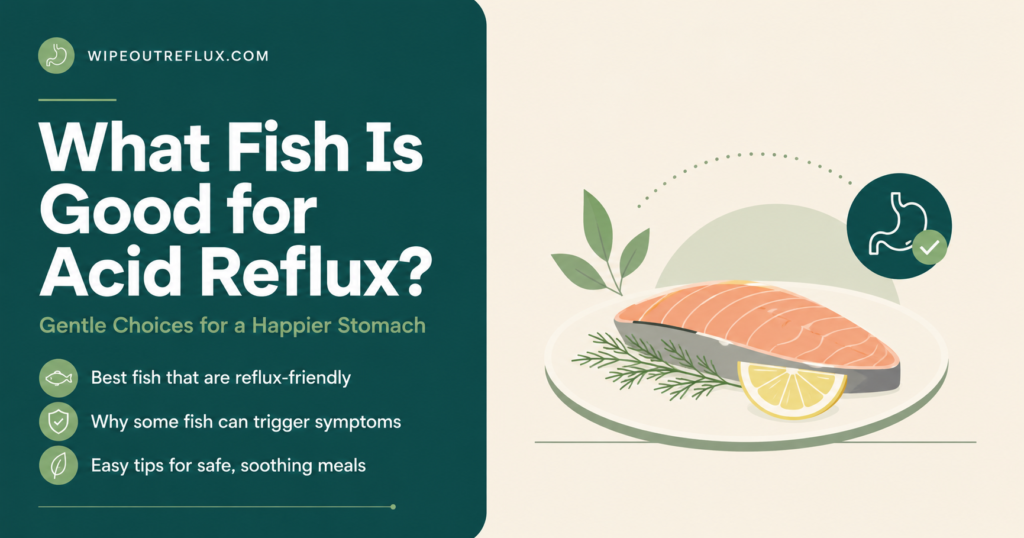
Fish is one of the best protein choices you can make if you have acid reflux, GERD, or LPR. Unlike red meat and fried foods, most fish is naturally low in fat, easy on the digestive system, and — in the case of fatty fish like salmon and tuna — packed with omega-3 fatty acids that actively reduce the kind of inflammation that makes reflux symptoms worse.
That said, not all fish is created equal when it comes to reflux. How a fish is prepared and stored matters just as much as the species itself. Deep-fried fish, smoked fish, and fish preserved in oil can all trigger symptoms, even in people who normally tolerate fish well.
Below I’ll walk you through the best fish for acid reflux, the ones to be cautious with, and the cooking methods that keep things safe for your stomach.
Key Takeaways
- Fish is generally one of the safest protein sources for acid reflux due to its low fat content and anti-inflammatory properties.
- Fatty fish like salmon and tuna contain omega-3s that help reduce esophageal inflammation caused by repeated reflux.
- Lean white fish such as cod, halibut, and tilapia are especially gentle on digestion and rarely trigger symptoms.
- The cooking method matters enormously — grilling, baking, and poaching are safe; deep-frying is not.
- Smoked, pickled, or oil-preserved fish should be avoided, particularly if you have GERD or LPR.
- Canned tuna in water is fine; canned tuna in oil or with added flavourings is riskier.
- Even healthy fish can trigger reflux if eaten in large portions or combined with heavy, fatty sauces.
Why Fish Is Good for Acid Reflux: The Mechanism
To understand why fish tends to be reflux-friendly, it helps to understand what actually causes reflux in the first place.
One of the main dietary triggers for acid reflux is high-fat food. Dietary fat — particularly in large quantities — causes the lower esophageal sphincter (LES) to relax. The LES is the valve between your stomach and esophagus, and when it relaxes at the wrong time, stomach acid flows upward. Research has confirmed that fat in the small intestine stimulates the release of hormones that directly reduce LES pressure and increase transient LES relaxations — the episodes where the valve briefly opens and allows reflux to occur [__Penagini et al., Gut, 1998__].
Fat also slows gastric emptying, meaning food sits in the stomach longer and creates more pressure on that valve. High-fat meals have been shown to increase both the frequency and duration of acid reflux episodes compared to low-fat meals [__Crouwel et al., Nutrients, 2024__].
Fish — especially lean white fish — is naturally low in fat, so it avoids this whole cascade. It digests quickly, doesn’t linger in the stomach, and keeps pressure on the LES to a minimum. Lean and low-fat protein sources like fish have been specifically highlighted in GERD research as foods that help minimize symptoms [__Niu et al., Nutrients, 2023__].
The same fat rule sorts the other proteins too: chicken and turkey sit in the same lean bracket as white fish, while bacon sits firmly at the other end.
Fatty fish like salmon and tuna add another layer of benefit through their omega-3 fatty acids. In an experimental model of reflux esophagitis, omega-3 fish oil significantly reduced esophageal damage and inflammation — while omega-6 oils from sources like soybean worsened it [__Irún et al., Frontiers in Pharmacology, 2019__]. This matters because with frequent reflux, the esophagus and throat are exposed to acid and pepsin repeatedly — and reducing underlying inflammation can make symptoms feel less severe over time.
The Best Fish for Acid Reflux
#1 Salmon (pH ~6.2)
Salmon is my top recommendation for reflux sufferers, and it’s the fish I personally eat most often. It’s rich in EPA and DHA omega-3 fatty acids, which have well-documented anti-inflammatory effects in the gastrointestinal tract. If you have LPR or GERD, you likely have some degree of ongoing inflammation in your esophagus or throat — and the omega-3s in salmon work against that process directly.
Salmon is also filling, satisfying, and versatile in the kitchen. The fat content is higher than in white fish, but it’s the right kind of fat and shouldn’t cause LES problems at a sensible portion size. Stick to grilled, baked, or poached salmon, and avoid smoked salmon which is a different matter entirely (see below).
For a deeper look, check out our article: Is Salmon Good for Acid Reflux?
#2 Cod (pH ~6.0–6.5)
Cod is one of the leanest, mildest white fish you can eat — and that makes it one of the most reflux-friendly options available. It’s very low in fat, high in protein, and has a neutral flavour that pairs well with reflux-safe seasonings like herbs, lemon (used sparingly), and olive oil in moderation. Because it’s so lean, it digests quickly and creates minimal digestive burden. Baked or grilled cod is an excellent choice for anyone who is currently in a flare.
#3 Tuna (pH ~6.2)
Tuna is another good source of omega-3 fatty acids and is also high in protein and vitamin D — both of which support digestion and reduce systemic inflammation. Fresh or canned tuna in spring water is the go-to choice.
One key thing: always choose tuna canned in water, not in oil or brine. Tuna stored in sunflower or olive oil significantly increases the fat content of each serving, and flavoured or brined varieties may contain vinegar or additives that aggravate reflux. Plain water-packed tuna is the safest option.
See also: Is Tuna Good for Acid Reflux?
#4 Halibut (pH ~6.6)
Halibut is a lean, firm white fish that’s low in fat and high in protein. It has a mild flavour and holds together well under heat, which makes it ideal for grilling or baking. Like cod, it’s quick to digest and unlikely to trigger reflux symptoms in most people. It’s also a good source of magnesium and B vitamins, which support overall digestive function.
#5 Prawns / Shrimp (pH ~6.9)
Prawns sit close to neutral on the pH scale, making them a particularly gentle option if you’re in a flare or have more sensitive reflux. They’re low in fat, quick to cook, and easy to digest. The main thing to watch is how they’re cooked — garlic butter prawns or anything in a heavy cream sauce will undo the benefits quickly. Simple grilled or steamed prawns are the best approach.
#6 Lobster (pH ~7.3)
Lobster is slightly alkaline, which is uncommon for a protein food and makes it genuinely helpful for reflux when prepared simply. It’s high in omega-3s, lean protein, and various minerals. The obvious downside is cost and how it’s typically served — drowning in butter at a restaurant isn’t going to help. At home, steamed or baked lobster with a small amount of olive oil is a real treat that’s also reflux-safe.
#7 Tilapia (pH ~6.0–6.5)
Tilapia is one of the leanest fish you can buy and is widely available at a low price point. It’s very mild, easy to cook, and has almost no fat — making it one of the most digestively inert protein sources you can eat. It doesn’t have the omega-3 benefits of salmon or tuna, but if you’re looking for a pure, clean protein source that won’t upset your stomach, tilapia is an excellent choice.
Other Good Choices
Sardines (in water), mahi-mahi, haddock, sea bass, crab, and octopus are all generally well-tolerated by reflux sufferers when prepared simply.
Fish to Avoid (or Treat With Caution)
Smoked Fish
Smoked salmon, smoked mackerel, smoked haddock — all of these should be avoided if you have active reflux symptoms. The smoking process makes the fish more acidic, and smoked fish is often high in sodium too, which can worsen irritation. If you have GERD or LPR, I’d avoid smoked fish consistently, not just during flares.
Fish in Oil or Brine
As mentioned with tuna, fish stored in oil or flavoured brine is more likely to cause reflux. The added fat and acidic additives change the profile of the food significantly. Always choose water-packed options when buying canned fish.
Breaded or Battered Fish
Even if the fish itself is lean, covering it in batter and deep-frying it turns it into a high-fat meal. The fat from frying is absorbed into the coating and the flesh, which then slows digestion and promotes LES relaxation. Fish and chips from a chip shop, fish fingers fried in oil, and battered fish from a takeaway are all high-risk choices for reflux.
Fish in Rich Sauces
Heavy cream sauces, cheese-based sauces, and butter-heavy preparations significantly increase the fat load of a fish dish. It’s not the fish causing the problem in these cases — it’s what surrounds it. Keep sauces simple: a drizzle of olive oil, fresh herbs, or a small amount of pesto is usually fine. A full creamy sauce is not.
How to Cook Fish for Acid Reflux
Cooking method has a big impact on whether fish is reflux-safe or not. Here are the approaches I’d recommend:
- Grilling — A great all-rounder. Keeps fat levels low, adds flavour, and works well with most fish varieties.
- Baking — Gentle and healthy. Wrap fish in foil with herbs and a little olive oil for a moist, flavourful result without excess fat.
- Poaching — The gentlest method. Simmering fish in water or a light stock produces a very soft texture that’s easy to digest. Ideal during a flare.
- Steaming — Similar to poaching in terms of digestive gentleness. Particularly good for white fish and prawns.
- Sautéing — Fine in moderation. Use 2–3 teaspoons of extra virgin olive oil per portion and avoid high heat, which can cause the oil to break down and become irritating.
Avoid deep-frying entirely. Deep-frying saturates the fish in fat — even naturally lean fish becomes a high-fat food after deep-frying — and this is one of the most reliable ways to trigger acid reflux symptoms.
For more structured guidance on building a reflux-friendly diet, my Wipeout Diet Plan covers exactly this kind of practical approach across a full dietary framework.
A Note on Portion Size
Even reflux-safe foods can become problematic in large quantities. Overfilling the stomach increases pressure on the LES regardless of what you’ve eaten. Aim for a sensible portion of fish — roughly 120–180g (4–6oz) — as part of a balanced plate. Eating slowly and not lying down within two to three hours of eating will also make a meaningful difference to how well you tolerate any meal.
Conclusion
Fish is genuinely one of the best foods you can eat if you have acid reflux, GERD, or LPR — and I say that not just as someone who writes about reflux, but as someone who has managed these conditions personally for years. It ticks every important box: low fat, high protein, easy to digest, and — in the case of fatty fish — actively anti-inflammatory.
The key is keeping things simple. Choose fresh or water-packed fish, cook it with minimal fat, and avoid the smoked and fried versions. Salmon, cod, tuna in water, halibut, and prawns are all excellent everyday choices that you can rotate without worrying too much. If you’re currently in a flare, lean white fish like cod or tilapia, poached or steamed, is the most gentle option.
Where most people go wrong isn’t the fish itself — it’s the cooking method or what surrounds it. A grilled salmon fillet is a great dinner. The same salmon pan-fried in butter with a cream sauce is a different meal entirely from a reflux perspective.
If you want a comprehensive, structured approach to eating well with acid reflux — including which proteins, vegetables, grains, and meals work best together — my Wipeout Diet Plan lays it all out in a practical, easy-to-follow format. And for quick pH and safety lookups on individual foods, the Wipeout Reflux Food Reference Guide is the faster reference. And if you’d like tailored guidance for your specific situation, you can book a Private Acid Reflux Consultation with me directly.
Frequently Asked Questions
Is mackerel good for acid reflux?
Mackerel is a reasonable choice. It’s high in omega-3 fatty acids, similar to salmon, which can help with inflammation. However, it’s an oilier fish than most, so some reflux sufferers — particularly those with more sensitive symptoms — may find it slightly heavier. Fresh grilled mackerel is fine for most people. Smoked mackerel should be avoided.
Is fish and chips bad for acid reflux?
Typically, yes — takeaway fish and chips are deep-fried, which means the fish absorbs a significant amount of fat. The chips are also high in fat. This combination is a well-known reflux trigger. That said, you can make a reflux-friendlier version at home by grilling the fish and baking the chips in a small amount of olive oil.
Can I eat tinned/canned fish if I have acid reflux?
Yes, with the right choice. Tinned tuna, sardines, or salmon in spring water are generally fine. Avoid versions in oil, tomato sauce, or with added flavourings and preservatives — these are more likely to trigger symptoms.
Is sushi okay for acid reflux?
Plain sushi rice with fresh fish (sashimi or simple rolls) is generally tolerable. The fish itself is usually fine. The potential issues are the sushi rice, which is seasoned with vinegar and can irritate, and spicy sauces or wasabi, which are clear reflux triggers. Go easy on the soy sauce too, as the high sodium content can worsen symptoms in some people.
Is fried fish bad for LPR (silent reflux)?
Yes. LPR tends to be more sensitive to dietary fat than typical GERD, and deep-fried fish is high in fat. I’d avoid fried fish entirely if you have LPR, at least until your symptoms are under good control. Grilled or baked fish is the better option. For more on managing LPR through diet, see our full guide.
Does the type of fish matter for acid reflux?
To some extent, yes — but preparation matters more. The leanest fish (cod, tilapia, halibut) are technically the most digestively neutral. Fatty fish (salmon, tuna, mackerel) are slightly higher in fat but bring anti-inflammatory benefits. The cooking method and what the fish is served with will have a bigger impact on your symptoms than which species you choose.
Related Articles
- Is Salmon Good for Acid Reflux?
- Is Tuna Good for Acid Reflux?
- The Complete Guide to LPR (Silent Reflux)
- The Ultimate Guide to Acid Reflux and GERD
- Best Salad Dressings for LPR
- Nuts and Acid Reflux: What You Need to Know
- Acid Reflux Sore Throat: How Long Does it Take to Heal?
Research & References
- Demonstrated that fat in the small intestine stimulates transient lower esophageal sphincter relaxations, directly increasing the frequency of reflux episodes [__Penagini et al., Gut, 1998__].
- In an experimental model of reflux esophagitis, omega-3 fish oil significantly reduced esophageal damage and inflammation compared to omega-6 oils [__Irún et al., Frontiers in Pharmacology, 2019__].
- Reviewed evidence showing that lean, low-fat protein sources including fish help minimize GERD symptoms, while high-fat foods promote LES relaxation and reflux [__Niu et al., Nutrients, 2023__].
- Systematic review finding that high-fat diets are associated with worsening GERD symptoms and increased esophageal acid exposure time [__Crouwel et al., Nutrients, 2024__].
- Large systematic review confirming that high-fat diets are strongly associated with GERD risk, while dietary patterns lower in fat are protective [__Eusebi et al., Therapeutic Advances in Gastroenterology, 2021__].

David Gray
12 years living with LPR · Consultant & researcher
I've lived with LPR for twelve years — the misdiagnoses, the PPI courses that did nothing, the slow work of figuring out what actually helps. Wipeout Reflux is where I translate the research into plain terms for people stuck in the same place. Every claim here is sourced to peer-reviewed work, and I consult one-to-one with LPR sufferers.