
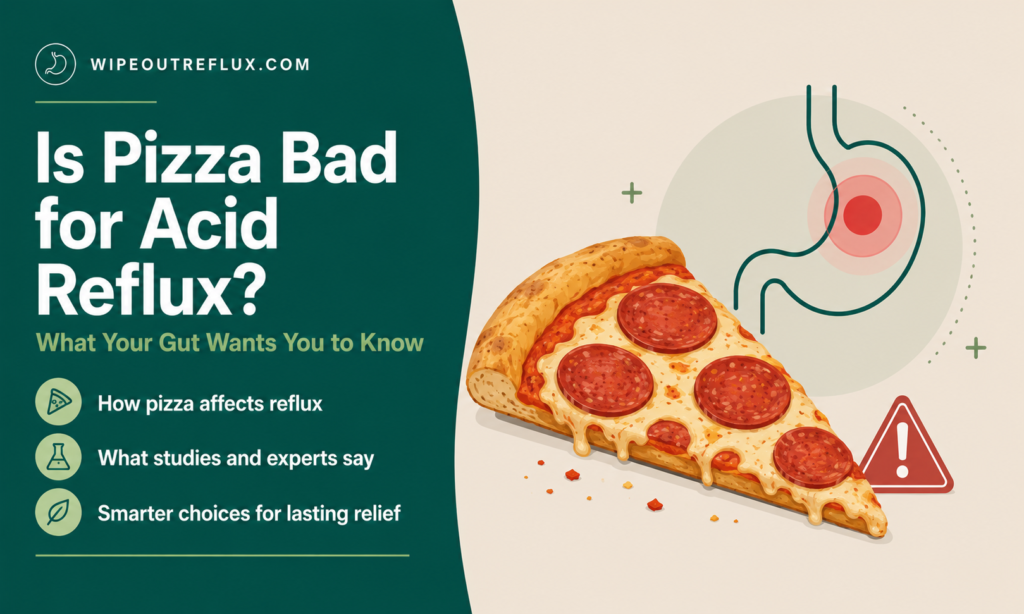
Pizza is one of the most commonly reported food triggers for acid reflux, and from both a personal and research standpoint, it’s not hard to understand why. The combination of acidic tomato sauce, high fat content, large portion sizes, and refined carbohydrates means a typical pizza hits nearly every major reflux mechanism in a single meal.
Yes, pizza is generally bad for acid reflux. The tomato sauce is acidic, the cheese and fatty toppings relax the lower esophageal sphincter (LES), and eating large portions increases stomach pressure — all of which create ideal conditions for acid to move upward into the esophagus. That said, the specific type of pizza you eat and how you eat it can significantly change how much of a problem it causes.
In a 2020 clinical study examining food triggers in GERD patients, pizza was reported as a trigger by 55% of participants — making it one of the five most commonly cited problem foods [Savarino et al., Digestive and Liver Disease, 2020]. That’s not a fringe finding. For most people with active reflux, pizza is a consistent and reliable trigger — not a borderline case.
Key Takeaways
- Pizza was identified as a trigger food by 55% of GERD patients in a 2020 clinical study — one of the five most commonly reported trigger foods
- Tomato sauce is highly acidic and directly irritates the esophageal lining, and can trigger transient LES relaxations
- High fat content from cheese and processed meat toppings reduces lower esophageal sphincter pressure and delays gastric emptying
- Large portion sizes increase intragastric pressure, raising the likelihood of acid moving upward
- People with LPR (silent reflux) face additional problems because the acidic sauce can reactivate pepsin deposited in the throat
- White pizza with no tomato sauce is considerably less problematic than traditional tomato-based pizza
- Thin crust, modest portions, reflux-friendly toppings, and correct meal timing can substantially reduce risk
- Eating pizza at least 3 hours before lying down is essential if you want to reduce symptom risk
Why Pizza Causes Acid Reflux
Pizza doesn’t cause reflux through a single mechanism — it typically combines three or four of the most well-documented reflux triggers into one meal. That’s what makes it such a reliable problem for people with GERD and LPR.
The Tomato Sauce Problem
The most obvious issue is the tomato sauce. Tomatoes are inherently acidic, with a pH typically between 4.0 and 4.5. When concentrated into pizza sauce — with added salt, sugar, herbs, and sometimes citric acid to extend shelf life — that acidity increases further. The result is a sauce that sits well below the threshold that irritates an already sensitive esophageal lining.
A systematic review drawing on 72 studies across 19 countries found that acidic foods including tomatoes and tomato-based products are positively associated with reflux-related symptoms, with eating patterns involving these foods linked to a higher onset risk for GERD [Zhang et al., Therapeutics and Clinical Risk Management, 2021].
The problem isn’t just the acidity of the sauce burning an already inflamed esophagus. Acidic foods can also trigger transient relaxations of the LES — the muscular valve that acts as the barrier between your stomach and esophagus. When that valve opens at the wrong moment, acid doesn’t need to be under exceptional pressure to travel upward. Even a small amount of highly acidic material reaching the lower esophagus is enough to provoke heartburn, regurgitation, or throat discomfort.
High Fat Content and Your Esophageal Sphincter
A standard slice of pizza — before you even add extra toppings — is high in fat. Mozzarella cheese, processed meats like pepperoni and sausage, and the dough itself all contribute to a significant fat load per meal. Two or three slices can easily represent 30–50g of fat, depending on the style and toppings.
Dietary fat is one of the most well-documented disruptors of LES function. High-fat meals stimulate the release of cholecystokinin (CCK), a digestive hormone that directly lowers LES pressure and increases the frequency of transient LES relaxations — the events that allow acid to escape from the stomach. Research measuring LES pressure and reflux events after isocaloric high-fat versus low-fat meals confirmed that high fat content significantly increases both the rate of transient LES relaxations and the number of acid reflux episodes [Penagini et al., American Journal of Gastroenterology, 1998].
The practical implication is that a high-fat pizza meal can create elevated reflux risk for two to three hours after eating — not just in the immediate postprandial window. This is why the timing of your meal matters so much when pizza is involved.
Delayed Gastric Emptying
Fat also slows gastric emptying — the rate at which food moves from the stomach into the small intestine. The longer food remains in the stomach, the longer the window during which a reflux event can occur, and the more sustained the pressure on the LES from below.
Delayed gastric emptying has been identified as a relevant factor in GERD pathophysiology, affecting approximately 26% of GERD patients, with high-fat meals being a known contributor to this delay. When emptying is prolonged, intragastric pressure remains elevated for longer and the acid pocket in the upper stomach — which is the most common source of postprandial reflux — persists for longer than it would after a lighter, lower-fat meal [Patel et al., Nutrients, 2023].
This explains a pattern many people notice: you eat pizza in the evening, feel okay for an hour, and then symptoms hit as you settle into the sofa or head to bed. The delayed emptying is still playing out, and the recumbent position removes the protective effect of gravity entirely.
Large Portions and Stomach Pressure
Pizza is easy to overeat. One slice comfortably becomes three, and the result is a significantly distended stomach. Increased gastric volume directly raises intragastric pressure, which applies mechanical force to the LES from below — making it harder for the sphincter to maintain a seal against upward acid movement.
Research on the relationship between meal volume and postprandial acid exposure found that larger meal volumes produce significantly greater esophageal acid exposure time compared to smaller portions, even when fat content is held constant [Pehl et al., Digestive Diseases and Sciences, 1996]. When you combine a large volume with a high fat load — exactly what a generous pizza meal provides — the effect on reflux risk is compounded.
What About LPR (Silent Reflux)?
If you have laryngopharyngeal reflux (LPR) rather than — or in addition to — classic GERD, pizza is even more of a problem, and the mechanism is slightly different.
LPR involves pepsin — a digestive enzyme that travels up with acid during reflux events — reaching and depositing itself on the delicate lining of the throat and larynx. Once pepsin is there, it remains stable and inactive in neutral or alkaline conditions. But the moment you consume anything acidic — with a pH below approximately 6.5 — it can be reactivated and begin causing inflammation again, even without a new reflux event occurring.
Tomato sauce, with a pH typically below 4.5, sits well within the reactivation range. This means that even if the overall reflux event is mild, the acidic sauce you’re eating can directly reactivate pepsin in your throat and perpetuate LPR symptoms: hoarseness, throat clearing, the sensation of mucus, or a persistent lump in the throat. For more detail on how pepsin reactivation works and which foods trigger it, my LPR diet guide covers this mechanism in full.
The short version: if you have LPR, traditional pizza with tomato sauce is a high-risk food regardless of portion size or timing. You’d need to change the base entirely to make it workable during an active flare.
Does the Type of Pizza Make a Difference?
Yes — significantly. Not all pizza carries the same reflux risk, and understanding the differences helps you make a more informed decision.
Traditional pizza (tomato base, full mozzarella, processed meat toppings) activates every major reflux trigger simultaneously: acidic sauce, high fat from cheese, additional fat from pepperoni or sausage, and typically a large portion. This is the highest-risk option.
White pizza (no tomato sauce, olive oil or béchamel base) removes the single most directly irritating ingredient. For people whose reflux is primarily GERD rather than LPR, a white pizza with a modest amount of mozzarella and vegetable toppings is considerably less problematic. It still has fat from the cheese, but eliminating the acidic sauce removes a major trigger.
Thin crust pizza naturally limits portion size and contains less refined carbohydrate per slice than deep-dish or thick-crust options. Less food overall means less gastric distension and a lower total fat load per sitting.
Deep dish or stuffed crust pizza is the hardest option to manage. It typically involves more dough, more cheese, and more filling per slice — all of which compound the volume and fat problems. If portion control is already difficult with a standard pizza, deep dish makes it considerably harder.
The toppings matter too. Chicken, courgette, bell peppers, spinach, and mushrooms are low-acidity, low-fat options that don’t compound the problem. Pepperoni, Italian sausage, anchovies, and extra mozzarella all add to the fat load and increase symptom risk.
How to Eat Pizza With Less Reflux Risk
If you want to eat pizza without reliably triggering symptoms, the following modifications can help. I’ll be direct though: if you’re in an active reflux flare — especially with LPR — pizza is best avoided entirely until your symptoms have settled. These tips are for managing pizza as an occasional food, not a justification for eating it freely while your reflux is active.
Switch to a White Base
Swapping tomato sauce for a simple olive oil base is the single most impactful change you can make. It removes the most acidic component entirely. A good white pizza with garlic-infused oil (use cooked garlic — raw garlic is a separate trigger), fresh herbs, and modest cheese is a substantially lower-risk choice. For those with LPR specifically, this change is particularly important for eliminating pepsin reactivation risk from the meal.
Choose Thin Crust
Thin crust naturally reduces the total volume of the meal. Fewer carbohydrates means less gastric distension, and the slimmer profile makes portion control more intuitive. This directly addresses the volume-related pressure effect on the LES.
Keep Portions to 1–2 Slices
Limiting yourself to one or two slices is one of the most straightforward and effective modifications. It controls both the total fat load and total gastric volume. It’s also much easier to manage if you’re not eating straight from the delivery box, so plating your portion before you start eating helps.
Time Your Meal Correctly
Don’t eat pizza within three hours of lying down. The combination of fat-related LES relaxation and a full stomach is significantly worse in a recumbent position. This applies to sitting back on the sofa as much as it does to going to bed. For what to drink alongside your meal to minimise additional risk, my guide on drinks for acid reflux has specific recommendations.
Choose Low-Fat Toppings
Lean chicken, vegetables, and a restrained amount of part-skim mozzarella give you a workable pizza without dramatically worsening the LES-fat interaction. Avoid processed meats entirely if you can — they’re high in fat, often high in salt, and sometimes include additives that can irritate the stomach lining. For more on how specific cheeses affect reflux risk, see my article on whether cheese causes acid reflux.
Frequently Asked Questions
Is pizza always bad for acid reflux?
Not in every scenario. A white pizza with thin crust, minimal cheese, and vegetable toppings eaten in a small portion (1–2 slices) at least three hours before lying down is much less likely to trigger symptoms than a traditional tomato-based deep-dish pizza eaten in large quantities before bed. That said, pizza is never a safe food during an active reflux flare.
What kind of pizza can I eat with acid reflux?
The safest option is a white pizza — no tomato sauce — with thin crust, modest amounts of lower-fat cheese, and reflux-friendly toppings like chicken, mushrooms, spinach, or bell peppers. Avoid processed meats, extra cheese, and raw garlic bases. Homemade pizza gives you the most control over ingredients.
Can pizza trigger LPR (silent reflux)?
Yes, and it’s particularly problematic for LPR. The tomato sauce is acidic enough to reactivate pepsin sitting in your throat, which can sustain symptoms — hoarseness, throat clearing, mucus sensation — even without a large reflux event. During an active LPR flare, I’d avoid pizza with tomato sauce entirely. See my LPR foods to avoid guide for a broader breakdown.
How do I stop acid reflux after eating pizza?
Stay upright for at least three hours after eating. A short walk helps stimulate gastric emptying. Chamomile tea can help soothe esophageal irritation without adding an acidic load. Avoid using antacids as a routine strategy — they address the symptom, not the trigger.
Does the cheese on pizza cause reflux?
Cheese contributes significantly through its fat content, which lowers LES pressure and slows gastric emptying. Higher-fat cheeses like full mozzarella, parmesan, and processed cheese blends are the biggest contributors. Part-skim mozzarella in modest amounts is a lower-risk alternative. For a full breakdown, see my article on cheese and acid reflux.
Can I eat pizza while taking omeprazole?
Omeprazole reduces stomach acid production, but it doesn’t eliminate reflux events entirely and doesn’t protect against non-acid components like bile or pepsin. Eating large, high-fat meals like pizza while on a PPI can still produce symptoms. Being on omeprazole isn’t a reason to ignore dietary triggers.
Is homemade pizza better for reflux?
Yes — meaningfully so. Homemade pizza gives you control over the base (you can use olive oil instead of tomato), the cheese quantity, the fat content of toppings, and portion size. A well-constructed homemade white pizza on a thin wholemeal base with vegetable toppings is one of the more manageable ways to eat pizza with reflux.
Conclusion
Pizza deserves its reputation as one of the most consistent acid reflux triggers. It’s not a single ingredient that causes the problem — it’s the combination of acidic tomato sauce, LES-relaxing fat from cheese and processed meats, delayed gastric emptying, and the ease with which large portions are consumed. For most people with GERD, pizza eaten in a standard way on a regular basis will reliably worsen symptoms.
That doesn’t mean pizza has to be permanently off the table. But managing it requires more than willpower at the dinner table. It means understanding the mechanism well enough to modify the meal: choosing a white base, going thin crust, keeping portions to one or two slices, selecting low-fat toppings, and eating at least three hours before lying down. Make enough of those changes and pizza becomes an occasional food with manageable risk, rather than an automatic flare.
If you have LPR specifically, the tomato sauce problem is harder to work around. The pepsin reactivation risk from acidic sauce makes traditional pizza a consistent trigger regardless of how well you manage timing or portions. A white pizza is the only workable version during an active LPR phase.
Managing reflux through diet isn’t just about cutting things out — it’s about understanding which changes make the most meaningful difference. The Wipeout Diet Plan gives you a structured, evidence-based approach to exactly that: which foods to eat, which to avoid, how to manage timing and portion size, and how to navigate real-world situations where food choices aren’t straightforward. If you’d prefer personalised guidance for your specific symptom profile, my one-to-one consultation is available to work through this with you directly.
Related Articles
- LPR Diet: What to Eat and Foods to Avoid with Silent Reflux
- Does Cheese Cause Acid Reflux? What the Research Shows
- LPR Foods to Avoid: A Complete Guide for Silent Reflux
- What to Drink with Acid Reflux: Best and Worst Choices Explained
- Best Snacks for LPR and Acid Reflux (And What to Avoid)
- The Complete GERD and Acid Reflux Guide
Research & References
- Savarino et al., Digestive and Liver Disease, 2020 — A clinical study of 100 GERD patients found that 85% could identify at least one trigger food, with pizza cited by 55% of participants — placing it among the top five most commonly reported triggers alongside spicy foods, chocolate, tomato, and fried foods. Dietary trigger elimination reduced symptom scores significantly at follow-up. [Savarino et al., Digestive and Liver Disease, 2020]
- Zhang et al., Therapeutics and Clinical Risk Management, 2021 — A systematic review of 72 studies across 19 countries found that acidic foods including tomatoes and tomato-based products, eating large portions, and eating within three hours of sleep were all positively associated with GERD symptoms and onset risk. [Zhang et al., Therapeutics and Clinical Risk Management, 2021]
- Penagini et al., American Journal of Gastroenterology, 1998 — A double-blinded study using isocaloric meals with low versus high fat content found that high-fat meals significantly increased the frequency of transient LES relaxations and postprandial acid reflux episodes in healthy volunteers. [Penagini et al., American Journal of Gastroenterology, 1998]
- Pehl et al., Digestive Diseases and Sciences, 1996 — Research on 20 healthy subjects using pH monitoring found that both high-fat content and larger meal volumes independently produced significantly greater postprandial esophageal acid exposure time compared to low-fat or smaller meals, with the supine position particularly increasing acid exposure after high-fat meals. [Pehl et al., Digestive Diseases and Sciences, 1996]
- Alomair et al., Journal of Family and Community Medicine, 2020 — A cross-sectional study of 339 patients at a primary health care centre in Makkah found that tomato and tomato-based food consumption was statistically significantly associated with increased risk of symptomatic GERD (p < 0.05), alongside other dietary factors including acidic drinks and salty foods. [Alomair et al., Journal of Family and Community Medicine, 2020]
- Patel et al., Nutrients, 2023 — A review of functional food in relation to GERD found that delayed gastric emptying — which occurs in a significant subset of GERD patients and is worsened by high-fat meals — raises intragastric pressure and prolongs the period of esophageal acid exposure, directly contributing to symptom risk. [Patel et al., Nutrients, 2023]

David Gray
12 years living with LPR · Consultant & researcher
I've lived with LPR for twelve years — the misdiagnoses, the PPI courses that did nothing, the slow work of figuring out what actually helps. Wipeout Reflux is where I translate the research into plain terms for people stuck in the same place. Every claim here is sourced to peer-reviewed work, and I consult one-to-one with LPR sufferers.