
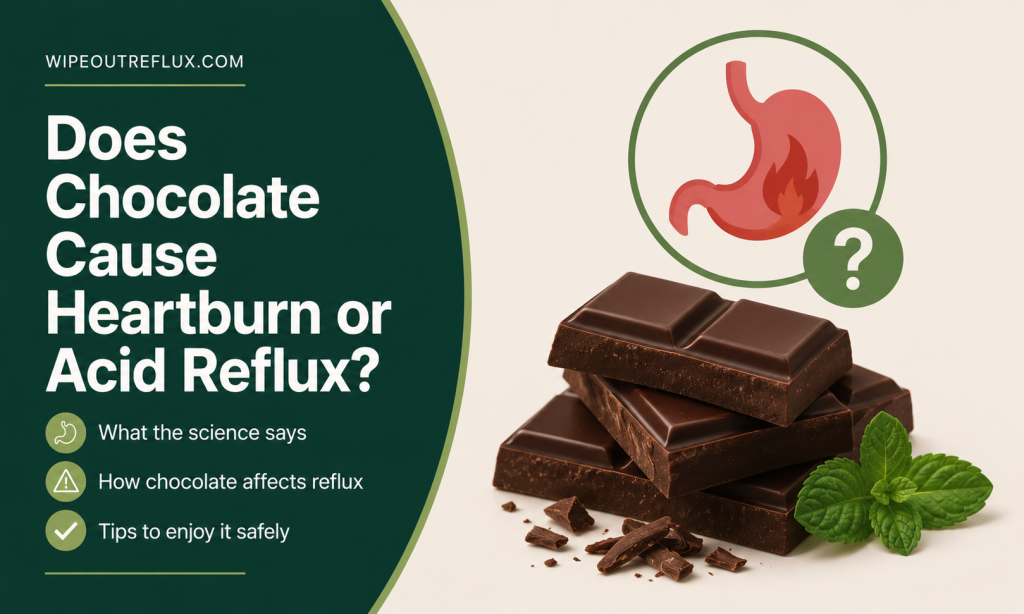
Yes — chocolate is one of the most consistent reflux triggers in the diet, and the mechanism behind it is unusually well-understood. Most foods cause reflux through a single route; chocolate operates through three simultaneously. It relaxes the lower esophageal sphincter (LES) via methylxanthine compounds, drives further LES relaxation through a serotonin pathway in the gut, and contributes fat-driven gastric emptying delay on top of both. That combination makes it particularly reliable as a trigger, particularly when eaten in the evening or as part of a high-fat dessert.
The picture is more nuanced than a simple “chocolate is bad, avoid it forever” verdict. Some people with well-controlled GERD can tolerate small amounts of dark chocolate, particularly earlier in the day. People with active LPR (silent reflux) are in a different position — the same LES-relaxing mechanism that drives more acid upward in GERD simultaneously deposits more pepsin into throat tissue, and chocolate’s mildly acidic pH can reactivate the pepsin that’s already there.
This article covers all three mechanisms in detail, how different chocolate types compare, what the specific risks are for LPR versus GERD, and what a realistic framework for occasional chocolate consumption looks like when your symptoms are under control.
Key Takeaways
- Chocolate triggers reflux through three distinct mechanisms operating simultaneously: methylxanthine-driven LES relaxation, serotonin-mediated LES relaxation, and fat-driven gastric emptying delay.
- Theobromine — not caffeine — is the primary active compound. It’s a methylxanthine found in cocoa solids that directly relaxes the LES smooth muscle. Dark chocolate has more theobromine per gram than milk chocolate; white chocolate has none.
- Clinical research confirmed that chocolate ingestion nearly halved basal LES pressure (from 14.6 mmHg to 7.9 mmHg), and this effect was not reversed by antacid — confirming it’s a direct muscle relaxation mechanism, not just an acidity effect.
- Chocolate also triggers intestinal cells to release serotonin, which signals the LES to relax further. Blocking this serotonin signal with medication significantly reduced post-chocolate reflux events in a clinical study.
- The original version of this article recommended dark chocolate as the “best bet” for reflux sufferers. This needs nuancing: dark chocolate has the highest theobromine content and is worst for the methylxanthine mechanism, though it has less fat and sugar than milk chocolate. No type of chocolate is safe during an active reflux or LPR flare.
- White chocolate contains no cocoa solids and therefore no theobromine or caffeine — but its very high fat content still triggers fat-driven LES relaxation. It is not a reliably safer alternative.
- For LPR, chocolate is a category-one exclusion during management because it simultaneously increases reflux frequency and delivers mildly acidic content (pH ~5.0–6.5) that can reactivate pepsin deposited in throat tissue.
- For people with well-controlled GERD (not LPR), small amounts of dark chocolate earlier in the day, after a meal rather than on an empty stomach, and away from sleep represent the lowest-risk approach if chocolate is to be kept in the diet.
Why Chocolate Triggers Reflux — Three Mechanisms
Mechanism 1: Theobromine and Caffeine (Methylxanthines)
The primary driver of chocolate’s effect on reflux is theobromine, a methylxanthine compound found in cocoa solids. Theobromine directly relaxes smooth muscle tissue, including the circular smooth muscle of the LES. When the LES relaxes, its closing pressure drops, creating the conditions for stomach contents to move upward into the esophagus.
Clinical research measuring the effect directly found that chocolate ingestion decreased mean basal LES pressure from 14.6 mmHg to 7.9 mmHg — nearly halving it [Wright & Castell, American Journal of Digestive Diseases, 1975]. Critically, this effect was not reversed when antacid was given alongside the chocolate, confirming that the mechanism is the direct muscle-relaxing action of the methylxanthines — not simply the acidity of the chocolate itself. Subsequent research confirmed that chocolate ingestion significantly increased esophageal acid exposure in the first postprandial hour in patients with reflux esophagitis [Murphy & Castell, American Journal of Gastroenterology, 1988].
Caffeine is also present in chocolate and adds a secondary methylxanthine effect, though in smaller quantities than theobromine. Both compounds act on the same pathway — smooth muscle relaxation — and their effects are additive.
Mechanism 2: The Serotonin Pathway
A less widely known but clinically demonstrated mechanism involves serotonin. Research from the University of Michigan found that chocolate causes a large release of serotonin from enterochromaffin cells lining the intestine. This serotonin signal travels to the LES, driving a second wave of relaxation on top of the methylxanthine effect.
In that study, GERD patients experienced an average of 5.4 reflux events in a 30-minute window after consuming chocolate. When researchers blocked the serotonin signal with granisetron (a serotonin receptor blocker typically used for nausea), reflux events decreased significantly and acid exposure time fell by more than a third. This confirmed serotonin as a genuine independent pathway through which chocolate compromises the LES — not a secondary effect of the methylxanthines.
Mechanism 3: Fat Content and Gastric Emptying
Chocolate is a high-fat food. Even dark chocolate contains 30–40% fat by weight; milk chocolate runs higher. High dietary fat slows gastric emptying — food spends more time in the stomach, the stomach stays fuller for longer, and intra-gastric pressure remains elevated for a longer window. Elevated gastric pressure pushes upward against a LES already compromised by methylxanthines and serotonin.
Early studies suggested fat was the primary mechanism of chocolate-related reflux. Later work using defatted chocolate demonstrated that the methylxanthines remain the dominant driver — fat is a contributing factor rather than the root cause. But it adds meaningfully to the compound effect, particularly when chocolate is consumed as part of a high-fat dessert course.
Dark vs. Milk vs. White Chocolate — Which Is Worst for Reflux?
Understanding which type of chocolate is most problematic requires separating the three mechanisms, because different types affect each mechanism differently.
Dark chocolate (70%+ cocoa) contains the highest concentration of theobromine and caffeine per gram of any chocolate type. More cocoa solids means more methylxanthines. From the primary mechanism standpoint, dark chocolate is the worst for LES pressure. However, dark chocolate generally has less total fat and significantly less sugar than milk chocolate, which reduces the contribution from the fat-gastric-emptying mechanism. For most people managing reflux, the net effect is that dark chocolate and milk chocolate are comparably problematic, just through slightly different dominant pathways.
Milk chocolate contains moderate levels of theobromine and caffeine — meaningfully less than dark chocolate per gram because more of the volume is milk solids and sugar. But it is higher in fat and sugar than dark chocolate, increasing both gastric emptying delay and, through high sugar intake, contributing to the gut dysbiosis pathway described in the sugar and reflux article.
White chocolate contains no cocoa solids whatsoever — and therefore no theobromine or caffeine. The methylxanthine mechanism is entirely absent. This might suggest white chocolate is the safest reflux choice, but white chocolate is extremely high in fat and sugar. The fat-driven LES relaxation mechanism still operates, gastric emptying is still delayed, and the sugar load creates its own problems. White chocolate is not a reliably safer alternative for reflux management — it trades one set of mechanisms for another.
The practical implication: none of the three main chocolate types is genuinely safe during active reflux or LPR management. The “dark chocolate in moderation” recommendation in many articles (including the original version of this one) is reasonable for people whose symptoms are well-controlled — but it should not be read as meaning dark chocolate is safe. It means dark chocolate may be the least-bad option for occasional use once symptoms are stable.
Chocolate and LPR (Silent Reflux) — A Specific Warning
For people managing LPR, the case against chocolate is stronger and extends beyond the GERD mechanisms. Two specific factors make chocolate particularly problematic for LPR.
First, LES relaxation is the central mechanical problem in LPR. Every time the LES relaxes inappropriately, gastric contents — including pepsin — travel upward. In GERD, the primary damage occurs in the esophagus. In LPR, pepsin reaches the laryngopharynx where it adheres to mucosal surfaces and drives ongoing inflammation. Chocolate’s triple-pathway LES relaxation (methylxanthines, serotonin, fat) means more reflux events reach the throat per chocolate serving than most other single foods. The practical consequence is more pepsin deposition with each exposure.
Second, once pepsin is deposited in throat tissue, it can be reactivated by any contact below pH 5.0. Dark chocolate sits at approximately pH 5.0–6.5 depending on processing (natural cocoa is more acidic; Dutch-processed or alkalized cocoa is closer to neutral). Milk chocolate typically sits around pH 5.5–6.5. These pH ranges place chocolate right at or below the threshold for pepsin reactivation — meaning swallowing chocolate can reactivate dormant pepsin in the throat even as it reaches the larynx, compounding the damage from the increased reflux frequency.
LPR dietary protocols — including the Koufman low-acid diet framework — consistently list chocolate as a category-one exclusion during the initial healing phase. For people in active LPR management, no amount of chocolate is appropriate until symptoms are fully controlled and a maintenance phase has been established.
When Chocolate Causes the Most Damage — Timing and Context
The same amount of chocolate produces different reflux risk depending on when and how it’s consumed. These combinations significantly amplify the baseline mechanisms.
Evening and pre-bed chocolate. This is the highest-risk scenario. LES pressure is naturally lower in the supine position, and when the LES has already been compromised by theobromine, any reduction in upright gravitational protection compounds the problem. A piece of chocolate as an after-dinner dessert consumed within 2–3 hours of lying down creates the conditions for the worst nocturnal reflux. Morning or midday chocolate, in contrast, gives the methylxanthine effect time to clear before sleep.
Chocolate on an empty stomach. Without a meal in the stomach to buffer the acid, chocolate’s LES-relaxing effect acts on an esophagus that lacks the temporary acid-diluting effect of food. A meal consumed before the chocolate dilutes gastric contents and reduces the immediate acid concentration available to reflux. Eating chocolate after a small meal provides some buffering that eating it alone does not.
Chocolate combined with mint. Mint is itself a potent LES relaxant — one of the most pharmacologically consistent in the reflux literature. Chocolate-mint combinations (peppermint patties, mint chocolate chip, after-dinner mints with chocolate) deliver two independent LES-relaxing compounds simultaneously. These represent the highest-risk chocolate format for reflux sufferers and should be avoided regardless of symptom status.
Chocolate combined with alcohol. Alcohol independently relaxes the LES and irritates esophageal tissue. Hot chocolate with liqueur, chocolate-based cocktails, or dark chocolate consumed with wine creates a compound triple-mechanism trigger. People managing reflux should treat this combination as categorically off-limits, not just moderated.
Chocolate as part of a high-fat dessert. Chocolate cake, chocolate lava cake, chocolate mousse, and similar preparations multiply the fat content far beyond the cocoa alone. The gastric emptying delay is substantially amplified by the surrounding fat, extending the pressure window significantly.
Can You Ever Eat Chocolate with Acid Reflux?
For many people with GERD whose symptoms are well-controlled through diet and lifestyle — not during active flares — small amounts of chocolate are often tolerable. The key variables are quantity, timing, type, and what the chocolate is combined with.
When I’m at a maintenance phase and symptoms have been stable for weeks, I can usually tolerate 1–2 small squares of dark chocolate earlier in the day, after a meal, and not in combination with other triggers. Attempting the same thing during an active flare, in the evening, or with mint would produce symptoms reliably. The food and context matter as much as the chocolate itself.
For a systematic view of where chocolate sits relative to other foods — including comparisons across LPR and GERD risk ratings — the Essential Reflux Food List covers 100+ foods and drinks with their full risk profiles so you can make these decisions quickly rather than searching food by food.
Carob as an alternative. Carob — made from the pods of the carob tree — is caffeine-free and theobromine-free, and has a naturally sweet, chocolate-adjacent flavour. It’s used as a chocolate substitute in carob chips, carob powder, and carob-based bars. For people who want to replicate the experience of chocolate without the methylxanthine LES effect, carob is worth exploring. Note that carob products still contain fat, so the gastric emptying mechanism applies, but the primary reflux driver (theobromine) is absent.
Free Weekend Reflux Diet Plan — Including What to Have Instead of Chocolate
If you’re in the process of cutting out trigger foods and want a ready-made plan that takes the guesswork out of the first few days, the free Weekend Reflux Diet Plan maps out a complete Saturday and Sunday of reflux-safe meals and snacks. Join the Wipeout Reflux newsletter below and it comes straight to your inbox.
Frequently Asked Questions
Does chocolate cause heartburn?
Yes, for most people with GERD or reflux-sensitive digestion. Chocolate operates through three simultaneous mechanisms — theobromine and caffeine relaxing the LES, serotonin from intestinal cells relaxing it further, and fat delaying gastric emptying — making it one of the most consistent food triggers in the reflux literature. Clinical studies confirmed that chocolate ingestion significantly increased esophageal acid exposure compared to control, and nearly halved basal LES pressure.
Is dark chocolate better or worse than milk chocolate for acid reflux?
It depends on which mechanism you’re most concerned about. Dark chocolate has more theobromine and caffeine per gram (worse for the LES-relaxation mechanism), but less fat and sugar than milk chocolate (better for the gastric emptying mechanism). Overall, both types are problematic; neither is clearly safe during active reflux. Dark chocolate in very small amounts may be marginally more tolerable for some people once symptoms are controlled, but “dark chocolate is fine in moderation” overstates how safe it is.
Is white chocolate safer for acid reflux?
Not reliably. White chocolate contains no cocoa solids and therefore no theobromine or caffeine, so the primary methylxanthine mechanism is absent. However, white chocolate is extremely high in fat, which still delays gastric emptying and contributes to LES pressure reduction through the fat pathway. It’s a different trigger profile, not a safe alternative.
Why does chocolate make my LPR worse?
Because LES relaxation is the central mechanical problem in LPR — every relaxation event deposits more pepsin into throat tissue — and chocolate drives LES relaxation through three independent pathways simultaneously. Additionally, chocolate’s mild acidity (pH ~5.0–6.5 for dark chocolate) places it at or below the pepsin reactivation threshold, meaning it can reactivate dormant pepsin in throat tissue as it passes through. LPR dietary protocols universally exclude chocolate during the management phase for these reasons.
Can I have a small amount of chocolate if I have acid reflux?
Potentially yes, during a stable maintenance phase — not during an active flare. If you’re going to test chocolate, the lowest-risk approach is: a small amount (1–2 squares), dark chocolate rather than milk, earlier in the day rather than evening, after a small meal rather than on an empty stomach, and not combined with other triggers like mint or alcohol. If symptoms appear within a few hours, reduce further or eliminate during the current phase.
What is the mechanism of chocolate causing acid reflux — is it the caffeine?
Caffeine contributes, but it’s not the primary driver. Theobromine — the main methylxanthine in cocoa solids — is the dominant compound responsible for LES relaxation. Caffeine adds a secondary effect. A third, often overlooked mechanism is serotonin: chocolate triggers a large release of intestinal serotonin that independently signals the LES to relax. Fat content is a fourth contributing factor through gastric emptying delay. All four operate together.
Is carob a safe chocolate alternative for reflux?
Generally yes. Carob contains no theobromine or caffeine, eliminating the primary reflux mechanism of chocolate. It’s naturally sweet and provides a passable chocolate-adjacent flavour in baked goods and snacks. Carob products still contain fat, so gastric emptying effects apply, but significantly less so than cocoa-based chocolate. For people who want something to satisfy a chocolate craving during reflux management, carob is the most evidence-consistent alternative.
Conclusion
Chocolate’s relationship with reflux is well-established and mechanistically understood. Three distinct pathways — theobromine relaxing the LES, serotonin compounding that relaxation, and fat slowing gastric emptying — operate simultaneously, making chocolate one of the more reliable dietary triggers for both GERD and LPR. The severity of symptoms depends on the type consumed, the quantity, the timing, and what it’s combined with — evening chocolate with mint after a fatty meal is a significantly different scenario than a single small square of dark chocolate mid-morning after breakfast.
For active reflux management, particularly during LPR, chocolate in any meaningful quantity should be excluded until symptoms are well-controlled. For people in a stable maintenance phase, small amounts of dark chocolate at the right time of day can often be tolerated — but it’s worth keeping the full mechanism picture in mind so that slips are recognised as triggers rather than dismissed as coincidences.
If you want a structured dietary framework that sequences the elimination and reintroduction of chocolate alongside other triggers, the Wipeout Diet Plan covers this in full. For a quick reference on where chocolate and other foods sit on the reflux risk spectrum, the Essential Reflux Food List gives you pH ratings and GERD vs. LPR risk scores for 100+ foods in one place. And if persistent symptoms — including the hiatal hernia and LPR combination several readers have asked about — aren’t responding to dietary change, a private consultation can help identify whether a mechanical component needs addressing.
Related Articles
- The Complete Guide to LPR (Silent Reflux): Causes, Symptoms, and Treatment
- The Complete Guide to Acid Reflux and GERD
- LPR Foods to Avoid: The Complete List
- Is Sugar Acidic or Alkaline? (What It Means for GERD)
- Is Coffee Acidic? What It Means for Acid Reflux and LPR
- The 2-Week Acid Reflux Diet: Foods to Eliminate and Eat
- The Wipeout Diet Plan: A Structured Approach to Reflux Management
Research Sources
[Wright & Castell, American Journal of Digestive Diseases, 1975] — In 9 healthy subjects, ingestion of 120ml of chocolate syrup decreased mean basal LES pressure from 14.6±1.1 mmHg to 7.9±1.3 mmHg — a reduction of nearly 46%. Critically, administering antacid alongside the chocolate produced an identical LES response, demonstrating that the mechanism is direct smooth muscle relaxation by the methylxanthine compounds in chocolate, not an effect of chocolate’s acidity. This was one of the foundational studies establishing the physiological basis for chocolate as a reflux trigger.
[Murphy & Castell, American Journal of Gastroenterology, 1988] — Using intraesophageal pH monitoring, researchers found that postprandial ingestion of chocolate produced a significant increase in esophageal acid exposure in the first hour compared to a dextrose control solution matched for volume, osmolality, and calories in patients with reflux esophagitis. The authors concluded that the findings support recommendations that patients with reflux esophagitis abstain from chocolate.

David Gray
12 years living with LPR · Consultant & researcher
I've lived with LPR for twelve years — the misdiagnoses, the PPI courses that did nothing, the slow work of figuring out what actually helps. Wipeout Reflux is where I translate the research into plain terms for people stuck in the same place. Every claim here is sourced to peer-reviewed work, and I consult one-to-one with LPR sufferers.
I have LPR with the complex issue of haital hernia and constant chest tightness
will this help me?
Yes, this can still help — but a hiatal hernia does make LPR more stubborn because it’s a mechanical issue (the reflux barrier is weaker, so reflux happens more easily).
That said, many people with a hernia still see big improvements by reducing reflux triggers, tightening meal timing, using an incline at night, and using something like Gaviscon Advance to physically block reflux.
Also worth looking into: the IQoro device. Some people with reflux/hiatal hernia symptoms report improvement because it strengthens the muscles involved in swallowing and may support the reflux barrier over time. It’s not a guaranteed fix, but it’s one of the more interesting non-drug options to try alongside diet and lifestyle changes.