
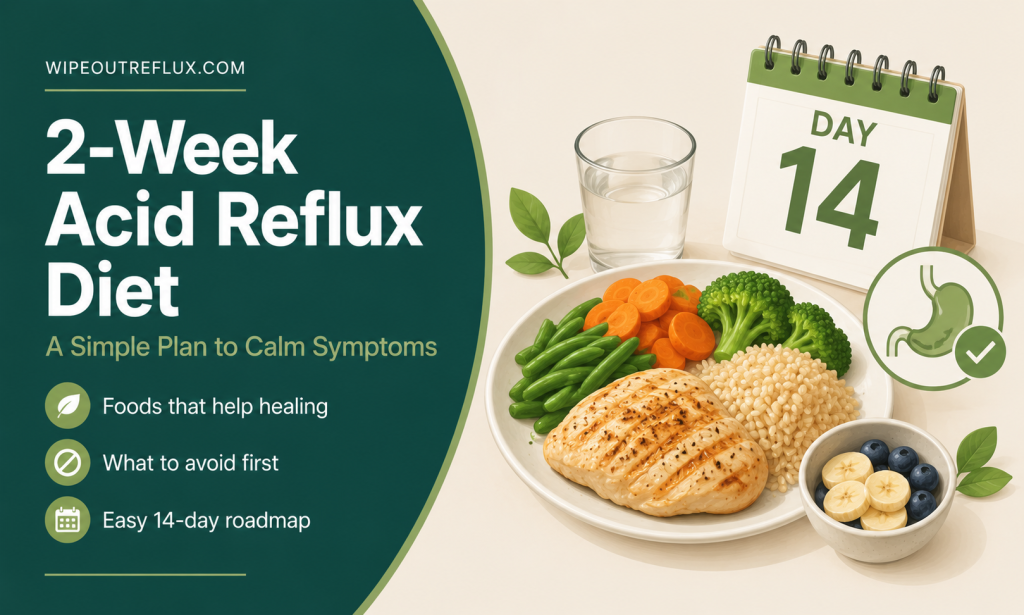
Two weeks of strict dietary elimination is often enough to establish whether food and drink choices are the primary driver of your reflux symptoms — and for most people who haven’t made deliberate dietary changes before, the improvement is significant. The goal isn’t detoxification in any mystical sense. It’s simpler and more evidence-based than that: removing the main dietary triggers gives your esophagus and, if you have LPR (silent reflux), your throat and laryngeal tissue a sustained window of reduced acid contact in which to begin recovering.
For many people, cutting the big triggers alone — carbonated drinks, citrus, fatty foods, alcohol, coffee — produces noticeable symptom relief within the first week. For others, particularly those with LPR, the improvement takes longer and requires stricter pH management across everything they eat and drink. And for some, detailed in the section at the end of this article, dietary change produces modest results despite genuine effort — because the cause is mechanical rather than dietary. Understanding which category you’re in by the end of 2 weeks is itself useful clinical information.
This article gives you the complete 2-week framework: what to eliminate, what to eat, how to structure the two weeks, what lifestyle changes amplify the results, and what to do when the 2 weeks are up.
Key Takeaways
- Two weeks of consistent dietary elimination removes the main inflammatory inputs to the esophagus and LPR-affected throat tissue, giving a meaningful window for symptom reduction and healing to begin.
- For GERD, the priority is protecting the LES — avoiding the fat, carbonation, alcohol, and overeating that cause the valve to relax and allow acid upward. For LPR, an additional pH floor applies: all food and drink should ideally sit at pH 5.0 or above to prevent pepsin reactivation in throat tissue.
- Carbonated drinks and citrus are the highest-priority eliminations. Both score 5/5 on reflux risk and most people see the clearest improvement when these are removed first.
- Meal timing matters as much as food choice. A clinical trial found that eating within 2 hours of bedtime increased pH-verified nighttime reflux significantly compared to eating 6 hours before bed — one of the most impactful behavioural changes in the 2-week plan.
- A plant-forward, whole-food dietary approach — the dietary pattern with the most evidence for reflux improvement — produced symptom relief in 62.6% of LPR patients in a published study, compared to 54.1% on PPIs over the same period.
- Honey appears in many reflux meal suggestions as a “natural” option. At pH 3.5–4.5, it sits far below safe levels for LPR and isn’t a neutral addition for active GERD. It has been removed from the meal plan in this updated version.
- If you eat healthily and exercise regularly but still have persistent reflux — particularly LPR — the cause is often mechanical (hiatal hernia, LES weakness, exercise-induced pressure) rather than dietary. Diet helps; but some cases require investigation beyond food change.
- Gluten and dairy intolerance adapt naturally to this diet. Most reflux-safe foods are already gluten-free; plant-based milks replace dairy without compromising the dietary framework.
What Actually Happens During 2 Weeks of Dietary Change
The 2-week timeframe is practical rather than arbitrary. When you remove the main dietary acid sources and LES-relaxing foods consistently, several things happen in parallel.
The esophageal lining, which may have been repeatedly contacted by acidic reflux, gets a lower-acid environment in which to reduce inflammation. It doesn’t regenerate in a clinical sense within 2 weeks, but symptomatic inflammation — the source of heartburn and chest discomfort — responds within days when its regular triggers are removed. Most people notice improvement in heartburn frequency and intensity within the first 5 to 7 days of strict elimination.
For LPR specifically, the throat and laryngeal tissue respond more slowly because pepsin that has adhered to mucosal surfaces remains there and continues to be reactivated by any food or drink below pH 5.0. The healing timeline for LPR symptoms — hoarseness, throat clearing, post-nasal drip sensation — is typically 4 to 8 weeks of consistent management, not 2. But 2 weeks of strict pH management establishes the trajectory and, for most people, produces measurable symptom reduction that confirms the dietary approach is working.
The elimination also creates a diagnostic baseline. At the end of 2 weeks, you know what your symptoms look like on a clean diet. That baseline makes reintroduction testing meaningful — you can systematically add individual foods back and observe what changes. Without the baseline, it’s impossible to isolate individual triggers.
Get the Free Weekend Reflux Diet Plan — Sent Straight to Your Inbox
The hardest part of starting a 2-week elimination isn’t knowing what to cut — it’s having the first few days actually mapped out so you’re not improvising at mealtimes when you’re tired and hungry. The free Weekend Reflux Diet Plan gives you a full Saturday and Sunday planned out meal by meal, using the same reflux-safe foods covered in this article. No hunting for ideas, no second-guessing whether something is on the list. You get it as soon as you join the Wipeout Reflux newsletter — sign up below and start this weekend.
GERD vs. LPR — The Same Framework, Different Emphasis
The 2-week elimination applies to both GERD and LPR, but the strictness and emphasis differ.
For GERD, the primary targets are the foods and habits that mechanically cause acid to reflux: anything that relaxes the LES (fat, alcohol, chocolate, mint, caffeine), anything that increases stomach volume and pressure (large meals, carbonation, lying down after eating), and anything that irritates already-inflamed esophageal tissue (citrus, tomato, vinegar, spicy food).
For LPR, an additional layer applies: the pH of everything you eat and drink. Pepsin deposited in throat tissue is reactivated by any contact below approximately pH 5.0. This means citrus, vinegar, carbonated drinks, and tomatoes are not just mildly problematic — they actively continue the pepsin-mediated damage even when stomach acid reflux itself is under control. The LPR version of this diet applies a more rigorous acid filter to everything consumed.
Foods to Eliminate — With Risk Scores
Higher scores (out of 5) indicate foods more likely to trigger or worsen reflux. I’ve kept the scoring system from the original version of this article because it’s a useful decision-making tool — it tells you where to direct the most effort.
Carbonated drinks (5/5) — The highest-priority elimination. Sodas and sparkling water introduce carbon dioxide into the stomach, which increases intragastric pressure and directly reduces LES competence. The acidity of most sodas (pH 2.5–3.5) compounds the damage for both GERD and LPR. Cut these entirely in week one.
Citrus fruits and juice (5/5) — Oranges, grapefruits, lemons, and limes sit between pH 2.0 and 3.5. They irritate esophageal tissue directly and reactivate pepsin in LPR-affected throat tissue. For the 2-week elimination, remove all citrus including as a garnish or dressing ingredient.
Alcohol (4/5) — Alcohol directly relaxes the LES, impairs its ability to close properly, and can independently irritate the esophageal lining. Beer and wine are particularly problematic, being both acidic and alcoholically LES-relaxing. Avoid entirely for 2 weeks.
Spicy foods (4/5) — Capsaicin slows gastric emptying and can independently irritate esophageal tissue. Spicy meals also stimulate acid secretion. This includes hot sauces, chili, and highly spiced dishes.
Processed and fried foods (3/5) — High fat content delays gastric emptying (more time for acid to pool), directly reduces LES pressure, and triggers transient LES relaxations more frequently than low-fat foods. Processed foods also typically contain preservatives, additives, and hidden acidic ingredients. Eliminate fried foods, fast food, fatty meats, and packaged snack foods.
Caffeine (3/5) — Caffeine relaxes the LES and stimulates gastric acid production through both direct and adenosine-receptor mechanisms. This applies to coffee (including decaf to a lesser degree), most teas, energy drinks, and cola beverages. For the 2-week elimination, reduce caffeine significantly — or eliminate it if your symptoms are severe.
Onions and garlic (3/5) — Raw onion and garlic are carminatives and fructans — they relax the LES and, for those with gut dysbiosis or SIBO, their fermentable content generates gas pressure that further compromises reflux defence. Cooked versions are somewhat better tolerated. Avoid raw; limit cooked versions.
Mint (3/5) — Peppermint is a potent LES relaxant. Avoid peppermint tea and mint-flavored products, including some chewing gums and sweets. Spearmint appears to be less problematic but worth avoiding during the 2-week elimination.
Premade condiments (3/5) — Ketchup, most salad dressings, mustard, hot sauces, and many sauces contain vinegar, citrus, tomato, or high sugar in some combination. These are often overlooked but are consistent triggers, particularly for LPR. Make dressings and sauces from scratch during the 2 weeks.
Fatty meats (3/5) — Red meat is acceptable in lean cuts, but high-fat meats (sausages, fatty cuts of beef and pork, deli meats) slow gastric emptying and relax the LES. Stick to chicken breast, turkey, fish, and very lean beef during the elimination phase.
Tomatoes and tomato products (2/5) — Tomatoes are acidic and contain compounds that relax the LES. Tomato sauce, ketchup, and concentrated tomato products amplify both effects. Fresh tomatoes in small amounts are less problematic, but for 2 weeks, avoid all tomato-based products to establish a clean baseline.
These are the core eliminations — but hundreds of individual foods sit in grey areas where the right answer depends on your specific condition and how active your symptoms are. If you want an instant pH-rated reference for anything you’re uncertain about before or during the 2 weeks, the Essential Reflux Food List covers 100+ foods and drinks with their pH values, reflux risk ratings, and GERD vs. LPR distinctions — built specifically as a daily-use reference alongside this kind of elimination plan. It tells you in seconds whether a food belongs in your plan right now.
What to Eat and Drink
The reflux-safe food list is generous enough to build varied, satisfying meals. The overall pattern that has the strongest research backing for reflux improvement is a plant-forward, whole-food approach — with the dietary evidence most relevant to LPR coming from a study comparing a 90% plant-based Mediterranean diet against PPI therapy in 184 LPR patients, which found dietary treatment produced symptom improvement in 62.6% of patients versus 54.1% on medication [Zalvan et al., JAMA Otolaryngology–Head & Neck Surgery, 2017].
Vegetables — Almost all are safe: broccoli, cauliflower, carrots, potatoes, sweet potatoes, courgette, cucumber, celery, fennel, asparagus, peas, green beans, leafy greens. The exception is raw onion and garlic at high doses. Cooked vegetables are generally better tolerated than raw during active symptom periods.
Fruits — Bananas, melons (watermelon, cantaloupe, honeydew), pears, apples (without skin for very sensitive individuals), and blueberries are the most consistently well-tolerated options. Avoid citrus, pineapple, and berries with high tartness.
Lean protein — Chicken breast, turkey breast, salmon, white fish (cod, haddock, sole), eggs, and tofu. Cook by baking, grilling, or steaming rather than frying. Very lean beef in small portions is tolerable for most people.
Carbohydrates — Oatmeal (particularly soothing for the esophageal lining), white or brown rice, pasta (whole grain is fine; watch the sauce), bread without excessive preservatives, and potatoes in any form (baked, boiled, mashed) are all reliably safe reflux foods.
Drinks — Water is the baseline and should be the primary drink throughout these 2 weeks. Alkaline water (pH 8.0 or above) provides additional buffering benefit, particularly for LPR. Chamomile and other herbal teas (not peppermint) are well-tolerated. Oat milk, almond milk, or unsweetened soy milk are all good alternatives to dairy. Limit or eliminate decaf coffee — it still stimulates gastric acid secretion, though less than regular coffee.
Soothing options — Oatmeal, marshmallow root tea, slippery elm, cucumber, and fennel are specifically soothing to inflamed mucosal tissue. Including these regularly during the 2 weeks actively supports the healing environment rather than merely reducing triggers.
Week 1 — Elimination and Adjustment
Week 1 is the hardest week, particularly if caffeine withdrawal is part of the picture. Focus on getting the big eliminations in place rather than achieving dietary perfection. The priority order is: remove carbonated drinks and alcohol first, then citrus, then fatty foods and fried items, then work through the rest of the list.
Breakfast ideas:
- Oatmeal with almond milk or oat milk, cinnamon, and sliced banana
- Banana and blueberry smoothie with unsweetened almond milk and a teaspoon of ground ginger
- Scrambled eggs on plain toast with a small amount of butter
- Plain Greek yogurt (if dairy is tolerated) with banana and oats
Lunch ideas:
- Grilled chicken breast with mixed greens, cucumber, and olive oil (no vinegar or lemon)
- Chicken stir-fry with rice, broccoli, and courgette — seasoned with ginger, cumin, and a small amount of soy sauce
- Baked salmon with sweet potato and steamed green beans
- Lentil soup (low-fat, no garlic or onion in excess) with plain bread
Dinner ideas:
- Baked cod with white rice and steamed broccoli and carrots
- Turkey breast with mashed potato (no butter if LPR is the concern; olive oil is fine) and asparagus
- Tofu and vegetable stir-fry with brown rice — seasoned with ginger and a small amount of soy sauce
- Lean beef meatballs with pasta and olive oil — no tomato sauce during Week 1
Snack ideas:
- Banana, melon chunks, or pear slices
- Plain rice cakes or oatcakes
- A small handful of almonds, cashews, or walnuts
- Cucumber slices with a small amount of plain hummus
Want Two Full Days of This Already Planned for You?
If reading through these meal ideas has you thinking “I just want someone to map the first two days out for me” — that’s exactly what the free Weekend Reflux Diet Plan does. Join the Wipeout Reflux newsletter and it comes straight to your inbox: a complete Saturday and Sunday of reflux-safe meals already sequenced, so you can start eating right this weekend without spending an hour planning it yourself. It’s the quickest way to turn intention into action.
Week 2 — Consolidation and Pattern Recognition
By Week 2, the elimination should feel less effortful and you should begin noticing genuine symptom patterns. Start paying active attention this week to the relationship between meal timing and overnight symptoms, between portion size and post-meal symptoms, and between specific foods and the few symptoms that remain.
If symptoms have improved noticeably, that’s confirmation the dietary triggers were significant drivers. If improvement is modest despite strict adherence, begin considering the lifestyle factors below — particularly meal timing, which often produces disproportionate results relative to its simplicity.
Keep the food list the same as Week 1. Resist the temptation to test trigger foods in Week 2 — that’s for after the 2 weeks, once you have a stable baseline. Introducing foods early contaminates the baseline you’re trying to establish.
Lifestyle Changes That Amplify the Diet
Meal timing — the most underestimated factor. A crossover RCT of 30 patients found that eating within 2 hours of bedtime increased pH-verified supine reflux significantly compared to eating 6 hours before bed (5.2 percentage point difference). Head-of-bed elevation reduced nocturnal acid exposure from 21% to 15% [Ness-Jensen et al., Clinical Gastroenterology and Hepatology, 2016]. Aim for at least 3 hours between your last meal or significant snack and lying down. Four to five hours is better if nighttime symptoms are prominent.
Portion size. Overeating is a direct reflux trigger regardless of what you eat. A stomach distended beyond comfortable capacity creates pressure on the LES from below. Eating to 70–80% fullness, particularly at dinner, reduces this pressure reliably. Three smaller meals with one or two small snacks typically works better than two large meals for reflux management.
Head of bed elevation. Raising the head of the bed by 15–20cm using bed risers (rather than extra pillows, which bend the body at the waist) keeps acid below the esophagogastric junction during sleep through gravity. It’s worth doing this during the 2-week trial if nighttime or morning symptoms are part of your picture.
Exercise timing. Vigorous exercise on a full stomach increases intra-abdominal pressure significantly and is a meaningful reflux driver in some people — particularly for LPR, where the pressure created by high-intensity running, heavy lifting, or inverted yoga positions can force gastric contents into the throat. Exercise on an empty stomach or at least 2 hours after eating wherever possible.
Eating slowly and without distraction. Eating rapidly causes air swallowing and faster gastric filling without proportionate satiety signalling. Taking longer over meals — at least 15–20 minutes for a main meal — reduces both bloating risk and overeating.
After 2 Weeks — Reintroduction and Next Steps
Once the 2-week elimination is complete and you have a clear symptom baseline, reintroduce foods one at a time. The standard approach is to add one new food every 2 to 3 days, observe whether symptoms change, and proceed accordingly. Start with the lower-risk items — cooked tomatoes, mild amounts of coffee, whole-fruit citrus — before working up to the higher-risk categories.
Keep a food and symptom diary during reintroduction. Memory is unreliable; written records are not. Note the food, the amount, the time of day relative to bed, and any symptoms that appear in the following 24 hours. This diary becomes a personalised trigger map for your specific pattern.
If you’re unsure which risk category a specific food falls into, the Essential Reflux Food List gives you a ranked, pH-rated breakdown of 100+ foods with separate GERD and LPR risk ratings — far faster than looking up foods individually. It’s designed as the reference you reach for whenever you’re deciding what to test next, and it takes the guesswork out of sequencing the reintroduction correctly.
For many people, the 2-week elimination reveals that 2 or 3 specific foods account for the majority of their symptoms. Continuing to avoid those while reintroducing others is a sustainable long-term approach. If you want a complete, structured long-term dietary framework beyond the initial 2-week period, the Wipeout Diet Plan covers this in full.
When Diet Alone Isn’t Enough — The Mechanical Causes
This section addresses a question I get asked often — usually by someone like the comment thread below, where a reader described eating a very healthy diet and exercising regularly but still experiencing persistent LPR. The dietary changes weren’t working because the cause was mechanical, not food-based.
When strict dietary change produces minimal results, the most common reasons are:
- Hiatal hernia — Part of the stomach herniates above the diaphragm, mechanically disrupting LES function independent of diet. A hiatal hernia can produce reflux regardless of what you eat.
- Intrinsically weak LES — Basal LES pressure that is chronically low produces ongoing transient relaxations that no dietary change can fully compensate for.
- Non-acid reflux — Some people reflux significant quantities of gastric contents (including pepsin) without the acid component being the primary driver. Standard pH testing misses this; 24-hour impedance/pH monitoring is required to identify it.
- Exercise-induced pressure — High-intensity training, particularly running and heavy resistance training, generates enough intra-abdominal pressure to overcome a borderline LES in some individuals. If LPR symptoms correlate with training intensity, this is worth examining.
- Stress and autonomic dysfunction — Chronic stress affects esophageal motility and acid secretion patterns. Symptoms that worsen predictably with psychological stress may need a combined dietary and stress management approach.
If you’ve followed this 2-week plan consistently and seen minimal improvement, the next step is investigation rather than further dietary restriction. A 24-hour impedance/pH test — which detects both acid and non-acid reflux events — is the gold standard for identifying the actual reflux pattern. From that result, a specialist can advise on whether medication, targeted intervention, or structural investigation (endoscopy, manometry) is the appropriate next step.
Adapting for Gluten and Dairy Intolerance
The reflux elimination diet is naturally compatible with both gluten-free and dairy-free eating — so much so that having these intolerances makes the dietary shift easier in some respects, not harder.
Most of the core reflux-safe foods are naturally gluten-free: rice, potatoes, oats (if certified gluten-free), vegetables, lean meats, fish, eggs, and legumes. For dairy: unsweetened almond milk, oat milk, or soy milk (protein isolate-based for SIBO concerns) are all well-tolerated reflux-safe replacements. Olive oil replaces butter in most cooking applications. Dairy-free also eliminates the lactose-fermentation and dairy-protein acid-rebound pathways that make dairy problematic for reflux in some individuals — making it a genuine win for digestive health, not a sacrifice.
Frequently Asked Questions
How quickly will I see results on the 2-week acid reflux diet?
Most people notice meaningful improvement in heartburn frequency and intensity within the first 5 to 7 days of strict elimination — particularly once carbonated drinks, citrus, and alcohol are removed. LPR symptoms (throat clearing, hoarseness) typically improve more slowly, with significant changes taking 4 to 6 weeks of consistent management. The 2-week diet establishes the trajectory; LPR healing continues beyond it.
Can I have coffee on the 2-week acid reflux diet?
Coffee — including decaf — is ideally avoided during the strict 2-week elimination. Regular coffee relaxes the LES and stimulates gastric acid secretion. Decaf does the same, though less powerfully. If eliminating coffee entirely is difficult, transitioning to one small cup of cold brew in the morning (lower titratable acidity than hot-brewed coffee) is a reasonable compromise. After 2 weeks, coffee can be tested during reintroduction to see whether it remains a personal trigger.
Is oatmeal good for acid reflux?
Yes — oatmeal is one of the best breakfast choices for reflux management. It’s low in fat, high in soluble fibre, has a neutral pH, and is specifically soothing to inflamed esophageal tissue. Prepare it with water or plant-based milk rather than dairy, and add banana or blueberries rather than citrus. Avoid the flavored instant varieties, which often contain added sugar and artificial flavoring.
What can I drink on the 2-week acid reflux diet?
Water is the foundation. Herbal teas (chamomile, ginger, marshmallow root, liquorice root) are good additions. Alkaline water (pH 8.0 or above) provides additional buffering benefit for LPR. Unsweetened almond milk, oat milk, and soy milk are all appropriate. Avoid carbonated drinks of any kind, citrus juices, alcohol, and regular coffee. Reduce or eliminate decaf during the 2 weeks if symptoms are severe.
Can I follow this diet if I’m on PPIs or other reflux medication?
Yes — and the combination of dietary change and medication often produces better results than either alone. The 2-week elimination removes the dietary triggers that PPIs don’t address (fatty foods that relax the LES, for instance), while medication helps control acid during the period when the esophagus is healing. Talk to your doctor before making changes to your medication based on symptom improvement.
Will this diet work for both GERD and LPR?
The framework applies to both, with stricter pH requirements for LPR. For GERD, the primary focus is the foods that cause acid to reflux (LES-relaxing foods, large meals, late eating). For LPR, the same priorities apply but with an additional filter: everything consumed should ideally sit at pH 5.0 or above, since pepsin deposited in throat tissue is reactivated by any acidic contact. LPR patients should be more rigorous about citrus, vinegar, and tomato elimination during the 2 weeks.
What should I do if I slip up during the 2 weeks?
Don’t restart the clock — continue from where you are. A single slip doesn’t invalidate the elimination period. Note what you ate and whether symptoms changed in the 24 hours following, which gives you useful information about that specific trigger. The goal of the 2 weeks is information and improvement, not perfection. Consistent 90% adherence produces meaningful results; waiting to restart until you can achieve 100% is a practical barrier to making any progress.
Conclusion
Two weeks of structured dietary elimination is the most effective first step I know of for establishing what role food and drink plays in your reflux pattern. For most people, it produces significant symptom improvement. For some — particularly those with mechanical causes — it clarifies that dietary change alone won’t be enough, which is equally useful information that points toward the next step.
The key elements: eliminate the big triggers consistently, pay as much attention to meal timing as to food choice, keep portions moderate, and finish eating at least 3 hours before bed. That combination — diet plus timing plus quantity — addresses more of the reflux equation than food composition alone.
If you want a structured long-term continuation beyond the initial 2 weeks, the Wipeout Diet Plan builds on this elimination framework with a complete phase-based approach to GERD and LPR dietary management. And if your symptoms persist despite consistent dietary effort, a private consultation can help identify whether a mechanical or non-dietary cause needs to be addressed.
Research Sources
[Zalvan et al., JAMA Otolaryngology–Head & Neck Surgery, 2017] — A retrospective cohort study of 184 patients comparing a 90% plant-based Mediterranean-style diet combined with alkaline water against standard PPI therapy for LPR found that the dietary approach produced a 6-point or greater reduction in Reflux Symptom Index in 62.6% of patients, compared to 54.1% in the PPI group. The authors concluded that a plant-based dietary approach with standard reflux precautions should be considered as a first-line or adjunctive treatment for LPR.
[Ness-Jensen et al., Clinical Gastroenterology and Hepatology, 2016] — A systematic review of lifestyle interventions for GERD including RCT evidence found that late evening meals (eaten 2 hours before bed) increased pH-verified supine reflux by a mean of 5.2 percentage points compared to early evening meals (eaten 6 hours before bed). Head-of-bed elevation reduced nocturnal acid exposure time from 21% to 15%. Weight loss was shown to reduce esophageal acid exposure time in two RCTs. The review concluded that avoiding late evening meals and elevating the head of bed are effective interventions for nocturnal GERD.

David Gray
12 years living with LPR · Consultant & researcher
I've lived with LPR for twelve years — the misdiagnoses, the PPI courses that did nothing, the slow work of figuring out what actually helps. Wipeout Reflux is where I translate the research into plain terms for people stuck in the same place. Every claim here is sourced to peer-reviewed work, and I consult one-to-one with LPR sufferers.
David,
I am gluten and dairy intolerant, does the diet have options that I can incorporate?
Sonya
Hi Sonya, yes 100% — the Wipeout-style diet is actually very easy to adapt for **gluten and dairy intolerance**.
Most of the reflux-friendly foods are naturally gluten-free anyway (rice, potatoes, oats *if certified GF*, quinoa, vegetables, lean meats, fish, eggs). For dairy, you can swap in things like **unsweetened almond milk or oat milk**, and use olive oil instead of butter.
If anything, being gluten/dairy free can make it *easier* to reduce inflammation and mucus, which is a big win for LPR.
Sounds interesting, David. But believe it or not, I already eat a very healthy diet like this, plus exercise vigorously….but I still have developed silent reflux. I admit, say, wine is a trigger. But even after cutting it out, the acid still comes. What to do, to find the root cause? Very confused at this point. thank you.
This is *very* common with LPR. A “healthy diet” doesn’t always stop reflux because the cause is often **mechanical**, not just food.
The usual root causes are: **hiatal hernia/weak LES**, **non-acid (pepsin) reflux**, **meal timing/portion size**, and even **vigorous exercise increasing abdominal pressure**. Stress can also worsen it by affecting digestion and throat muscle tension.
If you want the real root cause, the best test is a **24-hour impedance/pH test** (it detects non-acid reflux). Without that, you’re mostly guessing.
Hi David, You Helped Me years ago, before you had this amazing website! I am suffering again so I got on line looking for answers to immediately kill the pepsin that are eating at my throat near vocal chords and I have a burning and picky sire throat. It is so bad it keeps me awake and hurts all day as well. I was sipping baking soda to try and kill them. I am eating clean again as of today. I must say I had been cheating a lot on my diet, thinking I was healed. I need something to take away the sore throat. My sinuses and allergies have been really bad too and I notice it more when I’ve had sugar. I’m ready to heal. I will purchase your book! Thank you for helping so may people! I will pass your site on to many people who I know are suffering as the planet becomes much more toxic today! I have a question about a Natural Alcohol that is in a product that I just s started taking. This is my website for sharing it. I was curios if the alcohol in the spray is bad f or me. I would really appreciate your opinion on this. I muscle test well for it. They say it is an organic alcohol.https://www.purestblood.com/
Hi, I’m really sorry you’re going through that again. Honestly, the fact you improved before is a very good sign — it usually means your throat *can* heal again once the inflammation calms down.
When my symptoms were bad, the biggest things were getting very strict again with diet for a while, avoiding sugar completely, not eating late, and using things like alginates/alkaline water to calm the throat irritation.
As for the spray, even “natural” alcohol can still irritate a very inflamed throat in some people with active LPR. During a bad flare-up like this, I’d personally be cautious with anything alcohol-based until things settle.
Hope you start feeling relief again soon, and thank you so much for the kind words about the site.