
Ginger ale has a longstanding reputation as a stomach-soother. It’s the drink people reach for on aeroplanes, after surgery, during illness — and often, when acid reflux flares. The logic seems reasonable: ginger is genuinely good for digestion, so a ginger-flavoured drink must carry some of that benefit, right?
This is one of the most persistent myths in reflux management, and it’s worth correcting directly.
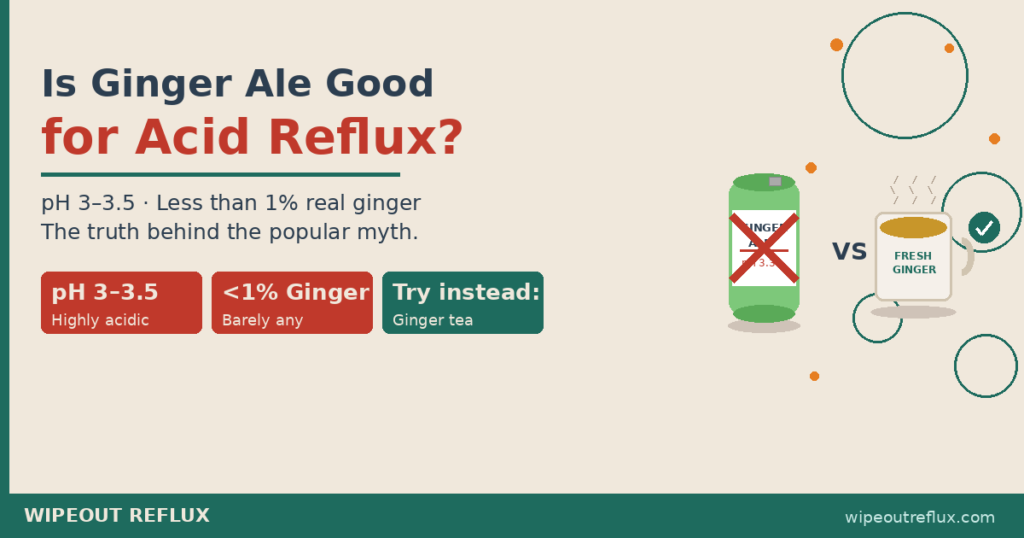
No, ginger ale is not good for acid reflux. Despite its name, commercial ginger ale contains almost no real ginger — typically less than 1% ginger extract — and far too little to produce any meaningful digestive benefit. What it does contain is a pH of around 3–3.5, significant carbonation, and 7–10 teaspoons of sugar per can. That combination actively worsens reflux for most people rather than helping it.
Key Takeaways
- Ginger ale’s pH sits at approximately 3–3.5, making it comparable in acidity to orange juice — well into the range that irritates the oesophagus and reactivates pepsin in LPR sufferers
- Commercial ginger ale (Canada Dry, Schweppes, Seagram’s) contains less than 1% ginger extract — not enough to produce any meaningful reflux benefit
- Carbonation increases transient lower oesophageal sphincter relaxations (tLESRs), directly allowing acid to reflux upward
- A 12oz can of ginger ale contains approximately 7–9 teaspoons of sugar, which contributes to delayed gastric emptying and gut fermentation
- The “ginger ale helps stomach problems” belief is largely a cultural myth transferred from actual medicinal ginger, not the soft drink
- Real ginger — as tea, fresh in cooking, or in low-dose supplement form — has documented gastroprotective and prokinetic effects
- If you want the benefits of ginger for acid reflux, ginger tea made with fresh root or a high-quality extract is the right approach
- Craft ginger ales with 1%+ real ginger content are less damaging but still problematic due to acidity and carbonation
The Ginger Problem: Why Ginger Ale Isn’t Actually Ginger
This is the foundational issue that most people never question. Ginger ale is named after ginger, but mass-market brands use vanishingly small quantities of actual ginger in their products.
Canada Dry, the world’s most recognised ginger ale brand, uses ginger extract — but at concentrations well below 1% of total product volume. Schweppes and Seagram’s are similar. The flavour of ginger is present, but the therapeutic compounds — gingerols and shogaols — that give real ginger its gastroprotective and motility-enhancing properties are present at doses far too low to matter.
Research on ginger’s genuine benefits for digestion is substantial. Ginger has been shown to accelerate gastric emptying and stimulate antral contractions, reducing the time during which acid can accumulate and reflux upward [Hu et al., Journal of Gastroenterology and Hepatology, 2011]. A comprehensive review of ginger’s gastroprotective effects found it beneficial for a range of gastric ailments including dyspepsia, bloating, gastritis, and nausea — effects driven by gingerols and shogaols acting on muscarinic and serotonergic receptors in the gut [Haniadka et al., Food & Function, 2013].
Those effects require meaningful concentrations of active compounds. A can of Canada Dry does not provide them. The benefit belongs to ginger the root, not ginger the flavour in a carbonated soft drink.
For a proper breakdown of what ginger does and doesn’t do for acid reflux, see my dedicated article on whether ginger is good for acid reflux.
Why Ginger Ale Actively Makes Reflux Worse
1. High Acidity
Ginger ale typically sits at a pH of 3–3.5 — driven primarily by citric acid used as an acidulant and flavouring agent. For context, lemon juice is around pH 2–2.5, orange juice around 3.5, and coffee around 4.5–5. Ginger ale sits in the same acidic tier as orange juice, which most reflux specialists and LPR researchers advise avoiding.
For GERD patients, introducing a drink at pH 3–3.5 to an already-irritated oesophagus is counterproductive. For LPR sufferers in particular, the citric acid content poses a specific additional risk: pepsin deposited in laryngeal and pharyngeal tissues from previous reflux events can be reactivated by any acidic exposure at or below pH 5 — and ginger ale is significantly below that threshold. Drinking ginger ale during an LPR flare actively triggers fresh tissue damage through this pepsin reactivation mechanism.
For more on how pepsin works and why LPR differs from GERD, see my complete guide to LPR. And for detail on why citric acid is specifically problematic, see my article on whether citric acid is bad for acid reflux.
2. Carbonation Weakens the LES
The carbonation in ginger ale is a direct mechanical problem for reflux, independent of its acidity.
A controlled manometry study found that ingesting a carbonated beverage more than doubled the frequency of transient lower oesophageal sphincter relaxations (tLESRs) and reduced basal LES pressure from a mean of 40.5 mmHg at baseline to just 18.5 mmHg — a reduction of more than 50% [Ravi et al., Indian Journal of Gastroenterology, 2012]. tLESRs are the primary mechanism by which reflux occurs — the LES briefly opens, allowing stomach contents to rise into the oesophagus.
A systematic review of carbonated beverages and GERD confirmed these findings: carbonation causes short-term drops in oesophageal pH and transient reductions in LES basal pressure [Johnson et al., Alimentary Pharmacology & Therapeutics, 2010]. The gas from carbonation also increases gastric distension and the urge to belch — and belching itself can carry acid upward into the oesophagus.
To understand more about LES function and why maintaining its pressure matters so much, see my article on the stomach sphincter and LPR.
3. High Sugar Content
A standard 12oz can of ginger ale contains approximately 32–36g of sugar — around 7–9 teaspoons. This is not a trivial amount in one sitting.
Excess sugar contributes to reflux in two ways. First, large sugar loads slow gastric emptying — the longer food and drink remain in the stomach, the more opportunity there is for acid reflux events. Second, sugar is fermented by gut bacteria, producing gas that builds pressure in the stomach and small intestine. That pressure, as with carbonation, pushes upward against the LES and increases the likelihood of reflux events.
A prospective cohort study of 167,574 UK Biobank participants found that sugar-sweetened beverage consumption above one serving per day was associated with a significantly higher risk of developing GERD compared to non-consumers [Liu et al., Nutrition Journal, 2025].
4. Additional Acidic Additives
Beyond citric acid, commercial ginger ale formulations typically include sodium benzoate (a preservative), natural flavours, and in some variants, high fructose corn syrup or artificial sweeteners. None of these are beneficial for reflux sufferers, and some — particularly citric acid used as an acidity regulator — compound the pH problem already discussed.
What About Craft or “Real” Ginger Ales?
There are higher-quality ginger ale products that contain meaningful quantities of real ginger — Reed’s Extra Strength, for example, contains around 26g of fresh ginger per bottle, and some craft brands list ginger root as a primary ingredient.
These are a different product from mass-market ginger ale and carry more of ginger’s genuine benefits. However, they still present the same core problems for reflux sufferers: they are carbonated, they are acidic (typically pH 3–4), and they contain significant sugar. A higher ginger content mitigates one of the three problems with ginger ale while leaving the other two intact.
For a reflux sufferer, even a craft ginger ale with real ginger remains a problematic choice during flares or for daily use. The better approach is to extract the ginger benefit through a medium that doesn’t bring acidity and carbonation along with it.
What to Drink Instead If You Have Acid Reflux
If you’re reaching for ginger ale because you want the ginger benefit — here’s how to get it without the downsides:
Fresh ginger tea: Slice or grate a small amount of fresh ginger root (around 5–10g) and steep in hot water for 5–10 minutes. This delivers meaningful gingerol and shogaol content without acidity, sugar, or carbonation. Allow it to cool slightly before drinking to avoid thermal irritation of the oesophagus. This is the best practical approach for most people.
Ginger in cooking: Incorporating fresh ginger into meals — soups, stir fries, broths — at low to moderate amounts provides digestive benefit without the reflux-triggering packaging of a fizzy drink.
Ginger supplement (low dose): At 1–1.5g daily, ginger extract in capsule form can provide prokinetic benefit for some reflux sufferers. Worth noting that doses above 4g daily can paradoxically worsen reflux in some people by stimulating acid secretion.
Chamomile tea: If your aim is simply to soothe digestive discomfort rather than specifically target the motility mechanism, chamomile tea is a better choice for reflux. It’s gentle, non-acidic, and has its own mild anti-inflammatory properties. For more, see my article on chamomile tea and acid reflux.
Alkaline water: For acute symptom relief, alkaline water at pH 8+ helps neutralise oesophageal acid and dilute pepsin. See my article on alkaline water and LPR.
For a full structured list of what to drink and avoid, the Wipeout Diet Plan covers beverages in detail.
Frequently Asked Questions
Does ginger ale make acid reflux worse?
For most people with GERD or LPR, yes. The combination of pH 3–3.5 acidity, carbonation that weakens the LES, and high sugar content creates conditions that worsen reflux rather than help it. Any temporary relief some people feel is more likely from the placebo effect or the brief distraction of drinking something cold, not from any genuine reflux-reducing mechanism.
Is Canada Dry ginger ale good for acid reflux?
No. Canada Dry contains negligible actual ginger — less than 1% ginger extract — and has the same acidity and carbonation problems as any other mass-market ginger ale. Its reputation as a stomach remedy is a cultural holdover, not a clinically supported claim.
Is ginger ale acidic?
Yes. Most ginger ale brands have a pH of approximately 3–3.5, placing them in the same acidic tier as orange juice. This is meaningfully problematic for both GERD and LPR sufferers.
Could ginger ale ever help acid reflux?
In theory, if someone has hypochlorhydria (insufficient stomach acid) rather than standard hyperacidity-driven reflux, a mildly acidic drink could assist digestion. But ginger ale is not a sensible vehicle for this — the carbonation, sugar, and additives create more problems than the acidity could solve. The condition also needs proper diagnosis rather than self-treatment with soft drinks.
Is ginger beer better than ginger ale for acid reflux?
No. Ginger beer typically contains more real ginger (which is a genuine advantage), but it’s also often more acidic and equally carbonated. The higher ginger content is its one advantage, but it doesn’t overcome the LES-weakening and acid-delivering effects of carbonation and low pH. Fresh ginger tea remains the correct approach if you want the genuine ginger benefit.
What drinks are actually good for acid reflux?
Alkaline water (pH 8+), chamomile tea, marshmallow root tea, and plain still water are consistently the safest choices. Fresh ginger tea in moderate amounts can help some people. Drinks to avoid include all carbonated sodas, coffee, alcohol, citrus juices, and most energy drinks.
Related Articles
- Is Ginger Good for Acid Reflux?
- Does Sprite Help Acid Reflux?
- Is Chamomile Tea Good for Acid Reflux?
- Alkaline Water and LPR
- Is Citric Acid Bad for Acid Reflux?
- The Complete Guide to LPR
- The Acid Reflux Ultimate Guide
Conclusion
Ginger ale’s reputation as a stomach remedy is one of the more stubborn myths in reflux management — and it’s one worth actively correcting. The drink that people reach for when their stomach is upset is almost entirely ginger in name only. What it actually delivers is a high-acidity, carbonated, sugar-loaded soft drink that mechanically weakens the LES, introduces pH 3–3.5 liquid to an already-irritated oesophagus, and provides none of the prokinetic or gastroprotective properties that make real ginger genuinely beneficial.
If you want ginger’s real benefits for acid reflux, make fresh ginger tea. It takes three minutes, contains meaningful active compounds, and comes without the acidity, carbonation, or sugar that make the canned version counterproductive.
Managing reflux well means knowing which popular beliefs are backed by evidence and which are cultural myths passed down uncritically. This is exactly the kind of detail-level clarity that the Wipeout Diet Plan is built around — not just what to eat and drink, but why specific choices help or hurt, and how to build a consistent approach that produces real improvement in both GERD and LPR over time. If you’re still navigating this through trial and error, it’s worth a look.
And for personalised guidance on your specific situation, I offer one-to-one consultations.
Research Sources
Ginger accelerates gastric emptying and stimulates antral contractions in healthy volunteers — effects that could benefit reflux sufferers by reducing the window for acid accumulation [Hu et al., Journal of Gastroenterology and Hepatology, 2011]. A review of ginger’s gastroprotective effects confirmed its value for gastric ailments including dyspepsia, bloating, and nausea, driven by gingerols and shogaols at therapeutic concentrations — not found in commercial ginger ale [Haniadka et al., Food & Function, 2013].
A controlled manometry study found carbonated beverage ingestion more than doubled the frequency of transient LES relaxations and reduced basal LES pressure by over 50%, directly creating conditions for reflux [Ravi et al., Indian Journal of Gastroenterology, 2012]. A systematic review confirmed that carbonated beverages cause short-term oesophageal pH drops and transient LES pressure reductions [Johnson et al., Alimentary Pharmacology & Therapeutics, 2010]. Higher sugar-sweetened beverage consumption was independently associated with increased GERD risk in a prospective cohort of 167,574 UK Biobank participants [Liu et al., Nutrition Journal, 2025].

David Gray
12 years living with LPR · Consultant & researcher
I've lived with LPR for twelve years — the misdiagnoses, the PPI courses that did nothing, the slow work of figuring out what actually helps. Wipeout Reflux is where I translate the research into plain terms for people stuck in the same place. Every claim here is sourced to peer-reviewed work, and I consult one-to-one with LPR sufferers.
Hi. An ENT I have says ginger ale is okay. But, it’s a soda…so I was wondering if that would be ok for me.
If you have only mild acid reflux it may be okay. If you have more severe acid reflux I would avoid it.