
If you’ve spent any time researching acid reflux treatments, you’ll have come across alginates — most commonly in the form of Gaviscon Advance. They’re recommended by GPs, prescribed by ENT specialists for LPR, used safely in pregnancy, and increasingly recognised in the research literature as something that does a job PPIs simply can’t. Yet most people using them have no idea what they actually are or why they work the way they do.
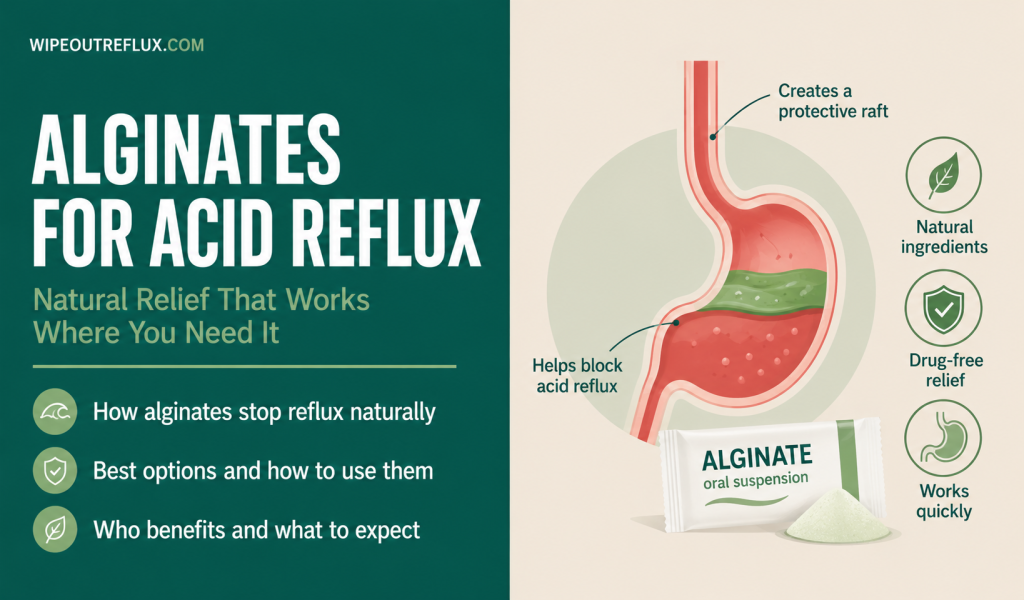
Alginates are naturally derived compounds extracted from brown seaweed. When they come into contact with stomach acid, they undergo a rapid chemical reaction that produces a gel — a physical raft that floats on top of stomach contents. That raft acts as a mechanical barrier between the stomach and the oesophagus, physically preventing reflux from reaching the throat and larynx. The mechanism is entirely physical and non-systemic: alginates don’t enter the bloodstream, don’t suppress acid production, and don’t interfere with normal digestive function.
That non-systemic mechanism is precisely what makes alginates so valuable — particularly for LPR (silent reflux), where the problem isn’t just acid but pepsin reaching the throat, and where the absence of systemic side effects means they’re safe for long-term use in a way that PPIs are not. Clinical research now shows alginates to be non-inferior to PPIs for both moderate GERD and LPR, with a fundamentally different and complementary mode of action.
Key Takeaways
- Alginates are derived from brown seaweed and work by forming a physical gel raft on top of stomach contents, preventing reflux from reaching the oesophagus and throat — a purely mechanical, non-systemic mechanism.
- The raft specifically targets the postprandial acid pocket — a reservoir of unbuffered acid that forms just below the gastro-oesophageal junction after meals and that PPIs have no effect on, because they reduce acid production but cannot prevent this pooling.
- A meta-analysis of 14 randomised controlled trials (2,095 patients) found alginate-based therapies were 4.42 times more likely to achieve GERD symptom resolution than placebo or antacids alone.
- In a direct head-to-head randomised trial, Gaviscon was non-inferior to omeprazole (20 mg/day) for achieving a 24-hour heartburn-free period in moderate GERD.
- For LPR specifically, magnesium alginate (Gastrotuss) was shown non-inferior to omeprazole over two months in reducing both symptom scores (RSI) and clinical findings (RFS) in a randomised controlled trial.
- Beyond the raft mechanism, alginates directly inhibit pepsin — reducing its proteolytic activity by up to 53.9% in vitro — and also scavenge bile acids from the refluxate. This makes them uniquely relevant for LPR, where pepsin reaching the throat is the primary damage mechanism.
- Alginates have also been shown in cell studies to preserve the oesophageal epithelial barrier against pepsin-mediated damage, inhibiting E-cadherin cleavage and matrix metalloproteinase induction — suggesting a protective role beyond physical barrier formation.
- Because alginates are non-systemic, they carry none of the long-term risks associated with PPIs (hypomagnesaemia, kidney disease risk, bone mineral density concerns, rebound acid hypersecretion) and are considered safe in pregnancy, for the elderly, and alongside other medications.
What Is an Alginate — and Where Does It Come From?
The word “alginate” refers to a family of naturally occurring polysaccharides (complex carbohydrates) derived from the cell walls of brown seaweed. The two most commonly used in reflux products are sodium alginate and potassium alginate — both extracted and purified from species of Phaeophyceae, the brown algae found in cold-water coastlines worldwide.
Chemically, alginates are composed of two types of uronic acid building blocks (mannuronic acid and guluronic acid) arranged in sequences that give different alginate samples different gel-forming properties. This structural variation explains why not all alginate products are equal — raft strength, gel viscosity, and duration of action vary depending on the specific alginate used, its concentration, and what other components it’s formulated with.
In their natural state, alginates are soluble in water. When they encounter the acidic environment of the stomach — typically pH 1.5 to 3.5 after a meal — they rapidly undergo a pH-dependent gelation reaction: the alginate chains cross-link to form a viscous, semi-rigid gel. This gel is buoyant and rises to float on top of the stomach contents, where it forms the raft that is the basis of the therapeutic effect. The entire process takes as little as 28 seconds from ingestion to visible raft formation.
Alginate-based reflux products have been available for decades — Gaviscon was first launched in the 1970s. But it’s only in the last ten to fifteen years that the research has fully characterised their mechanism, demonstrated their effect on the acid pocket, identified their role in pepsin inhibition, and produced rigorous head-to-head trials against PPIs. They’re no longer just a pharmacy staple — they’re a clinically validated treatment with a mechanism that addresses aspects of reflux that acid-suppressive therapy cannot.
How the Alginate Raft Works: The Mechanism in Detail
Understanding the raft mechanism requires a brief look at what happens physically during a reflux event — and what the raft does to interrupt it.
After a meal, stomach contents include food, water, and gastric secretions — including hydrochloric acid and pepsin. The gastro-oesophageal junction (GOJ) — the point where the oesophagus meets the stomach — is normally kept closed by the lower oesophageal sphincter (LES). When the LES relaxes transiently (which is a normal physiological event, but one that happens too frequently or at the wrong time in GERD), the stomach contents closest to the GOJ are the first to move upward.
This is where the acid pocket becomes critical. The acid pocket is a layer of highly acidic, unbuffered gastric secretion that accumulates in the proximal (upper) stomach just below the GOJ after meals. Food and the alkaline saliva swallowed with it dilute and buffer the acid in the body of the stomach — but the pocket above sits in an area that doesn’t get this buffering. It’s essentially a reservoir of concentrated, undiluted acid sitting right at the doorway to the oesophagus, ready to be the first thing that enters the oesophagus when the LES relaxes.
When an alginate suspension is taken — ideally within a few minutes of finishing a meal — it flows into this environment and reacts with the acid present. The alginate rapidly precipitates into a gel that rises to float above the stomach contents. The raft now occupies the space between the GOJ and the acid pocket, positioning itself as a physical barrier.
When transient LES relaxations occur, the raft — rather than acid — is what refluxes into the oesophagus first. It acts as a physical “dummy,” refluxing in lieu of the highly acidic contents below it. Research using both MRI imaging (which can directly visualise the raft in situ) and pH-impedance monitoring (which measures actual acid exposure in the oesophagus) has confirmed that alginate rafts displace the acid pocket away from the GOJ and significantly reduce both the number and acidity of reflux events after meals.
The Acid Pocket: The Problem PPIs Can’t Solve
The acid pocket is fundamental to understanding why alginates do something that PPIs — even at full dose — simply cannot replicate.
PPIs work by irreversibly blocking the proton pumps in the stomach lining that produce acid. They are highly effective at this — reducing acid output by 80–95% at therapeutic doses. But they reduce acid production systemically, across the whole stomach. They do not and cannot prevent the localised accumulation of the acid pocket after meals.
The acid pocket forms because saliva and food — which buffer the stomach’s acid contents — are not uniformly mixed. The body of the stomach after a meal has a significantly higher pH than the pocket above, which contains fresh, unbuffered secretion from the gastric mucosa closest to the GOJ. Even in patients on full-dose PPIs, a postprandial acid pocket still forms and still represents the main source of acid reflux episodes in the post-meal period. This is one of the key reasons why PPIs control acid exposure time reasonably well but don’t always eliminate symptoms — the pocket persists, and transient LES relaxations continue to bring its contents into the oesophagus.
Alginates directly address this gap. By forming a raft that physically sits above the pocket and displaces it distally (pushing it away from the GOJ), they target precisely the acid reservoir that PPIs leave unaddressed. This is the mechanistic basis for why alginates and PPIs are genuinely complementary rather than alternatives — PPIs reduce the overall acid environment, and alginates address the residual pocketed acid that PPIs can’t reach.
This is also why alginates are particularly effective as add-on therapy for people whose symptoms persist despite being on PPIs. It’s not that the PPIs aren’t working — it’s that the acid pocket problem remains unsolved. More on this below.
Alginates and Pepsin: Particularly Important for LPR
The raft mechanism is the headline story, but the pepsin interaction may actually be the most clinically important aspect of alginate therapy for people with LPR (silent reflux) — and it’s the aspect least covered in most accounts of how alginates work.
In LPR, the primary damaging agent reaching the throat and larynx isn’t acid alone — it’s pepsin. Pepsin is the digestive enzyme that breaks down protein, produced in the stomach and activated at low pH. When pepsin reaches the throat via reflux, it doesn’t just pass through harmlessly. It can be taken up by laryngeal cells, remains active or reactivatable at even mildly acidic pH (below 6.5), and continues to cause inflammatory damage to tissue that has no protective mechanisms equivalent to those of the oesophageal lining.
Alginates have been shown to directly interact with and inhibit pepsin through two mechanisms. First, in vitro research demonstrated that alginates reduce pepsin enzymatic activity by up to 53.9% — with the degree of inhibition related to the mannuronic acid content of the specific alginate used. The mechanism involves pH-dependent ionic interactions between the negatively charged alginate and pepsin at acidic pH, reducing the availability of substrate to the enzyme. Second, Gaviscon Advance (potassium alginate-based) has been shown in laboratory studies to specifically remove both pepsin and bile acids from solution — sequestering them within the raft structure rather than allowing them to reach the oesophageal or laryngeal mucosa.
More recently, cell-based research has gone further, showing that alginate-based medications preserve the integrity of the oesophageal epithelial barrier during pepsin-acid exposure by a mechanism that was previously unclear. The 2023 study by Samuels et al. found that both Gaviscon Advance and Gaviscon Double Action rescued cells from pepsin-induced E-cadherin cleavage and prevented the downstream induction of matrix metalloproteinases — proteins that degrade tissue and are implicated in the progression of reflux-related oesophageal damage. Even a brief residual coating of alginate on the cell surface after washing conferred lasting protection.
This cellular-level protection from pepsin is why alginates are increasingly positioned as a first-line treatment for LPR rather than just an adjunct to PPIs — they’re directly targeting the primary damage mechanism in that condition in a way that acid suppression cannot.
If you’re managing LPR and want to understand more about how pepsin causes throat damage and why it’s so much harder to treat than standard GERD, the guide to neutralising pepsin in the throat covers this in detail.
How Alginates Compare to PPIs: What the Evidence Shows
The evidence base for alginates has historically been thinner than for PPIs — partly because alginate products are classified as medical devices or over-the-counter medicines in many countries rather than prescription drugs, which reduces the commercial incentive for large-scale trials. But the research landscape has improved substantially, and the current picture is nuanced and clinically useful.
The Meta-Analysis (2017)
The largest systematic review of alginate therapy for GERD analysed 14 randomised controlled trials covering 2,095 patients. Compared to placebo or antacids alone, alginate-based therapies increased the odds of GERD symptom resolution by a factor of 4.42 (OR 4.42; 95% CI 2.45–7.97). This is a large and statistically robust effect. Compared directly to PPIs or H2 blockers, alginates appeared somewhat less effective, but the difference was not statistically significant — suggesting that for symptomatic relief in the general GERD population, alginates are a genuinely effective alternative rather than a distant second.
The GOOD Trial: Gaviscon vs Omeprazole (2012)
The first double-blind, double-dummy randomised controlled trial directly comparing an alginate (Gaviscon, 4 × 10 mL/day) to a PPI (omeprazole 20 mg/day) in 278 patients with moderate GERD found Gaviscon non-inferior to omeprazole in achieving the first 24-hour heartburn-free period. Secondary outcomes — proportion without heartburn at day 7, pain relief at day 7, and reduction in pain intensity at days 7 and 14 — were similar between groups. This was a practice-changing result: for moderate, non-erosive GERD, an alginate performs as well as a PPI in achieving symptom relief.
Alginate for LPR vs PPIs (2022)
A non-inferiority randomised controlled trial specifically in LPR patients randomised 50 people to either magnesium alginate (Gastrotuss, 20 mL three times daily) or omeprazole (20 mg once daily) for two months. Both the Reflux Symptom Index (RSI) and Reflux Finding Score (RFS) — the standard validated measures of LPR severity — fell significantly from baseline in both groups. The difference between groups was not significant on either measure (RSI: 95% CI –4.2 to 6.7, p = 0.639; RFS: 95% CI –0.8 to 1.4, p = 0.608), confirming non-inferiority of alginate to PPI therapy for LPR. This study provides the strongest direct evidence that alginates are a legitimate alternative to PPIs for LPR, not just an add-on.
Alginate Plus PPI vs PPI Alone
A meta-analysis of four randomised controlled trials (608 patients) comparing combined PPI plus alginate to PPI alone found improved efficacy with the combination, without any significant increase in adverse events. Individual studies have also shown that adding alginate to PPIs in patients with PPI-breakthrough symptoms reduces those breakthrough reflux events — confirming the complementary mechanism and the practical value of combination therapy in difficult-to-control reflux.
Alginates for LPR (Silent Reflux): A Particularly Strong Fit
LPR has a different profile from classic GERD in ways that make alginates particularly well suited as a treatment — sometimes more so than PPIs.
In standard GERD, acid is the dominant aggressor, and reducing acid with PPIs produces dramatic symptomatic improvement in most patients. In LPR, the picture is more complex. Acid exposure time in the oesophagus may be normal or only mildly elevated. The throat damage is often driven primarily by pepsin rather than acid alone, and pepsin activity can persist even in a less acidic environment. This is why PPI trials in LPR have been consistently disappointing — multiple systematic reviews and meta-analyses have found PPIs no better than placebo for throat symptoms in LPR, particularly hoarseness, chronic cough, and globus sensation.
Alginates, by contrast, address the reflux event physically rather than chemically. The raft doesn’t care whether the refluxate is acidic or weakly acidic — it prevents stomach contents from reaching the throat regardless. And the direct pepsin-inhibitory and sequestration effects mean that even if some reflux does occur, the pepsin available to cause damage has been substantially reduced. This is a genuinely different therapeutic footprint from PPIs, and it aligns far better with what we know about LPR pathophysiology.
The practical evidence supports this: Gaviscon Advance was shown in one prospective study of 100 LPR patients to produce significant improvements in RSI scores at three months — with patients treated with Gaviscon Advance alone performing similarly to those who also received a PPI, suggesting the alginate is doing most of the meaningful therapeutic work in this condition.
For anyone managing LPR, alginates — particularly Gaviscon Advance — should be a cornerstone of treatment, not an afterthought. The full evidence base and practical guidance for Gaviscon Advance specifically is covered in the dedicated Gaviscon Advance guide.
Alginates as Add-On Therapy: When PPIs Alone Aren’t Working
One of the most practically important use cases for alginates is as an add-on to PPIs in patients whose symptoms persist despite acid suppression — a scenario that’s far more common than most people realise.
Only about one third of patients on standard-dose PPI therapy achieve adequate symptom control. The reasons are multiple: the acid pocket persists despite reduced acid production; weakly acidic or non-acidic reflux continues (PPIs reduce acid but don’t stop the physical act of reflux); pepsin remains active even at higher pH; and bile acids can contribute to oesophageal irritation independently of acid.
Alginates address several of these simultaneously. By adding an alginate to existing PPI therapy, the residual acid pocket is targeted, the physical frequency of reflux events is reduced through the raft barrier, and pepsin exposure is inhibited — producing meaningful additional symptom relief without any additional pharmacological load on the system.
This is a clinically recognised strategy: guidelines in several countries now recommend adding an alginate-based product for patients with PPI-breakthrough symptoms, and the research supports this in practice. The 2025 non-inferiority trial comparing generic alginate to branded Gaviscon Dual Action as add-on therapy in PPI-refractory GERD patients found both produced similar, significant improvements in heartburn, chest pain, and regurgitation at 28 days — confirming that the therapeutic effect is a property of the alginate class, not just specific branded formulations.
If you’re on PPIs and still experiencing breakthrough symptoms, particularly regurgitation, nighttime reflux, or the throat symptoms of LPR, adding an alginate — taken 20–30 minutes after meals and at bedtime — is a well-evidenced next step. For more context on why PPIs may not be fully resolving your symptoms, the article on why acid reflux medication stops working covers the mechanisms behind PPI limitation in detail.
Types of Alginate Products: How They Differ and What to Look For
Not all alginate products are the same, and the differences matter both in terms of raft quality and in terms of additional components that may or may not be appropriate for your situation.
Gaviscon Advance (UK)
Gaviscon Advance contains potassium alginate and calcium carbonate. It produces a strong raft without the sodium bicarbonate used in standard Gaviscon formulations, which means it generates no carbon dioxide gas (relevant for those who find gas worsens their bloating or belching), has a lower sodium content (relevant for those monitoring sodium intake), and tends to produce a more cohesive raft. It is the formulation most consistently used and recommended in LPR research and clinical practice. The dedicated guide to Gaviscon Advance covers its use and dosing in full.
Gaviscon Double Action / Gaviscon Original (UK)
Standard Gaviscon formulations contain sodium alginate with both calcium carbonate and sodium bicarbonate. The sodium bicarbonate reacts with stomach acid to produce carbon dioxide, which helps the raft float but also contributes gas to the stomach. The raft tends to be somewhat lighter and less durable than Gaviscon Advance. These products are still effective for heartburn but are generally considered a step below Gaviscon Advance for LPR management specifically.
Gastrotuss and Other Magnesium Alginate Products
Gastrotuss and similar products use magnesium alginate as the active ingredient. These have been studied in the LPR-specific randomised controlled trial (Pizzorni et al. 2022) described above. The magnesium-based formulations may be better tolerated by those sensitive to potassium or calcium-containing products.
What to Look For When Choosing
Key things to consider when evaluating alginate products:
- Alginate concentration: Higher alginate content generally produces a stronger, more durable raft — check the product information and compare
- Sodium content: Important for anyone on a sodium-restricted diet; Gaviscon Advance has substantially lower sodium than standard Gaviscon
- Whether sodium bicarbonate is included: Produces gas; may worsen bloating or burping if this is already a problem
- Form — liquid vs tablet: Liquid suspensions generally form a more effective raft than chewable tablets, as the liquid distributes more evenly over the stomach surface; tablets are more convenient for on-the-go use but may be somewhat less effective
- Country and availability: Gaviscon formulations vary significantly between countries — the UK Gaviscon Advance is not the same product as US Gaviscon, which uses a different formulation with lower alginate concentrations
How to Take Alginates for Best Effect
The timing and method of taking alginates is directly relevant to how well they work. The raft forms in response to the acidic stomach environment, so the conditions need to be right.
Take within 20–30 minutes after a meal, not before. The raft needs stomach acid to form — taking alginates on an empty stomach provides insufficient acid for effective raft formation, and the resulting gel may pass through too quickly without forming an effective barrier. Post-meal acid levels are optimal for raft formation.
Take a dose before bed. This is the most important dose for LPR and for nocturnal reflux. When you lie down, the raft covers the gastro-oesophageal junction, and gravity is no longer assisting drainage. A bedtime dose — taken upright and then lying down on your left side after a few minutes — maintains protection through the highest-risk period of the 24-hour cycle. This is a specific recommendation supported by the pregnancy research as well as general reflux management guidelines.
Remain upright for a few minutes after taking. This allows the raft to form and settle before you change position. Lying down immediately after swallowing reduces raft formation efficiency.
For GERD: typically 4 times per day — after each main meal and at bedtime. This is the dosing schedule used in the clinical trials.
For LPR: the same schedule applies, with the bedtime dose being particularly important given the frequency of nocturnal LPR events.
Don’t take simultaneously with PPIs. PPIs are best taken 30–60 minutes before a meal. Taking alginate after the meal creates no conflict. In fact, sequencing is important: PPI before meal, alginate after meal.
For acute symptomatic relief during a flare, alginates begin working almost immediately after ingestion — within minutes — because the raft forms rapidly and the mechanical barrier is in place as soon as the gel is established. This is a significant advantage over PPIs, which require 3–5 days of daily dosing before reaching full therapeutic effect.
Safety Profile: Are Alginates Safe for Long-Term Use?
This is one of the strongest arguments for alginates — particularly compared to the long-term side effect profile of PPIs.
Because alginates act entirely within the gastrointestinal lumen and are not absorbed into the bloodstream, they carry essentially no systemic risk. There is no equivalent of the PPI concerns around hypomagnesaemia, C. difficile risk, kidney disease association, bone density effects, or rebound acid hypersecretion after stopping. The alginate passes through the gastrointestinal tract without absorption and is eliminated normally.
The main practical considerations for specific populations:
- Sodium intake: Standard Gaviscon formulations contain significant sodium (the sodium bicarbonate component). Gaviscon Advance contains substantially less. Those on sodium-restricted diets should use low-sodium formulations and discuss with their doctor
- Calcium intake: Calcium carbonate in alginate formulations contributes to dietary calcium — generally benign but worth noting for those monitoring calcium intake or with hypercalcaemia
- Interactions with medications: Alginates can delay the absorption of some medications if taken simultaneously. To avoid any impact, take other medications at least 2 hours before or after alginates
- Pregnancy: Alginates are well established as safe in pregnancy and are recommended as first-choice medication intervention (after lifestyle measures) in published guidelines — the evidence from pregnancy studies is covered in the reflux in pregnancy guide
- Children: Age-appropriate alginate formulations exist for paediatric use; dosing differs from adult formulations
Long-term use of alginates has not been associated with any significant adverse effects in the research literature. This is a meaningful distinction from PPIs, where the risk-benefit calculation becomes progressively less favourable over years of continuous use.
Frequently Asked Questions
What do alginates do for acid reflux?
Alginates react with stomach acid to form a viscous gel raft that floats on top of stomach contents, physically blocking acid and pepsin from entering the oesophagus during reflux events. They also directly inhibit pepsin enzymatic activity and scavenge pepsin and bile acids from the refluxate. The mechanism is entirely physical and non-systemic — no acid production is suppressed and the alginate is not absorbed into the bloodstream.
Are alginates better than PPIs for acid reflux?
For moderate, non-erosive GERD, alginates have been shown non-inferior to PPIs for symptom relief in randomised trials. For LPR specifically, there is a strong mechanistic case for alginates being a better primary treatment than PPIs, which have consistently failed to outperform placebo for throat symptoms in LPR trials. The two are genuinely complementary: PPIs reduce the acidity of the refluxate while alginates physically prevent reflux events and directly target pepsin. For erosive oesophagitis, PPIs remain the first-line standard; alginates work best as add-on or for non-erosive presentations.
When is the best time to take alginates?
Within 20–30 minutes after each meal, and at bedtime. The post-meal timing is important because the raft needs stomach acid to form — taking alginates before eating or on an empty stomach is less effective. The bedtime dose is particularly important for nighttime and LPR symptoms, as lying down removes gravitational protection and the raft covers the gastro-oesophageal junction throughout the night.
What is the difference between Gaviscon and Gaviscon Advance?
Gaviscon Advance (UK) uses potassium alginate and calcium carbonate — no sodium bicarbonate — producing a stronger raft with less gas, lower sodium content, and better applicability for LPR. Standard Gaviscon uses sodium alginate with both calcium carbonate and sodium bicarbonate; the bicarbonate produces carbon dioxide that helps the raft float but adds gas to the stomach. For LPR and anyone monitoring sodium intake, Gaviscon Advance is the preferred formulation.
Can alginates be taken with PPIs?
Yes — and for many people, combination therapy is more effective than either alone. Take the PPI 30–60 minutes before a meal as normal; take the alginate 20–30 minutes after eating. The two don’t interact with each other therapeutically and address different aspects of reflux — the PPI reduces acid production, the alginate prevents reflux events and addresses the residual acid pocket. Research supports the combination for PPI-breakthrough GERD symptoms.
How quickly do alginates work?
Very quickly — raft formation begins within seconds of the alginate reaching the stomach, with studies showing visible rafts forming within 28 seconds of administration. This means symptom relief begins almost immediately after dosing. This is a major practical advantage over PPIs, which take 3–5 days of daily dosing before reaching full acid-suppressive effect.
Are alginates safe to take every day long-term?
Yes. Because alginates are not absorbed into the bloodstream and act entirely within the gastrointestinal lumen, they carry no systemic risks and no long-term concerns equivalent to those associated with PPIs. They are considered safe in pregnancy, for the elderly, and alongside other medications — with the practical caveat that they should be taken at least 2 hours apart from other drugs to avoid any absorption delay.
Conclusion
Alginates occupy a genuinely unique position in reflux management. They work through a completely different mechanism from every other reflux treatment — physical rather than pharmacological — and that non-systemic mechanism gives them advantages that become more significant the longer you look at them. No systemic side effects. Immediate onset of action. A specific effect on the acid pocket that PPIs can’t replicate. Direct pepsin inhibition that matters specifically for LPR. And a safety profile that makes them viable for long-term use in a way that PPIs, with their accumulating evidence of systemic concerns, increasingly are not.
For GERD, the evidence supports alginates as an effective alternative to PPIs in moderate disease, and as a valuable add-on when PPIs alone aren’t producing adequate symptom control. For LPR specifically, the mechanistic fit is even stronger — targeting the physical reflux event and the pepsin it carries in a way that acid suppression simply doesn’t.
The dietary foundation matters too. Alginates work best when paired with the dietary changes that reduce the frequency and severity of reflux events in the first place — giving the raft less work to do and reducing the acid pocket’s size and acidity before the alginate even forms. The LPR diet guide and the Wipeout Diet Plan cover that structured dietary approach in full — a framework that combines diet, lifestyle, and evidence-based treatment into a coherent strategy for long-term management. For quick, practical reference on the pH values and reflux potential of specific foods and drinks, the Wipeout Food Reference Guide is the companion to have alongside — so you’re building the dietary side with the same rigour that the alginate brings to the mechanical one.
Research Sources
[__Leiman et al., Diseases of the Esophagus, 2017__] — Systematic review and meta-analysis of 14 randomised controlled trials (2,095 patients); alginate-based therapies produced 4.42-fold higher odds of GERD symptom resolution versus placebo or antacids (OR 4.42; 95% CI 2.45–7.97); comparison to PPIs showed alginates somewhat less effective but the difference was not statistically significant; established the evidence base for alginate therapy for symptomatic GERD.
[__Pouchain et al. (GOOD Trial), BMC Gastroenterology, 2012__] — First double-blind, double-dummy randomised non-inferiority trial directly comparing Gaviscon (4 × 10 mL/day) vs omeprazole (20 mg/day) in 278 patients with moderate episodic GERD; Gaviscon was non-inferior to omeprazole in achieving the first 24-hour heartburn-free period; comparable secondary outcomes at day 7 and day 14; established alginate as a clinically legitimate alternative to PPI in moderate non-erosive GERD.
[__Pizzorni et al., European Archives of Oto-Rhino-Laryngology, 2022__] — Non-inferiority randomised controlled trial of 50 LPR patients comparing magnesium alginate (Gastrotuss, 20 mL three times daily) vs omeprazole (20 mg once daily) for 2 months; both RSI and RFS fell significantly in both groups; between-group differences were not significant on either measure (p = 0.639 and p = 0.608 respectively); first RCT to establish alginate non-inferiority to PPI specifically for LPR treatment.
[__Wilkie et al., Food Hydrocolloids, 2016__] — In vitro investigation confirming alginates function as selective protease inhibitors; alginate reduced pepsin activity by up to 53.9% (±9.5 SD); strong positive correlation between mannuronate residue frequency and pepsin inhibition; limited inhibition of trypsin, confirming selectivity; demonstrated mechanism of pH-dependent ionic interactions reducing substrate availability to pepsin at acidic pH.
[__Samuels et al., Clinical and Translational Gastroenterology, 2023__] — Cell study demonstrating that alginate medications (Gaviscon Advance and Gaviscon Double Action) protect oesophageal cells from pepsin-mediated E-cadherin proteolysis and downstream MMP induction; confirmed a novel regulated intramembrane proteolysis mechanism of peptic injury; showed lasting protection even after alginate washout, supporting topical protective role beyond the physical raft barrier.
[__Samuels et al., The Laryngoscope, 2022__] — Laboratory study demonstrating that Gaviscon Advance and Gaviscon Double Action preserved aerodigestive epithelial barrier function during pepsin-acid insult significantly better than placebo; supported topical protection as a therapeutic approach specifically for GERD and LPR; contributed to the mechanistic rationale for alginate use in LPR beyond the raft barrier mechanism.
[__Srisakulsuk et al., Scientific Reports, 2025__] — Multicentre prospective randomised non-inferiority trial of 48 PPI-refractory GERD patients; generic alginate (ONE GERD) therapeutically equivalent to branded Gaviscon Dual Action Suspension as add-on to standard-dose PPI; similar significant improvements in heartburn, chest pain, and regurgitation in both groups at days 7 and 28; confirmed alginate add-on therapy as effective for PPI-breakthrough GERD and that therapeutic equivalence exists across alginate formulations.
[__Goldis et al. (GENYAL Trial), Nutrients, 2025__] — Randomised controlled trial comparing magnesium alginate + omeprazole vs omeprazole alone in GERD patients with Grade A reflux oesophagitis confirmed by endoscopy; demonstrated significantly greater symptom resolution and improved endoscopic findings in the combination arm; confirmed the complementary mechanism of alginate addition to PPI therapy for both symptomatic and mucosal outcomes.
[__Lechien et al., Journal of Personalized Medicine, 2025__] — Multicenter randomised controlled trial evaluating dietary modifications vs mucosal protectants (alginate-based) vs both combined in 48 LPR patients; results support mucosal protectants as an effective treatment component for LPR independent of acid suppression; confirmed dietary modification combined with mucosal protection as a viable PPI-alternative strategy for LPR management.
[__Srisakulsuk et al., Nature Scientific Reports, 2025__] — Supporting citation for the pharmacological complementarity of alginate therapy in PPI-refractory GERD; first multicenter RCT to investigate generic vs original alginate in this specific patient population; underscored that the acid pocket — unaddressed by PPI therapy — represents the key target of alginate-based add-on treatment in patients with persistent breakthrough symptoms.

David Gray
12 years living with LPR · Consultant & researcher
I've lived with LPR for twelve years — the misdiagnoses, the PPI courses that did nothing, the slow work of figuring out what actually helps. Wipeout Reflux is where I translate the research into plain terms for people stuck in the same place. Every claim here is sourced to peer-reviewed work, and I consult one-to-one with LPR sufferers.