
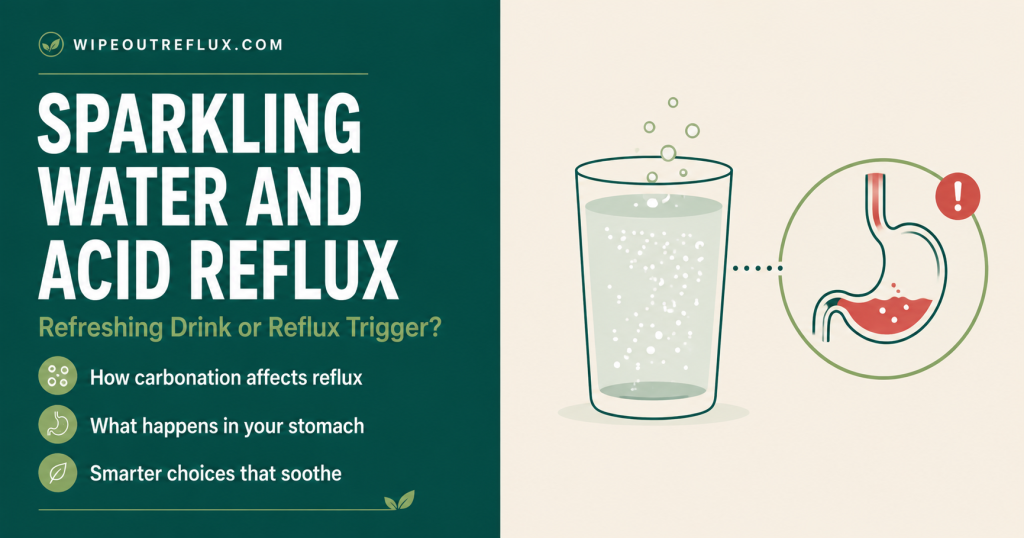
Here’s the honest answer: for most people with acid reflux, plain sparkling water is unlikely to be a real problem. Despite its fizzy reputation, research hasn’t consistently shown that carbonated drinks cause or worsen reflux — and there’s no solid evidence they directly damage the oesophagus or drive GERD. It’s far more nuanced than the flat “avoid all fizzy drinks” advice you’ll read elsewhere.
That said, it’s not a free pass either. Carbonation can aggravate symptoms in some people through two specific mechanisms, and if you have silent reflux (LPR), there are a couple of extra reasons to be a bit more careful. The key is understanding why, so you can work out whether sparkling water bothers you personally.
Let me walk you through exactly what the evidence says, the two real mechanisms at play, and how to enjoy sparkling water sensibly if it agrees with you.
Key Takeaways
- Plain sparkling water is not clearly “bad” for acid reflux — research hasn’t consistently linked carbonated drinks to causing or worsening GERD.
- Two mechanisms can still aggravate symptoms: the bubbles raise pressure in the stomach, and the carbonic acid makes it mildly acidic.
- Plain, unflavoured, unsweetened sparkling water is the safest choice; flavoured, citrus, and sugary versions are worse.
- It varies enormously person to person — the only reliable test is your own response.
- For silent reflux (LPR), there are two extra considerations: acid contacting already-damaged throat tissue, and carbonation-driven belching that can trigger reflux.
- Smaller amounts, sipping slowly, skipping straws, and letting some fizz escape all reduce the risk.
Is Carbonated Water Bad for Acid Reflux? What the Research Actually Says
This is where the popular advice and the actual science part ways. Cutting out carbonated drinks is routinely recommended to reflux patients — but when researchers looked closely, the evidence didn’t really back up the blanket warning.
A systematic review examining carbonated beverages and reflux found that they cause only a very short dip in oesophageal pH and may briefly reduce lower-oesophageal-sphincter pressure — but there was no evidence they directly damage the oesophagus, and they have not been consistently shown to cause GERD symptoms. The authors concluded there’s no direct evidence that carbonated beverages promote or worsen GERD (Johnson et al., Alimentary Pharmacology & Therapeutics, 2010).
So the idea that sparkling water is inherently reflux-triggering is more myth than established fact. The honest position is that it can aggravate symptoms in some individuals, but it isn’t a universal villain. That’s a much more useful starting point than fear — and it fits the bigger picture of working out which drinks genuinely suit you, which I cover in my guide to what to drink for acid reflux.
Can Sparkling Water Cause Heartburn? The Two Real Mechanisms
To self-assess sensibly, it helps to know exactly how carbonation could cause trouble. There are two mechanisms, and they’re worth understanding separately.
1. The bubbles increase pressure inside the stomach
When you drink something fizzy, the carbon dioxide expands in your stomach and increases the pressure inside it. In someone already prone to reflux — particularly with a weak or relaxed lower oesophageal sphincter — that extra pressure can help push stomach contents upward. The same systematic review noted carbonated drinks can transiently lower the pressure of that sphincter, which is the valve meant to keep acid down. If your reflux is driven by a sphincter problem, this is the mechanism most likely to matter for you, and it’s worth understanding how that valve works in my article on the lower oesophageal sphincter and LPR.
2. The carbonic acid makes it mildly acidic
Carbonation works by dissolving CO2 into water, which forms carbonic acid. That’s what gives sparkling water its slight tang — and it means it sits at roughly pH 3.5–4, making it mildly acidic. Important context, though: that’s far less acidic than cola, citrus juices, or energy drinks, which often sit closer to pH 2.5 because of added phosphoric and citric acids. So plain sparkling water is acidic, but gently so. In a randomised crossover study, carbonated cola increased feelings of fullness, heartburn, and belching compared with flat cola and water — yet it did not raise salivary pepsin, suggesting the symptoms weren’t from more gastric juice actually reaching the throat (Lim & Brownlee, Gastrointestinal Disorders, 2019).
Fizzy Drinks and Acid Reflux: Why Flavoured and Sugary Versions Are Worse
This is the distinction most pages miss. Lumping all fizzy drinks together is a mistake, because the carbonation is usually the least problematic ingredient. What tends to cause far more trouble is everything else added to commercial fizzy drinks:
- Added acids — citric, phosphoric, and “natural flavour” acids drag the pH down well below plain sparkling water.
- Sugar — high sugar loads can slow stomach emptying, keeping contents (and pressure) around longer.
- Caffeine — found in colas and energy drinks, and a recognised reflux aggravator for many people.
- Citrus flavourings — lemon, lime, and orange variants add acidity that plain sparkling water doesn’t have.
This is why I’ve looked at specific fizzy drinks individually rather than tarring them all with one brush — for example, whether Sprite helps or hurts reflux, how ginger ale stacks up, and where tonic water lands. The pattern is consistent: it’s the additives, not the bubbles alone, that usually do the damage. Plain sparkling water sidesteps almost all of it.
Soda Water, Seltzer, Club Soda: Do the Different Types Matter?
People search for these by name, and there are small differences worth knowing:
- Seltzer — plain water with added CO2. Nothing else. This is the cleanest option for reflux.
- Soda water / club soda — carbonated water with added minerals like sodium bicarbonate or potassium. The bicarbonate can make club soda slightly less acidic than plain seltzer, which some people find gentler — though the added sodium is worth noting if you watch your salt intake.
- Flavoured sparkling waters — usually fine if they’re genuinely just water and natural flavour with no citric acid or sweeteners. Always check the label, because “flavoured” often smuggles in added acids.
The practical takeaway: the plainer and more unflavoured, the better. Once you’re choosing between unsweetened seltzer and club soda, you’re splitting hairs — pick whichever your body prefers.
Sparkling Water and Silent Reflux (LPR): Why I’m More Cautious
Here’s where my advice diverges from the typical GERD take, because silent reflux behaves differently. If you have LPR, I’d lean toward limiting sparkling water more than a standard heartburn sufferer would — for two reasons almost no competing page raises.
The acidity matters more for already-damaged tissue
In LPR, refluxed acid and pepsin reach the throat and voice box, which are far more delicate than the oesophagus and often already inflamed. When acidic liquid passes over tissue that’s already irritated, even the mild acidity of carbonic acid is worth respecting. There’s also the pepsin angle: pepsin clinging to throat tissue can be reactivated by an acidic environment, so repeatedly bathing the throat in any acidic drink isn’t ideal. I explain that mechanism in detail in my guide to neutralizing pepsin in the throat. If you’re not sure whether your symptoms are LPR, my overview of silent reflux symptoms is a good place to start.
Carbonation drives belching — and belching can trigger reflux
This is the subtler point. Fizzy drinks make you belch, and belching isn’t always harmless. Research using pH-impedance monitoring found that in people with reflux symptoms, a large share of supragastric belches (the kind where air is sucked into the gullet and expelled) occurred in close association with reflux episodes — and frequently immediately preceded them, suggesting the belch itself can elicit a reflux event (Hemmink et al., American Journal of Gastroenterology, 2009). For LPR specifically, that’s a meaningful extra reason to moderate carbonation — you can read more about that air-and-reflux dynamic in my article on reflux, saliva and belching.
None of this means sparkling water is off-limits for LPR. It means the verdict is “more reason to limit it than a typical GERD sufferer,” rather than a flat ban.
How to Drink Sparkling Water Without Triggering Reflux
If sparkling water agrees with you, here’s how to keep it that way:
- Choose plain, unflavoured, unsweetened — this removes the added acids, sugar, and caffeine that cause most of the trouble.
- Drink smaller amounts — a large volume of fizz means more gas and more stomach pressure at once.
- Don’t sip it all day — constant carbonation keeps drip-feeding gas and mild acid; have it with a meal or in a single sitting instead.
- Skip the straw — straws make you swallow extra air, adding to belching and pressure.
- Let some fizz escape — pouring it and letting it sit for a few minutes, or giving it a gentle stir, knocks out some CO2 while keeping the taste.
- Avoid it close to bedtime — lying down with a gas-filled, mildly acidic stomach is asking for trouble.
- Test and observe — try it on a calm-symptom day and note your response. Your own body is the most reliable evidence there is.
Frequently Asked Questions
Is sparkling water bad for acid reflux?
For most people, plain sparkling water isn’t clearly bad. Research hasn’t consistently shown carbonated drinks cause or worsen reflux. It can aggravate symptoms in some individuals through stomach pressure and mild acidity, so it comes down to your personal response.
Can sparkling water cause heartburn?
It can in some people. The bubbles raise pressure inside the stomach, which may push acid upward if you’re already prone to reflux, and the carbonic acid makes it mildly acidic. But it’s far less acidic than cola or citrus drinks.
Is sparkling water worse than soda for reflux?
No — plain sparkling water is generally much gentler than soda. Sodas add citric or phosphoric acid, sugar, and often caffeine, all of which aggravate reflux more than carbonation alone. The additives are usually the real problem.
Is sparkling water OK for silent reflux (LPR)?
It can be, but I’d be more cautious with LPR. The mild acidity contacts already-sensitive throat tissue and can interact with pepsin, and carbonation-driven belching may trigger reflux. Plain versions in small amounts, not sipped all day, are the safest approach.
Which is best for reflux: seltzer, soda water, or club soda?
All are fine if unflavoured and unsweetened. Club soda’s added bicarbonate can make it slightly less acidic, which some people prefer, though it adds sodium. Plain seltzer is the cleanest. Avoid flavoured versions with added citric acid.
Does letting sparkling water go flat help?
It can. Letting some carbonation escape reduces the gas that raises stomach pressure and triggers belching, while keeping most of the taste. It’s a simple way to enjoy the flavour with less risk.
Conclusion
If there’s one thing I’d want you to take from this, it’s that sparkling water doesn’t deserve its blanket bad reputation. The research simply doesn’t support the idea that plain carbonated water causes or worsens reflux for most people. It can nudge symptoms in some individuals through stomach pressure and mild acidity — and for silent reflux there’s a stronger case for moderation because of sensitive throat tissue and belching-triggered reflux — but a flat “never touch fizzy water” rule isn’t honest. Plain, unflavoured, unsweetened, in sensible amounts, is the safe lane. The flavoured, citrus, and sugary versions are where the real trouble lives.
The deeper point is that individual drinks matter far less than your overall pattern of eating and drinking. Sparkling water won’t make or break your reflux; the foundation you build around it will. That’s exactly why I created the Wipeout Diet Plan — it’s the in-depth, step-by-step system for calming reflux through diet and lifestyle, going far beyond any single drink or food. If you want to understand how all the pieces fit together for silent reflux in particular, my complete guide to LPR ties it together.
And for quick, everyday decisions about which drinks and foods are reflux-friendly and where they sit on the pH scale, keep the Wipeout Food Reference Guide close to hand — it’s the essential companion for shopping and choosing on the spot. Use the guide for in-the-moment calls, and the Wipeout Diet Plan when you’re ready to tackle the root of the problem properly.
References
- A systematic review found carbonated beverages cause only a brief decline in oesophageal pH and a transient reduction in lower-oesophageal-sphincter pressure, with no evidence of direct oesophageal damage and no consistent link to GERD symptoms or complications (Johnson et al., Alimentary Pharmacology & Therapeutics, 2010).
- In a randomised crossover study, carbonated cola increased fullness, heartburn, and belching compared with flat cola and water, but did not raise salivary pepsin levels (Lim & Brownlee, Gastrointestinal Disorders, 2019).
- Using pH-impedance monitoring, supragastric belches occurred more often in patients with reflux symptoms and were frequently associated with — and often immediately preceded — reflux episodes, suggesting belching can elicit reflux (Hemmink et al., American Journal of Gastroenterology, 2009).

David Gray
12 years living with LPR · Consultant & researcher
I've lived with LPR for twelve years — the misdiagnoses, the PPI courses that did nothing, the slow work of figuring out what actually helps. Wipeout Reflux is where I translate the research into plain terms for people stuck in the same place. Every claim here is sourced to peer-reviewed work, and I consult one-to-one with LPR sufferers.