
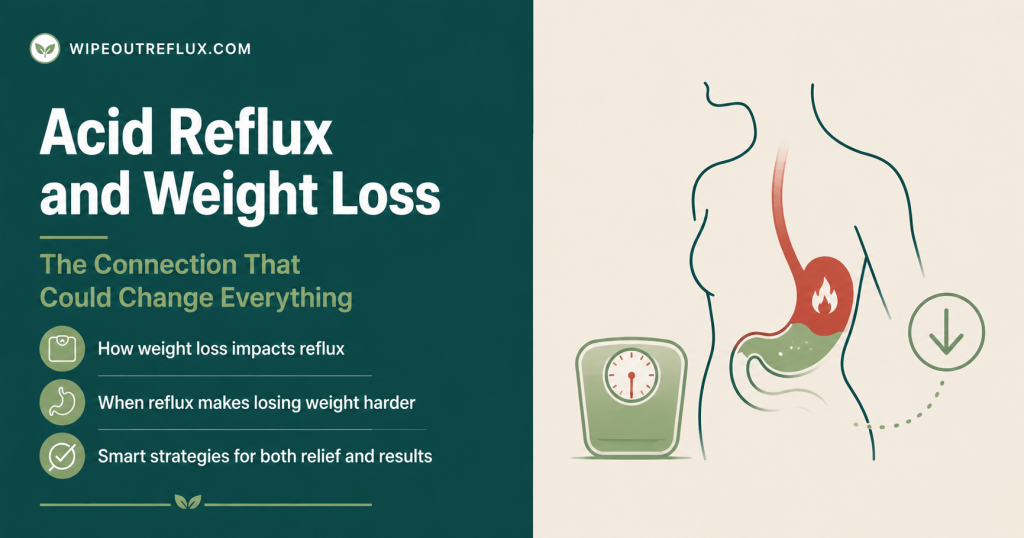
The relationship between acid reflux and weight loss runs in two distinct directions — and understanding both is important whether you’re trying to manage your symptoms or figure out why your weight is changing.
First, carrying excess weight — particularly around the abdomen — is one of the most well-established causes of acid reflux and GERD. The pressure it creates on your stomach directly drives reflux. Second, losing weight is one of the most effective lifestyle interventions for reducing or even eliminating reflux symptoms. Clinical studies show that structured weight loss can lead to complete resolution of GERD in the majority of overweight patients.
But there’s a third angle too: chronic acid reflux can itself cause unintentional weight loss. When eating repeatedly triggers discomfort, nausea, or pain, people naturally start eating less — sometimes far less than they should. If that’s happening to you, it’s worth understanding why and when it becomes a concern that needs medical attention.
Key Takeaways
- Excess abdominal weight is a major driver of acid reflux — it increases stomach pressure and triggers more frequent lower esophageal sphincter relaxations.
- Losing weight is among the most effective non-drug interventions for GERD — and it works for LPR (silent reflux) too.
- A prospective study of 332 patients found that 81% had improved GERD symptoms and 65% had complete resolution after structured weight loss.
- A weight loss target of at least 10% of body weight is recommended to meaningfully reduce reflux symptoms and potentially reduce PPI dependency.
- Waist circumference is a stronger predictor of reflux severity than BMI alone — abdominal fat is the key driver.
- Chronic acid reflux can also cause unintentional weight loss by suppressing appetite, triggering nausea, and making eating painful.
- Unexplained weight loss alongside acid reflux warrants medical investigation, as it can sometimes signal a more serious underlying condition.
- The foods that drive weight gain often overlap with the foods that worsen reflux — making a reflux-friendly diet a two-for-one approach.
The Two-Way Link Between Acid Reflux and Weight
Most people know that being overweight can contribute to acid reflux, but the relationship is more dynamic than a simple one-way arrow. Weight drives reflux, reflux can drive weight changes, and the foods that cause weight gain often directly worsen reflux symptoms. Understanding all three directions gives you a much clearer picture of how to approach both problems at once.
The encouraging takeaway is that weight management sits at the intersection of both problems. Addressing it doesn’t just help your waistline — it can fundamentally change the frequency and severity of your reflux, and in many cases reduce your need for medication.
How Excess Weight Causes and Worsens Acid Reflux
The primary mechanism is straightforward: excess weight — particularly visceral fat stored around the abdomen — increases intra-abdominal pressure. That pressure pushes upward against the stomach, elevating the gastroesophageal pressure gradient that drives reflux upward into the esophagus. The lower esophageal sphincter (LES) — the valve that separates the stomach from the esophagus — then has to work against that increased pressure with every meal. When it can’t, stomach contents escape upward.
Research makes this remarkably clear at a mechanical level. A study using esophageal manometry and pH monitoring found that obese subjects had dramatically more transient LES relaxations (TLOSRs) in the two hours after eating compared to people of normal weight — 7.3 per hour in obese participants versus 2.1 per hour in those with normal BMI. The proportion of those relaxations that resulted in actual acid reflux was also far higher: 63.5% in obese participants versus 17.6% in normal-weight subjects [Wu et al., Gastroenterology, 2007].
Waist circumference tells the story more precisely than BMI alone. It’s abdominal or visceral fat — not subcutaneous fat on the hips and thighs — that drives intra-abdominal pressure. A meta-analysis found that being overweight (BMI 25–30) was associated with significantly higher odds of GERD symptoms (OR 1.43), while obesity (BMI above 30) pushed those odds even higher (OR 1.94) [Festi et al., World Journal of Gastroenterology, 2009].
Beyond the mechanical pressure, visceral fat is metabolically active tissue. It generates inflammatory cytokines — including interleukin-6 and tumour necrosis factor-alpha — that may contribute to esophageal inflammation and increased susceptibility to reflux-induced damage [Anggiansah et al., World Journal of Gastroenterology, 2013]. The damage isn’t purely mechanical — it’s partly biochemical too.
Excess weight is also strongly associated with hiatal hernia, where part of the stomach pushes through the diaphragm into the chest cavity. This further weakens the LES barrier and makes both GERD and LPR significantly harder to control.
Does Losing Weight Actually Help Acid Reflux?
Yes — and the evidence is compelling. This isn’t just theoretical; there are well-designed clinical trials showing meaningful and in many cases complete resolution of reflux symptoms with weight loss.
The most cited is a prospective intervention trial by Singh et al. that enrolled 332 overweight and obese subjects with confirmed GERD in a structured weight loss programme. At six months, 97% of participants had lost weight (average 13kg), and the overall prevalence of GERD dropped from 37% to 15%. Critically, 81% of subjects had a meaningful reduction in GERD symptom scores, and 65% had complete symptom resolution [Singh et al., Obesity, 2013].
A separate comparative study confirmed that losing at least 10% of body weight not only reduced reflux symptoms significantly, but enabled many patients to either halve or entirely discontinue their PPI medication. In the weight-loss group, 27 out of 50 patients were able to stop taking PPIs completely, compared to none in the non-weight-loss group [Nadaleto et al., Digestive Diseases and Sciences, 2015]. The researchers concluded that a loss of at least 10% of body weight should be recommended to all GERD patients.
A randomised clinical trial published in 2022 found that individualised dietary intervention leading to weight loss produced a mean symptom improvement of 6.8 points on the validated GERD health-related quality of life scale, while the control group actually worsened by 3.3 points over the same period [Faria et al., Obesity Surgery, 2022].
If you’ve been relying on medication without seeing the results you hoped for, the acid reflux medication not working guide covers why lifestyle changes — including weight management — are often the missing piece.
How Much Weight Do You Need to Lose?
The evidence points to a 10% reduction in body weight as the clinically meaningful threshold for GERD improvement. This is the level at which studies consistently show significant reductions in reflux frequency, symptom scores, and medication requirements.
For context, if you weigh 85kg, that’s 8.5kg. If you weigh 100kg, it’s 10kg. These are achievable targets — particularly when dietary changes for weight loss happen to overlap significantly with dietary changes for reflux management.
Equally important is where the weight comes from. Since abdominal fat is the mechanical driver of reflux, reductions in waist circumference may produce disproportionate benefits even from modest total weight loss. A 2cm reduction in waist circumference corresponds to a meaningful drop in intra-abdominal pressure and gastroesophageal pressure gradient. Prioritising approaches that reduce visceral fat — reducing refined carbohydrates, processed foods, and alcohol — tends to shift weight from the abdomen more effectively than generically cutting calories.
It’s also worth noting that even modest early weight loss can produce measurable symptom improvement. You don’t have to wait until you’ve hit a target to notice results — many people find reflux frequency begins to drop within the first few weeks of consistent dietary changes.
Can Acid Reflux Cause Weight Loss?
Yes — and this is the direction of the relationship that tends to get less attention, but it’s clinically significant.
When acid reflux becomes chronic and poorly controlled, it can directly affect how much and what you eat. The mechanisms are fairly intuitive: eating triggers discomfort, so the brain starts to associate food with pain. Over time, appetite suppresses, meal sizes shrink, and people avoid an expanding list of foods. The result is a gradual, unintentional reduction in calorie intake — and with it, weight loss.
Specific symptoms that drive this include:
- Nausea — particularly common in LPR, where reflux reaching the upper airway activates the vagal reflex. Persistent nausea is a powerful appetite suppressant. My article on silent reflux and nausea covers this in detail.
- Dysphagia — difficulty or pain when swallowing, caused by chronic esophageal irritation. When swallowing becomes uncomfortable, people naturally eat less and gravitate toward soft foods that may not provide adequate nutrition.
- Post-meal discomfort — burning, bloating, or regurgitation after eating trains the brain to avoid meals, eat smaller portions, or skip food entirely.
- Food restriction anxiety — people with LPR and GERD sometimes develop an increasingly restrictive relationship with food as they try to identify and avoid triggers, sometimes cutting out entire food groups unnecessarily.
This pattern of reflux-driven weight loss is distinct from the beneficial intentional weight loss discussed above. It’s not improving your reflux — it’s a consequence of it being inadequately managed.
When Is Unintentional Weight Loss a Warning Sign?
Unintentional weight loss alongside acid reflux symptoms always warrants medical attention. While the cause is often the appetite and eating disruption described above, it can sometimes signal a more serious underlying issue that needs investigation.
The most important concern is esophageal cancer or its precursor, Barrett’s esophagus — a condition where the esophageal lining changes in response to chronic acid exposure. Barrett’s affects a subset of people with long-standing GERD, and esophageal cancer, while relatively uncommon, is associated with chronic reflux and is more treatable when caught early.
Seek prompt medical review if you experience:
- Unexplained weight loss of more than 2–3kg over a few weeks without trying
- Progressive difficulty swallowing — particularly if solids are becoming harder to manage than liquids
- Persistent vomiting or regurgitation that isn’t improving with treatment
- Blood in vomit or stools, or very dark/tar-like stools
- Significant chest pain that doesn’t respond to antacids
- Reflux symptoms that started or worsened suddenly after a long stable period
These aren’t reasons to panic — most people with reflux and some weight change are not dealing with anything sinister. But they are reasons to get checked rather than waiting.
How to Lose Weight Safely When You Have Acid Reflux
The good news is that a reflux-friendly diet and a weight-loss-friendly diet overlap substantially. Both tend to emphasise whole foods, lean proteins, and vegetables while reducing processed foods, saturated fat, refined carbohydrates, and alcohol. You don’t need two separate plans.
Dietary Priorities
A lower-fat, lower-acid eating pattern is the foundation. High-fat foods are problematic on both fronts — they delay gastric emptying (keeping food in the stomach longer and increasing reflux risk) and are calorie-dense. Processed and refined foods drive visceral fat accumulation disproportionately, which is the specific fat most closely linked to reflux severity.
Focus on:
- Lean proteins: chicken, turkey, white fish, eggs
- Complex carbohydrates: oats, brown rice, wholegrain bread, sweet potato
- Non-acidic vegetables: broccoli, cauliflower, courgette, green beans, leafy greens
- Low-acid fruits: bananas, melon, pears
- Healthy fats in moderation: avocado, olive oil — both better tolerated than saturated fats
For a comprehensive breakdown of safe foods, the LPR foods to eat guide and the LPR foods to avoid list are good starting references. The LPR diet overview covers the broader dietary framework.
Meal Timing and Portion Size
Meal size directly affects reflux risk. Larger meals increase gastric pressure and the volume of contents available to reflux. Eating smaller, more frequent meals — three moderate meals with one or two small snacks — is better for both weight management and reflux control than two or three large sittings.
The three-hour rule matters: avoid eating within three hours of lying down. Late-night eating is particularly problematic for reflux, and the calorie surplus it creates also tends to contribute to visceral fat accumulation. You can read more in my article on acid reflux at night.
Exercise
Regular aerobic exercise is highly effective at reducing visceral fat specifically — more so than resistance training alone. Walking, cycling, swimming, and low-impact cardio are all well-tolerated by most reflux sufferers. High-impact activities like running, heavy weightlifting, or exercises that involve bending and lying flat can worsen reflux in some people, particularly in the period after eating.
The timing of exercise matters. Exercising on a full or nearly full stomach significantly increases reflux risk. Allow at least two hours after a main meal before exercising, and avoid a large pre-workout meal.
What to Drink
Alcohol, carbonated drinks, and high-acid juices all worsen reflux and contribute to weight gain or abdominal bloating. Replacing these with water, herbal teas, and low-acid drinks removes a significant source of both reflux triggers and empty calories. My acid reflux drinks guide covers what’s safe in more detail.
Is Fasting or Keto Worth Trying?
Both intermittent fasting and ketogenic diets can be effective for weight loss and may offer some reflux benefits — partly through weight reduction itself and partly through reduced meal frequency and different food choices. I’ve written dedicated articles on both: fasting for acid reflux and keto and acid reflux. Both require some individual adjustment for reflux sufferers, but neither is off the table.
Frequently Asked Questions
Can losing weight cure acid reflux?
In people where excess weight is a primary driver of their reflux, significant weight loss can lead to complete resolution of symptoms — as demonstrated in clinical trials. That said, “cure” is a strong word: reflux has multiple contributing factors, and weight is one of them. People with structural issues like a hiatal hernia, or non-obese people whose reflux is driven by other factors, may not see the same level of improvement from weight loss alone.
How much weight do I need to lose to improve acid reflux?
The research consistently points to 10% of total body weight as the threshold where meaningful, measurable improvements occur — including reduction or discontinuation of PPI medication. Smaller amounts of weight loss can still produce some benefit, particularly if they’re accompanied by dietary improvements that also address reflux triggers directly.
Does acid reflux cause weight loss?
It can, particularly when symptoms are severe or poorly managed. Nausea, painful swallowing, post-meal discomfort, and food avoidance can collectively suppress calorie intake enough to produce unintentional weight loss. This type of weight loss isn’t beneficial — it’s a sign that reflux needs better treatment rather than a positive development.
Is being thin protective against acid reflux?
Not automatically. While excess weight — particularly abdominal fat — is a major risk factor, plenty of lean people develop GERD and LPR. In lean individuals, reflux is more likely driven by dietary triggers, sphincter dysfunction, stress, or anatomical factors like a hiatal hernia. Weight is one risk factor among several, not the whole story.
Does the type of diet matter, or just the calories?
Both matter, but diet composition has specific relevance for reflux beyond calories. High-fat foods delay gastric emptying and relax the LES. Acidic and spicy foods directly irritate the esophageal and laryngeal lining. A low-calorie diet that’s still high in fatty, processed, or acidic foods may produce weight loss without the full reflux benefit. The most effective approach addresses both calorie balance and food quality together.
Will exercise help acid reflux?
Regular aerobic exercise is beneficial — it reduces visceral fat, improves gastric motility, and supports healthy weight management. The key caveats are timing (avoid exercise immediately after eating) and intensity (high-impact, bending-heavy exercise can worsen symptoms in some people). Gentle, consistent exercise is far better for reflux than intense, sporadic sessions.
Should I go on a crash diet to lose weight quickly for reflux?
No — crash diets are counterproductive for reflux management. Very low-calorie approaches can disrupt gut motility, cause nutritional deficiencies, and in some cases worsen symptoms. The evidence supports gradual, structured weight loss through dietary modification and increased physical activity — not extreme restriction. Sustainable changes to eating habits consistently outperform short-term crash approaches in both weight management and reflux outcomes.
Conclusion
Weight and acid reflux are more closely intertwined than most people realise. If you’re carrying excess weight — particularly around the middle — it’s very likely contributing to your reflux, not just coincidentally coexisting with it. The good news is that this is one of the most actionable levers you have: well-designed clinical trials show that meaningful weight loss can eliminate GERD symptoms entirely in a majority of overweight patients, and substantially reduce the need for medication.
On the flip side, if your reflux is severe enough that it’s affecting your appetite and driving unintentional weight loss, that’s a signal that the reflux itself needs better management — not something to push through. Chronic undernutrition from poorly controlled reflux creates its own set of problems, and unexplained or rapid weight loss should always be investigated.
The most practical takeaway is that a reflux-friendly diet and a weight-loss-friendly diet are largely the same diet. Reducing fatty, processed, high-acid foods; eating smaller meals; cutting alcohol; and improving meal timing works for both objectives simultaneously. You don’t need separate plans — just one consistent approach that serves both goals at once.
If you want a clear starting point for foods and drinks, the Wipeout Food Reference Guide lays out exactly what’s safe for acid reflux and LPR — including pH values — so you can build your meals with confidence. For the deeper picture on how to approach reflux management from every angle, including diet, lifestyle, and treatment options, the Wipeout Diet Plan covers it all in much greater depth.
Research Sources
1. A prospective intervention trial of 332 overweight and obese GERD patients enrolled in a structured weight loss programme found that 81% had reduced symptom scores and 65% achieved complete resolution of GERD symptoms at six months, with a significant inverse correlation between percentage weight lost and symptom improvement [Singh et al., Obesity, 2013].
2. A comparative study of GERD patients who did and did not undertake structured weight loss found that a loss of at least 10% of body weight allowed 54% of the weight-loss group to discontinue PPIs entirely, and a further 32% to halve their dose — compared to no discontinuations in the non-weight-loss group [Nadaleto et al., Digestive Diseases and Sciences, 2015].
3. Using esophageal manometry and 24-hour pH monitoring, this study demonstrated that obese participants had 3.5× more transient LES relaxations per hour post-meal than normal-weight subjects, and a 63.5% rate of acid reflux during those relaxations versus 17.6% in normal-weight participants [Wu et al., Gastroenterology, 2007].
4. A meta-analysis of epidemiological studies found that being overweight (BMI 25–30) was associated with a 43% higher odds of GERD symptoms, rising to 94% higher odds in those with obesity (BMI above 30), establishing excess weight as a major independent risk factor [Festi et al., World Journal of Gastroenterology, 2009].
5. This review described the primary mechanistic pathway between obesity and GERD: increased intra-abdominal pressure from visceral fat relaxing the LES, compounded by inflammatory adipokines (interleukin-6 and tumour necrosis factor-alpha) that may contribute to esophageal inflammation independently of reflux volume [Anggiansah et al., World Journal of Gastroenterology, 2013].
6. A randomised clinical trial of individualised dietary intervention found that patients in the intervention group had a mean GERD symptom score decrease of 6.8 points after six months, while the control group’s symptoms worsened by 3.3 points. A strong positive correlation was found between degree of weight loss and symptom improvement [Faria et al., Obesity Surgery, 2022].
7. A systematic review concluded that weight loss can lead to resolution of GERD and that it should be used as first-line management in obese and overweight patients, with lifestyle interventions emphasising dietary modification, physical activity, smoking cessation, and head-of-bed elevation [Ahmed et al., Cureus, 2022].

David Gray
12 years living with LPR · Consultant & researcher
I've lived with LPR for twelve years — the misdiagnoses, the PPI courses that did nothing, the slow work of figuring out what actually helps. Wipeout Reflux is where I translate the research into plain terms for people stuck in the same place. Every claim here is sourced to peer-reviewed work, and I consult one-to-one with LPR sufferers.