
Bell peppers are one of those vegetables that cause genuine confusion for people managing acid reflux. They’re from the pepper family, and peppers have a reputation for worsening heartburn. They’re mildly acidic. And yet most reflux specialists don’t list them as a trigger food. So what’s the actual answer?
Bell peppers are acidic, with a pH range of approximately 4.8–6.0 depending on colour and ripeness. That places them in the mildly acidic category — less aggressive than tomatoes, citrus, or vinegar, but not neutral either.
The key thing that sets bell peppers apart from other peppers is that they contain zero capsaicin — the compound responsible for the heat in chilli peppers and the mechanism by which hot peppers genuinely worsen acid reflux. This absence of capsaicin is what makes bell peppers a very different proposition for reflux sufferers, and why they can generally be tolerated even by people who can’t touch chilli in any form.
Key Takeaways
- Bell peppers have a pH of approximately 4.8–6.0, varying by colour — mildly acidic but not aggressively so
- Crucially, bell peppers contain zero capsaicin (0 Scoville Heat Units), unlike all other peppers — this is the most important distinction for reflux sufferers
- Green bell peppers are the most acidic and least ripe; red, orange and yellow are riper, slightly sweeter, and marginally less acidic
- For most people with mild to moderate GERD, bell peppers in moderate amounts are generally well-tolerated
- For LPR sufferers, the moderate acidity still warrants some caution — particularly during active flares
- Cooked bell peppers are easier to digest and slightly less acidic than raw ones — roasting or sautéing is preferable
- Paprika, which is derived from dried bell peppers, carries similar tolerability for reflux sufferers
- Bell peppers are a rich source of vitamin C, carotenoids, and antioxidants — they bring genuine nutritional benefit, not just risk
Are Bell Peppers Acidic?
Yes — bell peppers are mildly acidic, but the degree varies meaningfully by colour.
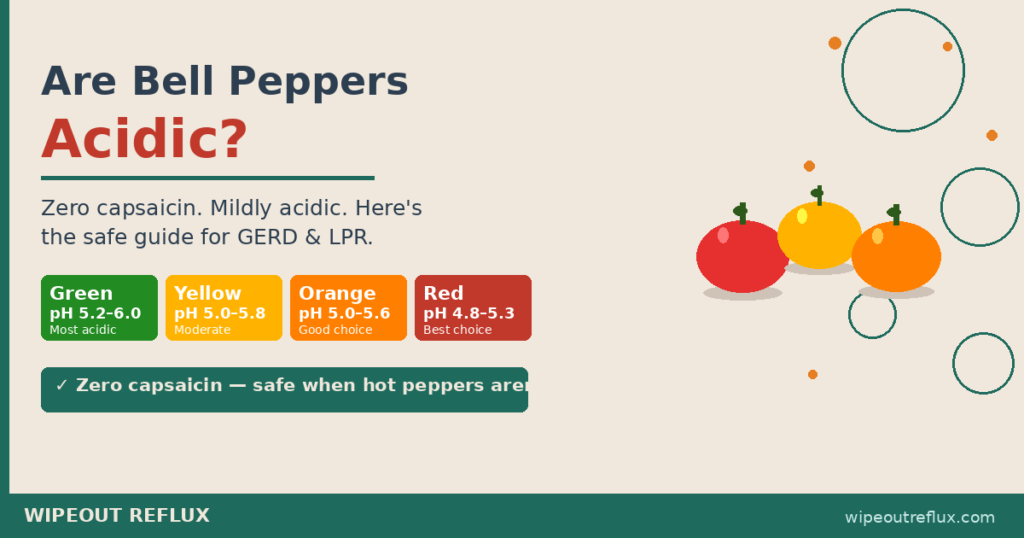
Green bell peppers, which are simply unripe versions of the other colours, sit at pH 5.2–6.0. They’re the least sweet, most bitter, and slightly more acidic of the four varieties. Red bell peppers, which are fully ripened, sit at approximately pH 4.8–5.3. Orange and yellow peppers fall somewhere in the middle.
To contextualise: tomatoes sit around pH 4–4.5, citrus at pH 2–3.5, and coffee at pH 4.5–5. At pH 4.8–6.0, bell peppers are considerably gentler than the most common acid reflux trigger foods. They sit in a similar acidity range to blueberries and bananas — vegetables and fruits that most reflux sufferers tolerate with appropriate portion control.
One important note: a study on coloured peppers found that total capsaicinoid content was highest in green peppers, with other colours containing meaningfully lower amounts [Kim et al., Foods, 2023]. This is relevant because even trace capsaicin compounds can affect digestive sensitivity — another reason red, orange and yellow bell peppers are the safer choices for people with reflux.
The Critical Difference: Zero Capsaicin
This is the single most important thing to understand about bell peppers and acid reflux, and the reason they sit in an entirely different category from chilli peppers, jalapeños, cayenne, or any other “hot” pepper.
Bell peppers register 0 on the Scoville Heat Unit scale. They contain no capsaicin.
This matters enormously for reflux sufferers because capsaicin is the primary mechanism by which hot peppers worsen acid reflux. Capsaicin acts on TRPV1 (transient receptor potential vanilloid 1) receptors in the oesophageal lining. Stimulation of these receptors by capsaicin induces heartburn, increases oesophageal hypersensitivity, and in GERD patients can significantly worsen symptom perception [Guarino et al., Gastroenterology Research and Practice, 2011]. In people with non-erosive reflux disease (NERD), chilli was also found to increase gastric accommodation (stomach volume expansion after eating), which puts additional upward pressure on the LES [Acharya et al., Nutrients, 2020].
Bell peppers trigger none of these mechanisms. They have the look, texture, and colour of a pepper but are chemically absent of the compound that makes peppers problematic for reflux. This is why I consistently distinguish between bell peppers and hot peppers in reflux guidance — they are fundamentally different foods for the purposes of symptom management.
Are Bell Peppers Bad for Acid Reflux?
For most people with mild to moderate acid reflux or GERD, bell peppers are generally a tolerable vegetable in reasonable amounts. They don’t have a known mechanism for relaxing the lower oesophageal sphincter, they don’t contain capsaicin, and their moderate acidity isn’t aggressive enough to trigger symptoms for most people.
That said, the picture is nuanced by reflux type and severity.
For Mild to Moderate GERD
Bell peppers in moderate amounts — say, half a pepper cooked as part of a meal — are unlikely to cause problems for most GERD sufferers. The fibre content, high water content, and micronutrient profile make them a beneficial vegetable overall. Starting with a small portion and monitoring your response is a sensible approach.
For LPR (Silent Reflux)
LPR requires more caution. The pH threshold at which pepsin deposited in laryngeal tissues gets reactivated sits around pH 4–5. Red bell peppers at pH 4.8–5.3 sit right at the edge of that threshold. During an active LPR flare, when throat tissue is already inflamed, even mildly acidic foods can maintain irritation.
My general approach in the Wipeout Diet Plan is to exclude bell peppers during the initial strict phase of LPR management, then reintroduce them once symptoms have settled. This isn’t because they’re particularly dangerous — it’s because eliminating borderline foods during the healing phase gives the throat lining the best environment to recover.
For more on how pepsin reactivation works and why LPR requires a different dietary threshold, see my complete guide to LPR.
Raw vs. Cooked Bell Peppers
Cooking bell peppers makes a practical difference for reflux sufferers.
Raw bell peppers are harder to digest — the skin in particular is fibrous and can be difficult for some people. In larger quantities, high-fibre raw vegetables can slow gastric emptying and increase gut fermentation, both of which put upward pressure on the LES.
Cooked bell peppers — whether sautéed, roasted, or steamed — are significantly easier to digest. The heat softens the cell walls, breaks down the fibrous skin, and reduces the fermentation load in the gut. Research on heat treatment of bell peppers found that certain cooking methods such as contact grilling increased total polyphenol content, suggesting that gentle cooking doesn’t undermine their nutritional profile [Myszkowska-Ryciak et al., Foods, 2024].
For reflux sufferers, roasted or sautéed bell peppers in olive oil are the preferable option over raw. If you do eat them raw, keep portions small and avoid doing so on an empty stomach.
Which Colour Bell Pepper Is Best for Acid Reflux?
Colour matters — primarily as an indicator of ripeness, which correlates with acidity, sweetness, and capsaicinoid content.
Red bell peppers are the fully ripened version. They’re sweetest, have the highest carotenoid content, and contain the lowest levels of total capsaicinoids. They’re the best-tolerated colour for most reflux sufferers.
Orange and yellow bell peppers are intermediate — riper and sweeter than green, with moderate capsaicinoid content. Generally well-tolerated.
Green bell peppers are the unripe form. They’re the most acidic, most bitter, contain the highest capsaicinoid levels among the four colours (though still minimal), and are harder to digest. If you’re going to eat bell peppers, green is the one to use most cautiously.
Paprika and Acid Reflux
Paprika is simply dried and ground bell pepper — it has the same fundamental profile as the fresh vegetable. This makes it one of the very few spices I consider usable even for people with more sensitive reflux.
The same guidelines apply: use it in cooked dishes rather than on raw food, start with a small amount (under half a teaspoon), and observe your response. Sweet paprika, which is the mildest variety, is the safest starting point. Smoked paprika has a more intense flavour profile and a small number of people find it more irritating — likely due to the smoking process adding additional compounds. Avoid hot paprika, which contains chilli and therefore does contain capsaicin.
For more on spices safe for acid reflux and a complete framework for what to eat, the Wipeout Diet Plan covers this comprehensively.
The Nutritional Upside
Bell peppers are worth mentioning positively here — they’re an exceptionally nutritious vegetable.
Red bell peppers contain approximately 128–154mg of vitamin C per 100g, making them one of the richest plant sources available — more vitamin C per gram than oranges. They’re also rich in carotenoids (particularly beta-carotene in red peppers and lutein in green), flavonoids, and polyphenols [Kim et al., Foods, 2023].
These antioxidants are relevant for reflux sufferers because chronic acid exposure in GERD and LPR causes oxidative stress and inflammation in oesophageal and laryngeal tissues. Antioxidant-rich foods can contribute to reducing that inflammatory burden over time — so bell peppers, when tolerated, aren’t just a neutral food. They’re actively beneficial.
Practical Tips for Eating Bell Peppers with Acid Reflux
- Start small: Begin with about a quarter of a pepper, cooked, to test your response
- Choose red, orange or yellow over green: Lower acidity and better digestibility
- Always cook them: Sautéed, roasted, or steamed rather than raw whenever possible
- Avoid them during active flares: Particularly for LPR — let symptoms settle first
- Don’t pair them with other trigger foods: Bell peppers in a stir fry with garlic, onion, and chilli sauce creates a compound trigger. The peppers alone may be fine; the combination may not be
- Watch portion size: Half a pepper or less in a meal is a reasonable amount to start with
Conclusion
Bell peppers are one of the more manageable vegetables for acid reflux and GERD sufferers — and considerably safer than their name suggests. The zero capsaicin content is the defining factor: without capsaicin, bell peppers don’t trigger the oesophageal sensitivity mechanisms that make hot peppers so problematic. Their moderate acidity (pH 4.8–6.0) warrants some care, particularly for LPR during active flares, but doesn’t make them a trigger food for most people.
My practical recommendation: choose red, orange, or yellow peppers over green, cook them rather than eating raw, start with small portions, and avoid them during LPR flares. For the majority of people managing reflux long term, bell peppers can be part of a regular, varied diet without causing problems.
If you’re finding that even gentle vegetables like bell peppers are consistently triggering your symptoms, that often signals that the broader dietary approach needs attention rather than individual foods. The Wipeout Diet Plan is built specifically to address this — giving you the full framework for what to eat during different stages of reflux management, how to reintroduce foods safely, and how to build a sustainable long-term diet that supports genuine healing. It’s the structured approach that goes well beyond individual food verdicts. Or look up individual spices and produce directly in the Wipeout Reflux Food Reference Guide.
And if you want personalised guidance for your specific situation, I’m available for a one-to-one consultation.
Frequently Asked Questions
Is bell pepper acidic or alkaline?
Bell peppers are mildly acidic, with pH approximately 4.8–6.0 depending on colour and ripeness. Green is most acidic, red least acidic. They’re considerably gentler than tomatoes, citrus, or coffee.
Do red bell peppers cause acid reflux?
For most people, no. Red bell peppers contain zero capsaicin, are mildly acidic, and don’t have a known mechanism for relaxing the LES. Some people with very sensitive reflux or active LPR may find them mildly irritating, particularly if eaten raw or in large quantities.
Are bell peppers inflammatory?
No — they’re anti-inflammatory. Bell peppers are rich in vitamin C, carotenoids, and polyphenols, all of which have documented antioxidant and anti-inflammatory properties. Unlike hot peppers, bell peppers contain no capsaicin, so they don’t provoke the irritant response in oesophageal TRPV1 receptors that hot peppers do.
What is the pH of bell peppers?
Green bell peppers sit at approximately pH 5.2–6.0. Red bell peppers are approximately pH 4.8–5.3. Orange and yellow fall in the 5.0–5.8 range. The variation reflects differences in ripeness — fully ripened peppers tend to have slightly higher pH (less acidic) than unripe green ones.
Can I eat bell peppers if I have LPR?
With caution. During active LPR symptoms, I’d avoid them to give the throat lining the best chance to recover. Once symptoms are stable, cooked red or orange bell peppers in modest amounts can be reintroduced carefully. If symptoms stay settled, most LPR sufferers find they can tolerate them without issue.
Is paprika safe for acid reflux?
Sweet paprika, yes — it’s derived from dried bell peppers and shares their zero-capsaicin profile. Use it in small amounts in cooked dishes. Avoid hot paprika, which contains chilli and is a genuine reflux trigger.
Related Articles
- The Complete Guide to LPR
- Stomach Sphincter and LPR
- Is Citric Acid Bad for Acid Reflux?
- Best Salad Dressings for Acid Reflux
- Are Blueberries Acidic?
- The Acid Reflux Ultimate Guide
- Is Garlic Acidic or Alkaline?
Research Sources
A study of coloured peppers (red, orange, yellow, green, purple) found that total capsaicinoid content was highest in green peppers, with all varieties rich in vitamin C (28–31mg/g) and carotenoids — relevant for understanding both the acidity gradient and antioxidant benefit of different bell pepper colours [Kim et al., Foods, 2023]. Capsaicin stimulates TRPV1 receptors in oesophageal afferent neurons, inducing heartburn — a mechanism entirely absent in bell peppers, which contain zero capsaicin [Guarino et al., Gastroenterology Research and Practice, 2011].
Acute chilli ingestion (containing capsaicin) significantly increased gastric accommodation in NERD patients but not healthy volunteers, demonstrating how capsaicin specifically worsens reflux physiology in susceptible individuals [Acharya et al., Nutrients, 2020]. Heat processing of bell peppers including contact grilling increased total polyphenol content, supporting that cooking bell peppers is both safer for digestion and nutritionally sound [Myszkowska-Ryciak et al., Foods, 2024].

David Gray
12 years living with LPR · Consultant & researcher
I've lived with LPR for twelve years — the misdiagnoses, the PPI courses that did nothing, the slow work of figuring out what actually helps. Wipeout Reflux is where I translate the research into plain terms for people stuck in the same place. Every claim here is sourced to peer-reviewed work, and I consult one-to-one with LPR sufferers.