
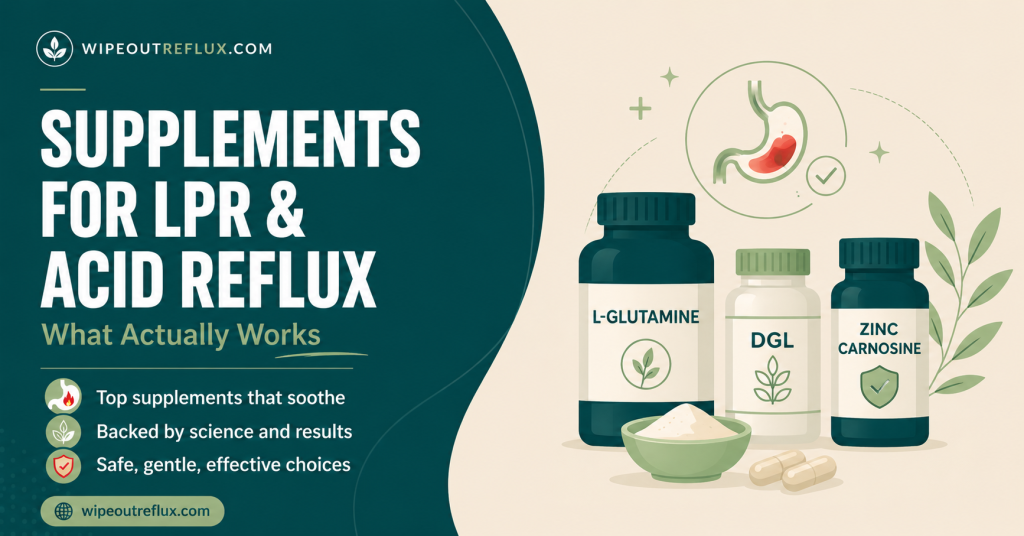
If you have acid reflux or silent reflux (LPR) and you are researching supplements, the most important thing to understand before spending any money is that different supplements work through very different mechanisms. Some reduce acid. Some coat and protect the esophageal lining. Some target the pepsin enzyme directly. Choosing the wrong type for your situation is one of the main reasons people end up disappointed.
Over years of managing LPR personally and researching the evidence closely, I have found a specific group of supplements — DGL (deglycyrrhizinated licorice), slippery elm, and marshmallow root — that are genuinely worth understanding in depth. These three work as mucosal protectants rather than acid suppressants, which makes them particularly relevant for LPR, where pepsin and non-acid reflux play a significant role that standard medications often fail to address. A 2025 multicenter randomised trial confirmed that mucosal protectants combined with dietary changes produced the greatest measurable reduction in both LPR symptoms and throat pepsin concentrations [Gelardi et al., Frontiers in Medicine, 2025].
This article covers the three main mucosal supplement options in detail, compares them directly, and then rounds up other supplements that have some evidence behind them for silent reflux and GERD. I will also be honest about which ones have solid clinical backing and which are working more from mechanistic rationale and traditional use.
Key Takeaways
- DGL, slippery elm, and marshmallow root are all mucosal protectants — they work by coating and protecting irritated tissue rather than by suppressing stomach acid.
- DGL has the strongest clinical evidence among the three, with a 2025 Phase III randomised controlled trial showing significant improvement in GERD symptoms and quality of life versus placebo.
- Slippery elm has a plausible mechanism (mucilage forming a protective raft over stomach contents) but limited large-scale RCT evidence specifically for GERD or LPR.
- Marshmallow root has strong preclinical support for gastric mucosal protection, with anti-inflammatory effects comparable to omeprazole in animal models, but human reflux trials remain limited.
- All three are best used as adjuncts to — not replacements for — dietary changes and appropriate medical treatment.
- Aloe vera, chamomile, and zinc carnosine are worth knowing as honourable mentions, each with a plausible mechanism and some supporting evidence.
- Supplements can interact with medications and slow drug absorption — always take them at least two hours apart from prescription drugs.
- Supplements address irritation and coating but do not fix the underlying valve dysfunction driving reflux — diet and lifestyle changes remain essential.
Why Supplements Work Differently for LPR Than for GERD
Before diving into individual supplements, it is worth understanding why the LPR context matters so much. In standard GERD versus LPR, the primary damage mechanism is different. GERD is largely an acid exposure problem in the esophagus. LPR involves acid and pepsin reaching the throat and larynx — tissues that have almost no defence against even weakly acidic or non-acid pepsin activity.
This matters for supplement selection because acid-suppressing drugs (PPIs) do not neutralise pepsin or prevent non-acid reflux events. Mucosal supplements, by contrast, create a physical barrier that may protect irritated tissue regardless of the pH of what reaches it. Understanding how pepsin damages throat tissue and why coating strategies make sense is fundamental to using these supplements intelligently as part of your LPR management approach.
DGL for LPR (Deglycyrrhizinated Licorice)
DGL is licorice root extract from which glycyrrhizin — the compound responsible for raising blood pressure and causing electrolyte imbalances — has been removed. What remains is a flavonoid-rich extract that stimulates mucus production, supports mucosal cell renewal, and provides anti-inflammatory and antioxidant effects in the digestive tract.
The mechanism is particularly relevant for reflux: DGL encourages the esophageal and gastric lining to produce more of its own protective mucus, which creates a sustained barrier against acid and pepsin damage rather than just neutralising what is already there. It also has known anti-inflammatory properties through inhibition of COX and LOX inflammatory pathways, which may help calm the inflamed esophageal tissue that drives so much of the symptom burden in LPR.
The clinical evidence for DGL is now meaningful. A 2025 Phase III, double-blind, randomised placebo-controlled trial of a standardised deglycyrrhizinated licorice extract (GutGard) in 200 adults with GERD found significant improvement in both heartburn and regurgitation scores from week two onwards, with quality of life scores substantially better than placebo [Raj et al., Complementary Medicine Research, 2025]. This is about as well-designed a trial as you will find for a herbal supplement in this space.
Earlier work also confirmed DGL’s utility in ulcer conditions and its ability to increase mucosal integrity [Asl & Hosseinzadeh, Phytotherapy Research, 2020].
How to use DGL: Chewable tablets or capsules, typically 250–500mg taken 20 minutes before meals and at bedtime. Chewing is thought to be important as it mixes DGL with saliva and initiates the protective mucus response earlier in the esophagus. Look for a standardised product with confirmed low glycyrrhizin content (under 3%).
Who should avoid it: People on antihypertensive medications, those with existing heart failure or kidney conditions, or those on diuretics should consult their GP first, as even low-glycyrrhizin DGL carries a small residual risk of sodium and water retention in susceptible individuals.
Slippery Elm for LPR and Silent Reflux
Slippery elm (Ulmus rubra) is one of the most widely recommended natural supplements for acid reflux, particularly in naturopathic and integrative gastroenterology circles. Its active component is mucilage — a soluble fibre that transforms into a thick, gel-like substance when it contacts water. When you swallow this gel, it coats the entire mucosal surface of the esophagus and stomach, creating a physical barrier that may absorb and partially buffer acid before it reaches inflamed tissue.
There is also a secondary mechanism that makes slippery elm particularly interesting for LPR: its ability to form what is described in the literature as a “raft” over stomach contents, similar in principle to how alginate-based products like Gaviscon Advance work. This raft may physically prevent refluxate from travelling upward into the esophagus and throat.
The honest assessment of the evidence: direct RCT data on slippery elm for GERD or LPR is limited. The FDA classifies slippery elm as GRAS (Generally Recognised as Safe) and approves it as an over-the-counter demulcent for throat irritation — which is exactly the mechanism that makes it appealing for LPR specifically. Several integrative gastroenterology specialists recommend it routinely with good patient-reported outcomes, and a multi-ingredient herbal trial published in BMC Gastroenterology found that a formula containing slippery elm produced at least a 30% reduction in GERD symptoms in all participants by week three, with 85% of those with heartburn reporting improvement. The direct attribution to slippery elm specifically within that formula is difficult to isolate.
The bottom line is that slippery elm has a mechanistically convincing case for LPR, a very strong safety profile, and meaningful anecdotal and integrative clinical support — but has not yet been studied in a standalone RCT for GERD or LPR. That is worth knowing before you choose it over something with stronger evidence.
How to use slippery elm: Powder mixed with warm water is the most effective form (2 tablespoons in a cup), taken after meals and before bed. The powder allows the mucilage to form properly before swallowing. Capsule forms are also available but may be less potent for esophageal coating.
Key interaction warning: Slippery elm mucilage can slow the absorption of medications by coating the gut lining. Always take it at least two hours away from any prescription drug.
Marshmallow Root for LPR
Marshmallow root (Althaea officinalis) works through the same core mechanism as slippery elm — it is rich in mucilage polysaccharides that form a soothing, gel-like coating over irritated mucosal surfaces. What distinguishes marshmallow root is that its polysaccharide content is considered among the highest of any demulcent herb, and its coating film reaches from the throat all the way down through the esophagus and into the stomach, making it especially appealing for LPR where the upper throat and larynx are involved.
Beyond the physical coating, marshmallow root also contains flavonoids and antioxidant compounds that exert measurable anti-inflammatory effects. Preclinical research has demonstrated gastroprotective effects comparable to omeprazole and misoprostol in inducing gastric mucosal protection against ulceration [Zaghlool et al., Antioxidants, 2019]. The same study confirmed strong antioxidant properties, attributed to the plant’s flavonoid and mucilage polysaccharide content, which are relevant for reducing the oxidative stress that acid reflux generates in inflamed tissue.
For LPR specifically, marshmallow root’s full-tract coating — from throat to stomach — is its key advantage over many other supplements that primarily target the lower esophagus and stomach. Given that LPR symptoms are concentrated in the larynx, pharynx, and upper airway, a supplement that coats those areas on the way down is conceptually well-matched to the condition.
As with slippery elm, the dedicated human clinical trial data specifically for GERD and LPR is still limited. Most evidence comes from animal models, in vitro studies, and the long-standing traditional use in European and Middle Eastern herbal medicine. For this reason, marshmallow root is best positioned as a complementary measure within a broader LPR management plan rather than as a standalone treatment.
How to use marshmallow root: Cold-water infusion is the preferred method — adding marshmallow root powder to cold water and leaving it for 4–8 hours extracts the mucilage more effectively than hot water. Drink one cup three times daily, ideally before meals or at bedtime. Capsule and tincture forms are less effective for this purpose. Avoid hot water preparation as heat can break down the mucilage structure.
Safety: Very low risk profile. Generally well-tolerated with no significant reported side effects at standard doses. Same interaction caution as slippery elm — keep two hours away from medications.
DGL vs Slippery Elm vs Marshmallow Root: How They Compare
All three are mucosal protectants at their core, but there are meaningful differences in mechanism, evidence, and best use case. If you are trying to choose between them, this is how I would frame the comparison.
Mechanism: DGL works primarily by stimulating your own mucus production and has anti-inflammatory and antioxidant activity. Slippery elm and marshmallow root both work by directly depositing a mucilage coating on the esophageal and gastric lining — they are external barriers rather than stimulators of your own defensive response.
Evidence quality: DGL has the strongest clinical trial evidence, including a 2025 Phase III RCT. Slippery elm and marshmallow root have strong mechanistic rationale and traditional use, with limited direct RCT data on GERD or LPR specifically. If you need the most evidence-supported option, DGL leads.
Best for GERD: DGL, for its mucosal stimulation and the depth of clinical evidence. Slippery elm as a secondary option with good empirical support.
Best for LPR / upper tract symptoms: Marshmallow root and slippery elm, because their coating extends from the throat downward and physically contacts the laryngeal and pharyngeal tissues that LPR inflames. DGL is still useful but its primary site of action is lower in the GI tract.
Can you combine them? Yes — DGL and either marshmallow root or slippery elm are complementary rather than duplicative. DGL builds internal mucosal defence while marshmallow or slippery elm provides an external physical coating. Many people with LPR use DGL before meals and cold marshmallow root infusion at bedtime for this reason. As with any supplement protocol, introduce one at a time so you can assess your response clearly.
Cost and availability: All three are widely available. Slippery elm powder and marshmallow root powder are generally inexpensive. DGL chewable tablets from quality brands tend to cost slightly more, but the dose is low (250–500mg) so a bottle lasts well. For food pH reference data and a practical guide to building a reflux-safe routine, the Wipeout Essential Reflux Food List covers what you should and should not be eating alongside any supplement protocol.
Other Supplements for Silent Reflux
Beyond the three main mucosal supplements, several others have some evidence or strong mechanistic rationale for LPR and GERD. These are worth knowing as adjuncts or alternatives if the primary three are not suitable for you.
Aloe vera juice (decolourised, purified): A pilot randomised controlled trial in 79 GERD patients found that aloe vera syrup at 10ml per day reduced the frequency of all eight assessed GERD symptoms — including heartburn, regurgitation, and belching — with no adverse events over four weeks [Panahi et al., Journal of Traditional Chinese Medicine, 2015]. It is an anti-inflammatory demulcent with a reasonable safety profile when the aloin (a laxative component) has been removed. My article on aloe vera juice for acid reflux covers this in more detail. Always use inner-leaf gel products that are specifically decolourised.
Chamomile: Chamomile (Matricaria chamomilla) has a long traditional use for gastrointestinal irritation and has demonstrated anti-inflammatory and anti-spasmodic effects in preclinical studies relevant to esophageal spasm — a known contributor to reflux chest tightness. Direct RCT data for GERD or LPR is limited. It is best used as a calming, anti-inflammatory tea rather than a primary therapeutic supplement. See my dedicated article on chamomile tea for acid reflux for guidance on the right type and preparation.
Zinc carnosine (zinc L-carnosine): This is a chelate compound of zinc and L-carnosine with a 20-year clinical history of use in Japan for gastrointestinal mucosal protection. Its mechanism is well-characterised: it is directly cytoprotective and anti-inflammatory, with mucosal repair properties confirmed in human studies for peptic ulcers, esophagitis, and oral mucositis [Efthymakis & Neri, Current Treatment Options in Gastroenterology, 2022]. It works differently from the demulcent herbs — rather than coating the surface, it has a higher affinity for damaged mucosa and promotes cellular repair directly. For most people it is well-tolerated, though some individuals find it causes digestive discomfort and cannot sustain it. If you are interested in zinc carnosine, start with the lowest available dose and trial it for two to three weeks before committing to a longer course.
Are Supplements for LPR Safe? Medication Interactions
The short answer is that the supplements discussed in this article have good to excellent safety profiles for most adults when used at standard doses. None of them are experimental or unregulated — DGL, slippery elm, and marshmallow root all have centuries of traditional use, FDA or equivalent safety designations, and a meaningful body of modern research confirming their safety.
That said, there are important considerations that apply specifically to people with LPR and GERD, many of whom are also on prescription medications.
Absorption interference: The most clinically significant issue with mucilage-based supplements (slippery elm, marshmallow root, and to a lesser extent aloe vera) is that they can form a coating over the gut lining that delays or reduces the absorption of other drugs. This applies to PPIs, H2 blockers, antibiotics, thyroid medication, and most orally taken drugs. The practical rule is simple: take these supplements at least two hours before or after any prescription medication. This is not optional — getting the timing wrong could reduce the effectiveness of drugs you are relying on.
DGL and cardiovascular medications: Although glycyrrhizin has been removed in DGL, residual amounts remain. People on antihypertensives, ACE inhibitors, diuretics, or those with heart failure should discuss DGL use with their GP before starting, as even trace glycyrrhizin can affect fluid balance and potassium levels in sensitive individuals.
If you are on PPIs or considering coming off them: Mucosal supplements are not a direct substitute for PPI therapy in cases of moderate to severe GERD. They can support mucosal healing and reduce symptom burden, and some people do find they can reduce their PPI reliance over time with comprehensive dietary changes and supplementation — but this should always be done gradually and ideally with medical supervision. My article on getting off PPIs and acid rebound is essential reading if that is your goal.
Pregnancy and breastfeeding: Slippery elm bark is not recommended during pregnancy due to traditional concerns about stimulating the uterus. Marshmallow root and DGL should also be used only under medical supervision during pregnancy. This applies to all supplements — always disclose what you are taking to your healthcare provider.
Finally, supplements are most effective when they are supporting a foundation of good dietary practice. If you are eating foods that regularly trigger reflux, no supplement will compensate for that. The natural remedies for LPR article covers how supplements fit into a broader management approach.
Frequently Asked Questions
Which supplement is best for LPR specifically?
For LPR, marshmallow root and slippery elm are particularly well-matched because their coating action begins in the throat — the area most affected in LPR. DGL is excellent for supporting mucosal repair and has the strongest clinical evidence, making it a strong first choice if you prefer evidence-backed options. Many people with LPR use a combination: DGL chewable tablets before meals and a cold-infused marshmallow root drink at bedtime, when lying flat makes the throat more vulnerable to pepsin activity.
Can I take DGL, slippery elm, and marshmallow root together?
Yes, they are complementary rather than duplicative. DGL works by stimulating your internal mucus production and has direct anti-inflammatory effects. Slippery elm and marshmallow root provide an external physical coating. The main practical consideration is cost and simplicity — stacking all three is reasonable but start one at a time so you know what is helping. Many people find one or two are sufficient alongside dietary changes.
How long do supplements take to work for acid reflux?
Most people notice some symptomatic relief from demulcent supplements (slippery elm, marshmallow root) within one to two weeks of consistent use. DGL’s clinical trial data showed meaningful symptom improvement from week two onwards. Zinc carnosine and aloe vera may also take two to four weeks to show their full effect. None of these supplements provide instant relief in the way antacids do — they are working on longer-term mucosal repair and protection rather than immediate neutralisation.
Are supplements a replacement for PPIs?
No — at least not directly, and not for everyone. Mucosal supplements work through a fundamentally different mechanism from PPIs and are not clinically equivalent in cases of moderate or severe GERD. However, for people with mild to moderate symptoms who are also making meaningful dietary changes, they can meaningfully reduce symptom burden and support esophageal healing. If your goal is to eventually reduce your reliance on PPIs, read my article on why acid reflux medication sometimes stops working as a starting point.
Is DGL safe to take long-term?
DGL is generally considered safe for long-term use because the problematic glycyrrhizin compound has been largely removed. No significant adverse events have been reported in trials lasting up to 28–35 days, and traditional use suggests longer-term tolerability for most people. The one caveat is for those with hypertension, kidney disease, or heart failure, where even trace glycyrrhizin may be relevant — in these cases, periodic review with your GP is advisable.
Can slippery elm interfere with my reflux medication?
Yes, this is the key practical concern with slippery elm. Its mucilage can coat the gut lining and slow the absorption of orally taken drugs. This means PPIs, H2 blockers, and other medications may be less effective if taken at the same time as slippery elm. The straightforward fix is to take any prescription medication at least two hours before or after slippery elm — and ideally at a consistent time each day to keep your medication’s absorption predictable.
Does marshmallow root help with the lump-in-throat feeling from LPR?
Many people with LPR report that cold-infused marshmallow root provides temporary relief from the globus sensation (lump in the throat) associated with reflux. The mucilage coats the throat and laryngeal area on the way down, which can soothe the inflamed tissues that create that persistent stuck feeling. It is not a cure for globus — the underlying reflux needs to be addressed — but it can provide meaningful comfort, particularly at night.
Conclusion
The supplements covered in this article — DGL, slippery elm, and marshmallow root — are genuinely worth your consideration if you have acid reflux or LPR and want to support your treatment plan beyond medication alone. They are not magic, and they are not a replacement for getting the dietary and lifestyle fundamentals right. But as part of a well-structured plan, mucosal protectants can make a real difference to symptom burden and esophageal recovery.
My personal recommendation is to start with DGL if you want the best clinical evidence, or marshmallow root if your symptoms are concentrated in the throat and larynx rather than the chest. Introduce them one at a time, keep your medications at least two hours away, and give each one a minimum of two to three weeks of consistent use before drawing conclusions.
The most important thing I can tell you is that supplements work best as part of a comprehensive approach that addresses the root causes of reflux — the dietary patterns, eating habits, and lifestyle factors that create the conditions for reflux in the first place. The Wipeout Diet Plan is the most complete resource I have built for that. It lays out the full dietary framework, practical meal planning guidance, and management principles that, combined with the right supplementary support, give you the best realistic chance of long-term symptom control. For a quick reference on which foods and drinks to prioritise and which to avoid, the Wipeout Essential Reflux Food List is the companion guide I recommend for daily use.
Research & References
A 2025 multicenter randomised controlled trial found that combining dietary modifications with mucosal protectants produced the greatest reduction in LPR symptoms (RSI and RFS scores) and measurable reduction in salivary pepsin concentrations, outperforming either intervention alone. [Gelardi et al., Frontiers in Medicine, 2025]
A Phase III, double-blind, randomised placebo-controlled trial of a standardised deglycyrrhizinated licorice extract (GutGard) in 200 adults with GERD found clinically significant improvement in heartburn and regurgitation from week two, with substantially improved quality of life scores versus placebo; the extract was well-tolerated with no significant adverse events. [Raj et al., Complementary Medicine Research, 2025]
A comprehensive pharmacological review confirmed DGL’s mechanisms of action including stimulation of mucus production, mucosal cell renewal, anti-inflammatory activity via COX/LOX inhibition, and antioxidant effects relevant to gastrointestinal mucosal protection. [Asl & Hosseinzadeh, Phytotherapy Research, 2020]
Pre-treatment with Althaea officinalis (marshmallow root) extract provided protection from gastric ulceration comparable to omeprazole and misoprostol in a controlled animal model, with confirmed strong antioxidant and free-radical scavenging activity attributed to flavonoids and mucilage polysaccharides. [Zaghlool et al., Antioxidants, 2019]
A pilot randomised controlled trial in 79 GERD patients found that standardised aloe vera syrup (10ml/day) reduced the frequency of all eight assessed GERD symptoms over four weeks and was well-tolerated with no adverse events requiring withdrawal. [Panahi et al., Journal of Traditional Chinese Medicine, 2015]
A systematic review confirmed that zinc L-carnosine has direct mucosal cytoprotective and anti-inflammatory action, has been shown to promote repair of mucosal injury in human studies, and has a long clinical history of use for peptic ulcers, esophagitis, and chemotherapy-related mucosal damage. [Efthymakis & Neri, Current Treatment Options in Gastroenterology, 2022]

David Gray
12 years living with LPR · Consultant & researcher
I've lived with LPR for twelve years — the misdiagnoses, the PPI courses that did nothing, the slow work of figuring out what actually helps. Wipeout Reflux is where I translate the research into plain terms for people stuck in the same place. Every claim here is sourced to peer-reviewed work, and I consult one-to-one with LPR sufferers.
Wow! I’m compelled to comment, as this is an extraordinarily clear, comprehensive, balanced, and well -written and researched article on the natural approaches for silent reflux and GERD. THIS is exactly the kind of information that both consumers and health care providers need, in order to make informed decisions for themselves or their patients. With the significant and alarming association between PPI use and dementia- !- (which, of course, most conventional physicians are either not aware of, or don’t bother mentioning, to their patients), there need to be other approaches explored- and more so, patients/consumers need to be made AWARE of these other options. The current pharma-run health system, and pharma-educated medical students (yes- pharma creates the academic curriculum for med students..) is failing its patients. The facts show that the US is the sickest nation of the entire world. :/ We must make other choices, and educated choices- if our doctors cannot provide us with the information and risks associated with conventional drug protocol that they propose. So- thank you again for this fantastic article! 🙂 I will forward it to many I know who are in need of this information-
Thank you, this genuinely made my day. That’s exactly what I’m going for with the site — enough detail that people can actually make an informed decision for themselves rather than just being told what to do.
Really appreciate you passing it on, and I hope it helps the people you send it to. Feel free to shout if there’s a topic you’d like me to cover next.