
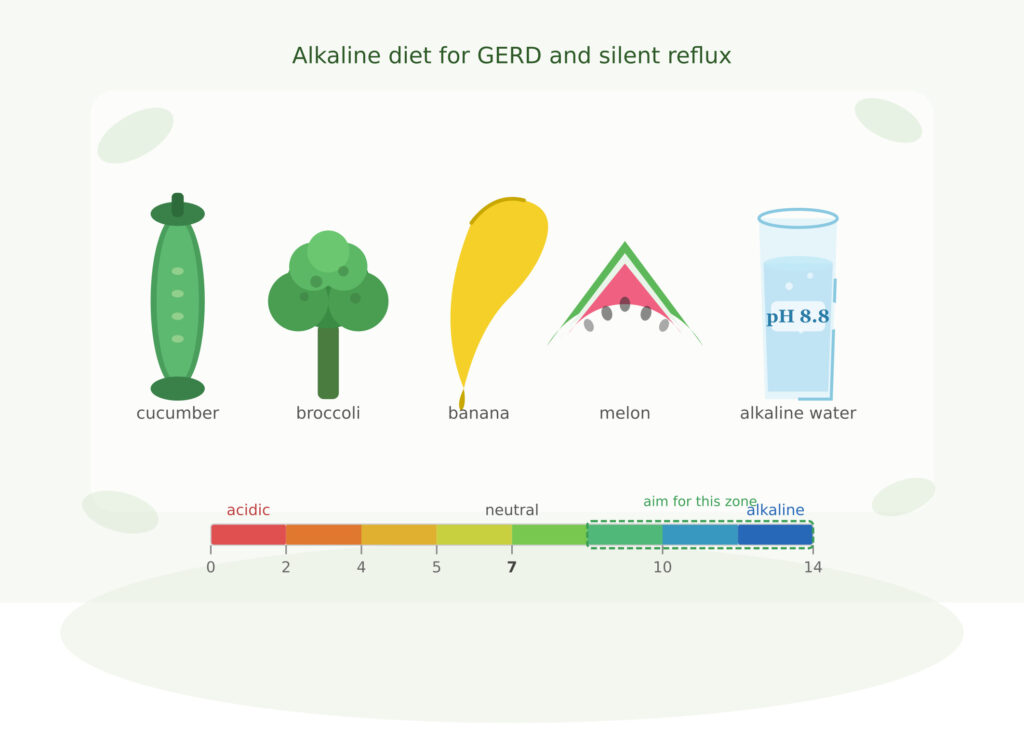
The alkaline diet has attracted a lot of attention as a natural approach to managing GERD (Gastroesophageal Reflux Disease) and silent reflux (LPR). And unlike a lot of dietary trends, there is genuine clinical research behind it — including a landmark study published in JAMA Otolaryngology that found a plant-based alkaline diet with alkaline water outperformed PPIs for reflux symptom reduction.
But it’s also a topic surrounded by confusion. People use the term loosely, the science is often misunderstood, and not all alkaline diets are equal when it comes to reflux. This article will cut through the noise and give you a clear picture of what the alkaline diet actually is, what the research says, how it works for GERD and LPR specifically, and how to follow it properly.
Key Takeaways:
- An alkaline diet emphasises foods with a pH above 5 — reducing the acid load on the digestive tract and throat
- A study published in JAMA Otolaryngology (Zalvan et al., 2017) found a plant-based alkaline diet with alkaline water produced greater reflux symptom reduction than PPIs — 63% vs 54% of patients achieving meaningful improvement
- Alkaline water with a pH of 8.8 or above has been shown in studies by Koufman and Johnston to permanently deactivate pepsin in the throat
- For GERD the diet helps by reducing acid intake and LES pressure. For LPR it works differently — by preventing pepsin reactivation
- The diet works best when combined with the right medication and lifestyle changes
What is the Alkaline Diet?
The alkaline diet is based on the pH scale — a measure of how acidic or alkaline a substance is. The scale runs from 0 to 14. Anything below 7 is acidic, 7 is neutral, and anything above 7 is alkaline. The idea behind the alkaline diet is to eat predominantly foods that are lower in acid or alkaline in nature, reducing the acid load on the stomach, oesophagus and throat.
In practical terms this means building your diet around vegetables, lean proteins, most grains, and alkaline fruits like bananas and melon — while reducing or eliminating highly acidic foods like citrus fruit, soft drinks, alcohol, most condiments and processed foods.
For reflux specifically the alkaline diet matters for two distinct reasons — one that applies to GERD and one that is particularly important for LPR (silent reflux). Understanding both is the key to making the diet work properly for you.
How the Alkaline Diet Helps GERD
In GERD, stomach acid refluxes up into the oesophagus and causes the classic burning sensation of heartburn. The alkaline diet helps GERD in two main ways.
First, it reduces the overall acid load. When you eat and drink highly acidic things — soft drinks with a pH of 2 to 3, citrus juices, alcohol, coffee — you are directly adding to the acidity in your stomach. This makes the stomach contents more corrosive when they do reflux. Switching to lower acid foods and alkaline drinks reduces how damaging any reflux that does occur will be.
Second, certain foods weaken the lower oesophageal sphincter (LES) — the valve above the stomach. Fatty foods, chocolate, coffee and alcohol all cause the LES to relax more than it should, making it easier for stomach contents to escape upward. An alkaline diet naturally removes most of these LES-weakening foods which reduces the frequency of reflux episodes in the first place.
A 2024 systematic review and meta-analysis published in Nutrients (Lakananurak et al.) found significant evidence that dietary interventions reduce GERD symptoms, with low-fat, plant-based diets consistently showing benefit across studies. International guidelines now include dietary modification as one of the most important first-line treatments for GERD alongside or before medication.
How the Alkaline Diet Helps LPR — The Pepsin Connection
For LPR (silent reflux) the alkaline diet works through a completely different and more specific mechanism — one that involves pepsin rather than just acid.
Pepsin is a digestive enzyme produced in the stomach that travels up with reflux and reaches the throat where it causes inflammation and tissue damage. This is the primary driver of LPR symptoms — not acid alone. And pepsin has a critical characteristic: it can lay dormant in throat cells for 24 to 48 hours after a reflux episode, and it gets reactivated by anything acidic that comes into contact with it. So even if you haven’t refluxed, eating or drinking something with a pH below 5 will reactivate dormant pepsin and trigger your symptoms.
This is why the alkaline diet is so powerful for LPR. By eating predominantly foods with a pH above 5, you stop reactivating the pepsin sitting in your throat. The inflammation cycle breaks and your throat gets the opportunity to heal. As I explain in my LPR diet guide, this pepsin-focused approach is what makes the diet for LPR different from a standard GERD diet — and more specific in its requirements.

The Research — What the Studies Actually Show
The evidence for the alkaline diet approach to reflux is stronger than most people realise.
Alkaline diet vs PPIs for LPR. The most significant study is one published in JAMA Otolaryngology-Head and Neck Surgery (Zalvan et al., 2017). This cohort study compared 184 patients with LPR — one group treated with PPIs and standard reflux precautions, the other with a 90% plant-based Mediterranean-style alkaline diet, alkaline water and standard precautions. The results were striking: 63% of patients in the alkaline diet group achieved a meaningful reduction in their Reflux Symptom Index (RSI) compared to 54% of the PPI group. The average RSI reduction in the diet group was 40% compared to 27% in the PPI group. The authors concluded that a plant-based diet and alkaline water should be considered as primary treatment for LPR.
Alkaline water permanently deactivates pepsin. A landmark study by Koufman and Johnston published in the Annals of Otology, Rhinology and Laryngology (2012) found that water with a pH of 8.8 irreversibly denatures human pepsin — meaning it permanently inactivates it rather than just suppressing it temporarily. The water also demonstrated strong acid-buffering capacity. This is the foundational research behind the recommendation to drink alkaline water alongside an alkaline diet for reflux.
Low acid diet works even when PPIs have failed. A prospective study by Koufman (2011) found that 95% of LPR patients improved on a strict low acid diet — including those who had already failed twice-daily PPI treatment. Both RSI symptom scores and laryngeal findings improved significantly.
Dietary interventions reduce GERD symptoms. The 2024 Nutrients systematic review (Lakananurak et al.) confirmed that dietary interventions are effective for GERD, with evidence supporting low-fat, high-fibre, plant-based eating patterns. A 2025 review in Gastrointestinal Disorders further confirmed that plant-based treatments and dietary modifications are increasingly recognised as viable alternatives or complements to pharmacological therapy for GERD.
Alkaline Foods for Acid Reflux — What to Eat
Here is a breakdown of the best alkaline and low-acid food choices for GERD and LPR.
Vegetables
Most vegetables are naturally alkaline or very low in acid, making them the foundation of the diet. The best choices are cucumber, celery, broccoli, cauliflower, courgette, asparagus, leafy greens, sweet potato, peas, corn and green beans. Raw onion and tomatoes should be avoided as they are too acidic and irritating for most reflux patients, but cooked sweet onion is generally fine.
Fruits
Most fruits are unfortunately too acidic — citrus fruits in particular should be completely avoided. The best alkaline fruit choices for reflux are bananas, melon (particularly cantaloupe and honeydew), watermelon and pear. Ripe mango is also generally well tolerated. Berries can be blended with an alkaline milk like almond milk which neutralises much of their acidity. For more information on fruits check my article on LPR foods to eat.
Grains
Oats are one of the best choices for anyone with reflux — they help absorb acid in the stomach and are very soothing. Rice, plain pasta and plain bread (preferably with minimal preservatives or additives) are all good options. Make porridge with almond milk or soy milk rather than dairy for an even more alkaline effect.
Proteins
Lean proteins are important on an alkaline reflux diet. The best choices are chicken breast, turkey breast, fish (particularly salmon and prawns which are actually alkaline), eggs and tofu. Fatty meats should be avoided as they slow gastric emptying and worsen reflux. Nuts — almonds, cashews, pistachios and walnuts — are also alkaline and make excellent snacks. For more on fish specifically check my article on what fish is good for acid reflux.
Dairy Alternatives
Regular dairy is something to be careful with — particularly full fat dairy which slows digestion. The best alternatives are almond milk and soy milk, both of which are alkaline and work well in cooking and hot drinks. For more on this check my article on almond milk and acid reflux.
Drinks
Alkaline water with a pH of 8 or above is the best drink you can have on this diet. Regular still water is also good. Chamomile tea and marshmallow root tea are excellent options — both are soothing and anti-inflammatory. For more on drinks check my article on what you can drink with acid reflux.
What to Avoid on the Alkaline Reflux Diet
The following foods are highly acidic, weaken the LES, or directly trigger reflux and should be avoided or significantly reduced:
- All soft drinks, carbonated drinks and energy drinks — most have a pH of 2 to 4, making them as acidic as stomach acid
- Alcohol — acidic and causes the LES to relax
- Coffee and caffeinated drinks — caffeine weakens the LES
- Citrus fruits and juices — oranges, lemons, limes, grapefruit
- Tomatoes and tomato-based products
- Raw onions and garlic
- Spicy food
- Fatty and fried foods — slow gastric emptying significantly
- Chocolate — contains methylxanthine which relaxes the LES
- Most condiments, dressings and sauces — particularly anything with vinegar
- Processed foods — typically high in preservatives that increase acidity
- Mint and peppermint — relaxes the LES
For a complete breakdown with reasoning behind each check my article on LPR foods to avoid.
Alkaline Water — A Key Part of the Diet
Alkaline water deserves its own section because it plays a specific and important role in the alkaline reflux diet that goes beyond just staying hydrated.
As the Koufman and Johnston study established, water with a pH of 8.8 or above permanently deactivates pepsin in the throat. Regular tap water and most bottled waters have a pH of around 6.7 to 7.4 — neutral enough that they don’t affect pepsin at all. But alkaline water at pH 8.8 and above actually breaks down the pepsin enzyme, rendering it permanently inactive rather than just temporarily suppressing it.
This is why the Zalvan JAMA study specifically combined alkaline water with the plant-based diet rather than just diet alone. The two work together — the diet prevents pepsin reactivation, and the alkaline water actively destroys any pepsin in the throat.
For the best results aim for water with a pH of 8 or higher. Naturally sourced alkaline spring water is the best option. You can also use pH drops to raise the alkalinity of regular water, though handle these very carefully and never use them near your eyes. For more information check my article on alkaline water for LPR.
Does the Alkaline Diet Work for Both GERD and LPR?
Yes — but with an important distinction in how it works and how strictly you need to follow it.
For GERD — the alkaline diet helps primarily by reducing the acid load going into the stomach and by removing foods that weaken the LES. The approach gives you significant relief and for many people reduces or eliminates the need for medication. The diet doesn’t need to be quite as strict in terms of pH targets — avoiding the obvious triggers and eating predominantly alkaline foods is usually enough to see improvement.
For LPR — the diet needs to be more specific and stricter, particularly around the pH threshold. Because pepsin in the throat gets reactivated by anything with a pH of 5 or below, you need to actively keep the pH of your food and drink above 5 as much as possible. This is more precise than a standard GERD diet. Even foods that seem healthy — like certain fruits, vinegary dressings or fruit juices — need to be avoided because of their acidity level even if they don’t seem like obvious reflux triggers. To understand the full difference between treating GERD and LPR through diet check my article on GERD vs LPR.
The Alkaline Diet and PPIs — Do You Still Need Medication?
This is a question a lot of people have and it’s worth being direct about.
For GERD, PPIs work well and can be used alongside dietary changes. If you have significant oesophageal symptoms, PPIs combined with an alkaline diet will generally give the best results. Over time as symptoms improve, many people are able to reduce their PPI dose or use it on demand rather than daily.
For LPR, PPIs have been shown in clinical trials to offer no meaningful benefit over placebo. The 2021 TOPPITS BMJ trial and the 2024 IFOS international consensus both confirm this. The right combination for LPR is the alkaline diet plus Gaviscon Advance (UK version) — which creates a physical barrier against reflux and filters pepsin — rather than PPIs.
If you are currently on PPIs for what seems like LPR symptoms and they are not helping, tapering off them slowly is the right move. Read my guide on getting off PPIs safely for how to do this without a painful rebound effect.
Practical Tips for Following the Alkaline Reflux Diet
Here are a few things that make a real difference when putting the diet into practice:
Eat smaller portions more frequently. Large meals put significant pressure on the LES. Eating roughly a fist-sized amount at any one sitting and spreading food across more meals throughout the day reduces this pressure considerably.
Don’t eat within 3 hours of bedtime. When you lie down, gravity no longer helps keep stomach contents in place. Leaving at least 3 hours after your last meal before sleeping reduces nighttime reflux significantly. For more advice on this check my article on nighttime acid reflux.
Watch cooking methods. Frying adds fat which slows digestion. Grilling, baking, steaming and boiling are all better choices. The food itself might be alkaline but frying it significantly changes its effect on reflux.
Be aware of hidden acids. Many foods that seem neutral or healthy are actually quite acidic — apple cider vinegar, most fruit juices, most condiments, many salad dressings, tomato-based sauces and even some herbal teas. Reading labels and being aware of pH is particularly important for LPR.
Give it enough time. Most people notice meaningful improvement within 1 to 2 weeks of following the diet properly. But full healing — particularly of physical tissue changes in the larynx and oesophagus — takes longer. Stay consistent for at least 6 to 8 weeks before assessing how well it is working.
The Wipeout Diet Plan — The Most Complete Alkaline Diet for Reflux
Following an alkaline diet for GERD or LPR properly is more involved than simply avoiding obvious trigger foods. Knowing the pH of different foods, understanding which ones are problematic for LPR specifically, having a complete food and drink list, and knowing what to cook are all things that take time to figure out on your own.
That’s exactly why I created the Wipeout Diet Plan. It is a complete, structured diet plan built specifically around the alkaline low-acid approach for people with GERD and LPR. It includes a full food and drink list with pH guidance, recipe ideas, meal planning structure and the reasoning behind every recommendation — all based on the same research covered in this article.
Rather than having to piece everything together yourself, the Wipeout Diet Plan gives you a complete system to follow from day one. Many people who have followed it report meaningful improvement within the first couple of weeks.
You can check it out here — Wipeout Diet Plan.
Getting Personalised Help
If you have been following an alkaline diet and still struggling, or if you want guidance on exactly what your specific situation requires, a private consultation is the most direct way to get answers. I will go through your symptoms, your current diet and what you have already tried, and put together a specific treatment plan built around your situation.
86% of people who follow the recommendations from a consultation see meaningful improvement within 2 weeks. If you are stuck and want to stop guessing, it’s worth considering.
Frequently Asked Questions
Does the alkaline diet actually work for acid reflux?
Yes — there is solid clinical evidence for it. The Zalvan JAMA study found a plant-based alkaline diet with alkaline water outperformed PPIs for reflux symptom reduction. Multiple other studies confirm that dietary intervention is one of the most effective treatments available for both GERD and LPR. It needs to be followed properly and consistently to see results.
What foods are most alkaline for acid reflux?
The most alkaline and reflux-friendly foods are cucumber, celery, broccoli, asparagus, leafy greens, oats, rice, banana, melon, watermelon, chicken breast, salmon, eggs, almonds and almond milk. These should form the foundation of your diet. For a complete list check my article on LPR foods to eat.
What pH should food be for GERD and LPR?
For GERD, avoiding foods with a very low pH (below 4) is the most important step — so avoiding citrus, soft drinks, alcohol and vinegar. For LPR you need to be more specific — ideally avoiding anything with a pH below 5, because pepsin in the throat gets reactivated at pH 5 and below.
Is alkaline water worth drinking for acid reflux?
Yes — particularly for LPR. Alkaline water with a pH of 8.8 or above has been shown to permanently deactivate pepsin in the throat. This is a direct therapeutic effect rather than just a general health benefit. Aim for water with a pH of at least 8. For more detail check my article on alkaline water for LPR.
How long does the alkaline diet take to work for reflux?
Most people following a strict alkaline low-acid diet start noticing improvement within 1 to 2 weeks. Full healing can take several months — particularly for physical tissue changes in the larynx or oesophagus. The key is being consistent. One or two days of eating acidic food can set your progress back noticeably due to the pepsin reactivation mechanism.
Can I follow the alkaline diet if I have both GERD and LPR?
Yes — in fact the same core diet works for both. The main difference is that for LPR you need to be stricter about the pH threshold (above 5 rather than just avoiding obviously acidic foods). The diet can address both conditions simultaneously, which is one of its advantages over medication — Gaviscon Advance helps LPR while dietary changes benefit both. For more on the differences between the two conditions check my article on GERD vs LPR.
Conclusion
The alkaline diet is one of the most effective and evidence-based approaches to managing both GERD and LPR. The research is clear — a plant-based, alkaline diet with alkaline water reduces reflux symptoms significantly, and for LPR the results have been shown to exceed what PPIs can achieve.
The core of the approach is straightforward — eat predominantly foods with a pH above 5, drink alkaline water, avoid the classic reflux trigger foods, eat smaller portions, and don’t eat close to bedtime. Done consistently, this gives your digestive tract and throat the best possible environment to heal.
For a complete, structured plan that takes all the guesswork out check the Wipeout Diet Plan. And if you want personalised guidance on your specific situation consider a private consultation.
Related articles:
- LPR Diet — What to Eat, What to Avoid and What to Drink
- Alkaline Water for LPR — Does It Work?
- LPR Foods to Eat — The Best Choices
- LPR Foods to Avoid
- What Can You Drink with Acid Reflux
- The Complete Guide to LPR
- GERD vs LPR — What’s the Difference?
- Silent Reflux Treatment — What Actually Works
- Gaviscon Advance for LPR
References
- Zalvan CH et al. (2017) “A Comparison of Alkaline Water and Mediterranean Diet vs Proton Pump Inhibition for Treatment of Laryngopharyngeal Reflux.” JAMA Otolaryngology-Head and Neck Surgery, 143(10):1023-1029. PubMed
- Koufman JA, Johnston N. (2012) “Potential Benefits of pH 8.8 Alkaline Drinking Water as an Adjunct in the Treatment of Reflux Disease.” Annals of Otology, Rhinology and Laryngology, 121(7):431-434. PubMed
- Koufman JA. (2011) “Low-acid diet for recalcitrant laryngopharyngeal reflux: therapeutic benefits and their implications.” Annals of Otology, Rhinology and Laryngology, 120(5):281-287. PubMed
- Lakananurak N et al. (2024) “The Efficacy of Dietary Interventions in Patients with Gastroesophageal Reflux Disease: A Systematic Review and Meta-Analysis.” Nutrients, 16(3):464. PMC
- Lechien JR et al. (2024) “The Dubai definition and diagnostic criteria of laryngopharyngeal reflux: the IFOS consensus.” The Laryngoscope, 134(4):1614-1624. PubMed
- O’Hara J et al. (2021) “Use of proton pump inhibitors to treat persistent throat symptoms: multicentre, double blind, randomised, placebo-controlled trial.” BMJ, 372:m4903. BMJ
- Kuril AK. (2025) “Updates in Gastroesophageal Reflux Disease Management: From Proton Pump Inhibitors to Dietary and Lifestyle Modifications.” Gastrointestinal Disorders, 7(2):33. Full text